

Welcome to this deep dive into 2 Corinthians 3, a pivotal chapter where the Apostle Paul contrasts the fading glory of the Old Covenant with the surpassing, life-giving glory of the New Covenant in Christ. As we explore these verses together, may your heart be opened to the transformative power of the Holy Spirit, who writes the law of God not on tablets of stone, but upon the fleshy tablets of your heart.
2 Corinthians 3 — Historical and Spiritual Context
2 Corinthians 3 was written by the Apostle Paul around 55–57 AD to the church in Corinth, a congregation he founded but which had become influenced by “false apostles” who questioned his authority. Paul writes this letter to defend his ministry, emphasizing that his credentials are not found in human letters of recommendation, but in the transformed lives of the Corinthian believers themselves. You can read 2 Corinthians 3 on Bible Gateway to ground yourself in the text.
The overarching theological theme of 2 Corinthians 3 is the shift from the “ministration of death” (the Law) to the “ministration of the Spirit” (the Gospel). This chapter is essential for modern believers because it clarifies that our standing before God is not based on our own adherence to a legalistic code, but on the sufficiency of Christ’s work and the ongoing, sanctifying presence of the Holy Spirit. It serves as a profound reminder that spiritual maturity is a process of being “changed into the same image from glory to glory.”
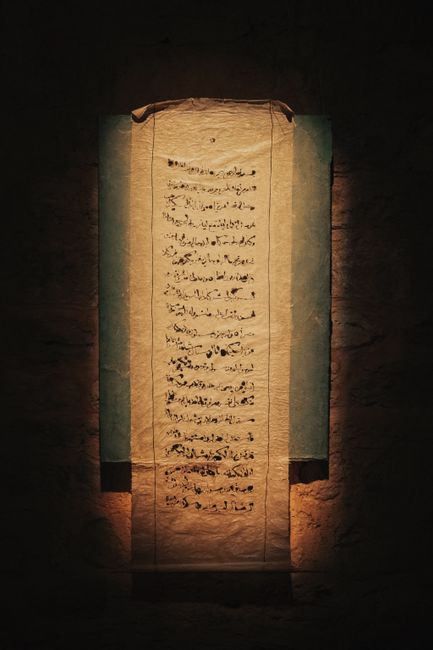
Verse-by-Verse Commentary on 2 Corinthians 3
2 Corinthians 3:2 — Meaning and Explanation
“Ye are our epistle written in our hearts, known and read of all men:”
In this verse, Paul addresses the skeptics who demanded “letters of commendation.” He argues that the true validation of his ministry is not a piece of paper, but the visible transformation in the lives of the Corinthian Christians. The Greek word for “epistle” is *epistolē* (G1992), meaning a message or letter sent. Paul is essentially saying that the changed conduct of the believers is the most powerful sermon he could ever preach.
Spiritually, this challenges us to consider what our lives “say” to the world. We are living letters. If the world looks at our reactions under pressure, our integrity at work, and our love in the family, what message are they reading? Paul’s point is that the Spirit of God transforms us into a document that the world can read, proving the reality of the Gospel through our character.
2 Corinthians 3:6 — Meaning and Explanation
“Who also hath made us able ministers of the new testament; not of the letter, but of the spirit: for the letter killeth, but the spirit giveth life.”
Paul clarifies the distinction between the Old Covenant and the New. The “letter” refers to the literal demands of the Mosaic Law, which, while holy, revealed sin and brought condemnation—thus, it “killeth.” The “spirit” refers to the life-giving work of the Holy Spirit, *pneuma* (G4151), which empowers the believer to actually live a life pleasing to God.
This is the bedrock of Christian freedom. We are not “able” because of our own talents or degrees, but because we are ministers of a New Testament (or Covenant) that relies on the Spirit. The Law shows us our inability, but the Spirit provides the ability. When we stop trying to earn God’s favor through legalism and start relying on the Spirit, we move from a state of spiritual death to true, abundant life.

2 Corinthians 3:17 — Meaning and Explanation
“Now the Lord is that Spirit: and where the Spirit of the Lord is, there is liberty.”
This verse provides the theological climax of the chapter, identifying the Lord Jesus with the Holy Spirit in terms of their unified work in the believer. The word “liberty,” or *eleutheria* (G1657), denotes freedom from the bondage of sin and the crushing weight of the Law. It is the emancipation of the soul from the fear of condemnation.
For the believer, this means that we are no longer slaves to our past failures or the demands of religious performance. Where the Spirit of the Lord dwells, there is a release from the chains of legalism. We are free to serve God not because we *have* to, but because we *want* to. This liberty is the hallmark of the New Covenant; it is the freedom to approach the throne of grace without a veil.
2 Corinthians 3:18 — Meaning and Explanation
“But we all, with open face beholding as in a glass the glory of the Lord, are changed into the same image from glory to glory, even as by the Spirit of the Lord.”
Paul describes the process of sanctification as a mirror-like reflection. By “beholding” (or contemplating) the glory of Christ, we are progressively transformed into His likeness. The Greek word for “changed” is *metamorphoō* (G3339), the same word used for the transfiguration of Jesus. It implies an internal change that results in an external transformation.
This is the central goal of the Christian life: to look more like Jesus tomorrow than we do today. As we spend time in the Word and in prayer, the Spirit “mirrors” Christ’s glory onto our hearts. It is not a sudden, one-time event, but a journey—”from glory to glory”—as we shed the old self and put on the new. You can find more historical context on this concept at Blue Letter Bible.

How to Apply 2 Corinthians 3 in Your Daily Life
Applying 2 Corinthians 3 requires a shift in focus from “doing” to “beholding.” In your family life, instead of merely enforcing a list of rules for your children, focus on modeling the grace and patience of Christ. When your spouse or child fails, remember that the “letter” of your expectations kills, but the “spirit” of grace gives life. Let your home be a place where the transformation of the Spirit is evident through forgiveness rather than condemnation.
In the workplace, view your professional conduct as your “epistle.” You may not be able to preach a sermon, but your integrity, your work ethic, and your kindness to colleagues are your letter of recommendation. When you face stress, practice the habit of “beholding the glory of the Lord.” Pause for a moment to pray, asking the Spirit to replace your anxiety with His peace. By consistently turning your eyes to Christ, you will find yourself being “changed into His image” even in the midst of a busy, secular environment.
A Prayer Based on 2 Corinthians 3
Guided Scriptural Prayer
Heavenly Father, I thank You that I am no longer under the burden of the law, but alive in the power of Your Spirit. Lord, help me to be a living epistle, that my life may clearly reflect Your love and grace to everyone I encounter. Please remove any veil that hinders my vision, so that I may behold Your glory with an open face. As I walk through my day, transform me into the image of Christ from glory to glory. May Your Spirit, who dwells within me, grant me the true liberty to serve You with a joyful and willing heart. Amen.
Frequently Asked Questions About 2 Corinthians 3
What is the main message of 2 Corinthians 3?
The main message is the superiority of the New Covenant over the Old Covenant. Paul argues that while the Law (the Old Covenant) was glorious, it was temporary and brought death because it only highlighted human inability. In contrast, the New Covenant, administered by the Holy Spirit, brings life, righteousness, and permanent glory. The chapter serves to validate Paul’s ministry by pointing to the spiritual transformation of the Corinthian believers as evidence that the Spirit of God is at work through the Gospel, not through legalistic adherence.
What does “the letter killeth, but the spirit giveth life” mean in 2 Corinthians 3:6?
This phrase contrasts legalism with grace. “The letter” refers to the written code of the Mosaic Law, which demands perfect obedience. Because no one can keep the Law perfectly, it only serves to condemn the sinner, hence it “killeth.” “The spirit” refers to the Holy Spirit, who empowers the believer from within. Instead of external commands, the Spirit writes God’s law on the heart, providing the internal motivation and ability to live a life that honors God, thereby giving “life.”
How are we “changed into the same image from glory to glory” according to 2 Corinthians 3:18?
This verse describes the process of sanctification. As believers “behold” or meditate on the glory of Christ through the Scriptures, the Holy Spirit works to transform our character to match His. It is a progressive, ongoing process (“from glory to glory”), meaning we are constantly being refined. It is not something we achieve by our own willpower, but something the Spirit accomplishes as we keep our focus fixed on Jesus, effectively mirroring His nature into our own lives.
May the grace of our Lord Jesus Christ and the fellowship of the Holy Spirit continue to lead you into all truth as you meditate on His Word.