
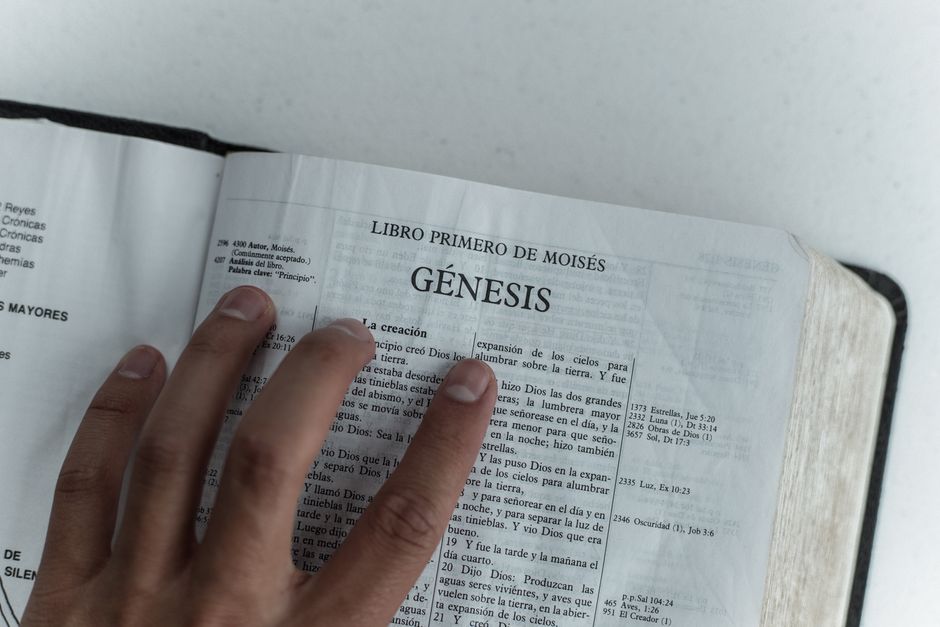
Welcome to this deep dive into one of the most pivotal chapters in the entire biblical narrative. As we explore 2 Samuel 7, we will uncover the profound beauty of the Davidic Covenant, the heart of a king who desired to honor God, and the eternal promises that find their ultimate fulfillment in Jesus Christ.
2 Samuel 7 — Historical and Spiritual Context
2 Samuel 7 takes place during the height of King David’s reign, likely shortly after he had established his palace in Jerusalem and brought the Ark of the Covenant to the city. The narrative captures a moment of transition from a life of warfare to a desire for lasting stability, as David reflects on his own comfort compared to the dwelling place of God. You can read 2 Samuel 7 on Bible Gateway to ground yourself in the text.
Theologically, this chapter represents the “Davidic Covenant,” a monumental turning point where God shifts from merely dwelling among His people to establishing an eternal throne through David’s lineage. For the modern believer, 2 Samuel 7 serves as a reminder that God’s plans for us often exceed our own limited ambitions, shifting our focus from what we can do for Him to what He has already purposed to do through His grace.

Verse-by-Verse Commentary on 2 Samuel 7
2 Samuel 7:2 — Meaning and Explanation
**”That the king said unto Nathan the prophet, See now, I dwell in an house of cedar, but the ark of God dwelleth within curtains.”**
David’s heart is stirred by a sense of holy incongruity. Having transitioned from a shepherd’s field to a palace constructed of cedar—a symbol of luxury and permanence in the Ancient Near East—David feels a righteous restlessness regarding the Ark of the Covenant, which represented the presence of Yahweh. The Hebrew word for “house” here is *bayith* (Strong’s H1004), which can denote a physical dwelling or a dynasty. David’s desire is not merely architectural; it is a manifestation of his desire to see God honored above his own glory.
The spiritual lesson here is the importance of a sensitive conscience. David does not become complacent in his prosperity. Instead, he reflects on his surroundings and asks, “Am I living in luxury while the things of God are neglected?” This is a call for every believer to examine their own priorities. Are we investing our resources, time, and “cedar” into the kingdom of God, or are we settling for a life where God is relegated to the “curtains” of our lives?
2 Samuel 7:12 — Meaning and Explanation
**”And when thy days be fulfilled, and thou shalt sleep with thy fathers, I will set up thy seed after thee, which shall proceed out of thy bowels, and I will establish his kingdom.”**
This verse is the foundational promise of the Davidic Covenant. God speaks to David about his “seed” (*zera*, Strong’s H2233), a term that carries both a near-term fulfillment in Solomon and a far-term, messianic fulfillment in Jesus Christ. The promise to “establish his kingdom” confirms that the throne is not just a human institution, but a divine mandate that God Himself will sustain.
The theological significance lies in the transition from David’s effort to build a house for God to God’s promise to build a house for David. This is the gospel in miniature: we try to earn God’s favor through our works, but God intervenes to establish our standing through His grace. The “seed” that proceeds from David’s body is ultimately the Messiah, the King of Kings, whose kingdom shall have no end. We are invited into this kingdom not by our building, but by His grace.

2 Samuel 7:13 — Meaning and Explanation
**”He shall build an house for my name, and I will stablish the throne of his kingdom for ever.”**
God distinguishes between the physical temple and the eternal throne. While Solomon would indeed build the stone temple, the promise of an “everlasting” throne points toward a spiritual reality that transcends physical architecture. The Hebrew verb for “stablish” is *kun* (Strong’s H3559), meaning to be firm, stable, or secure. God is promising that the lineage of David will be the instrument through which His salvation is channeled.
For the believer, this verse serves as an anchor of security. In a world of shifting political, economic, and personal foundations, the throne of Christ—the ultimate Son of David—is the only thing that is truly *kun*. When we feel our own “houses” (our families, careers, or health) are shaking, we can rest in the reality that the kingdom of God is unshakable. Our identity is found in the one whose throne is established forever.
2 Samuel 7:16 — Meaning and Explanation
**”And thine house and thy kingdom shall be established for ever before thee: thy throne shall be established for ever.”**
This verse serves as the climax of the prophecy. God uses the language of permanence to comfort David. The repetition of “for ever” emphasizes the divine decree. This is the culmination of the covenantal theology found throughout the Old Testament, which you can further research using resources like the Blue Letter Bible. It is a promise that God’s purposes cannot be thwarted by human failure or the passage of time.
The spiritual takeaway is the assurance of God’s faithfulness. Even when David’s descendants would later fail, God remained faithful to His covenant. This is the basis of our New Covenant hope. Because Jesus Christ is the eternal Son of David, His rule over our lives is not a temporary arrangement, but an eternal reality. We live our lives “before Him,” knowing that our destiny is wrapped up in the stability of His throne.
How to Apply 2 Samuel 7 in Your Daily Life
Applying 2 Samuel 7 begins with a shift in your internal posture. Just as David paused to consider God’s dwelling place, you should cultivate a habit of “holy reflection.” In your family life, this might look like a weekly meeting where you ask, “Is our home a place that honors God, or are we simply focused on our own comfort?” Bring your children into this conversation by discussing how your family can serve others, making your home a “house for His name.”
In your professional life, view your career not as a way to build your own empire, but as a “cedar” that God has provided for you to steward. Ask yourself: “How can I use my influence or my workspace to establish His kingdom?” Whether you are in a boardroom or a classroom, your work becomes part of the “house” you are building for the Lord. Finally, in your spiritual walk, stop trying to “do” for God in your own strength. Instead, spend time in prayer asking Him to show you what *He* is already doing, and how you can align your life with His established, unshakable kingdom.

A Prayer Based on 2 Samuel 7
Guided Scriptural Prayer
Heavenly Father, I stand in awe of Your grace, just as David did when You promised to establish his house forever. Lord, forgive me for the times I have been more concerned with my own comfort than with the honor of Your name. I thank You that because of the work of Jesus Christ, the true Son of David, my life is built upon an unshakable foundation. Help me to live each day with the assurance that Your kingdom is secure and that I am a part of Your eternal plan. May my life be a dwelling place where Your presence is honored and celebrated. Amen.
Frequently Asked Questions About 2 Samuel 7
What is the main message of 2 Samuel 7?
The main message of 2 Samuel 7 is the establishment of the Davidic Covenant, where God promises to establish David’s throne and dynasty forever. It marks a shift from David’s desire to build a house for God (the Temple) to God’s promise to build a house for David (the Messianic line). This chapter teaches that God’s purposes are sovereign and that He provides for His people far beyond what they can ask or think, ultimately pointing toward the eternal reign of Jesus Christ.
Who wrote 2 Samuel and why?
While the Bible does not explicitly name the author of 2 Samuel, Jewish tradition attributes it to the prophets Samuel, Gad, and Nathan. The purpose of the book is to document the transition of Israel from a loose confederation of tribes to a unified kingdom under David. 2 Samuel 7 specifically serves to legitimize David’s reign and connect it to the broader redemptive plan of God, showing that the monarchy was not an accident but part of God’s covenantal history.
What does 2 Samuel 7:14 mean?
In 2 Samuel 7:14, God says, “I will be his father, and he shall be my son.” This verse is a prophecy of the unique relationship between God and the Davidic king. While it applied to Solomon, the New Testament (Hebrews 1:5) identifies this as a reference to the divinity and unique sonship of Jesus Christ. It signifies a special, intimate bond of adoption and authority, confirming that the king of Israel represents God’s rule on earth, a role that finds its perfect expression in the Son of God.
May the truths of this covenantal promise encourage your heart and strengthen your walk with the Lord today.