
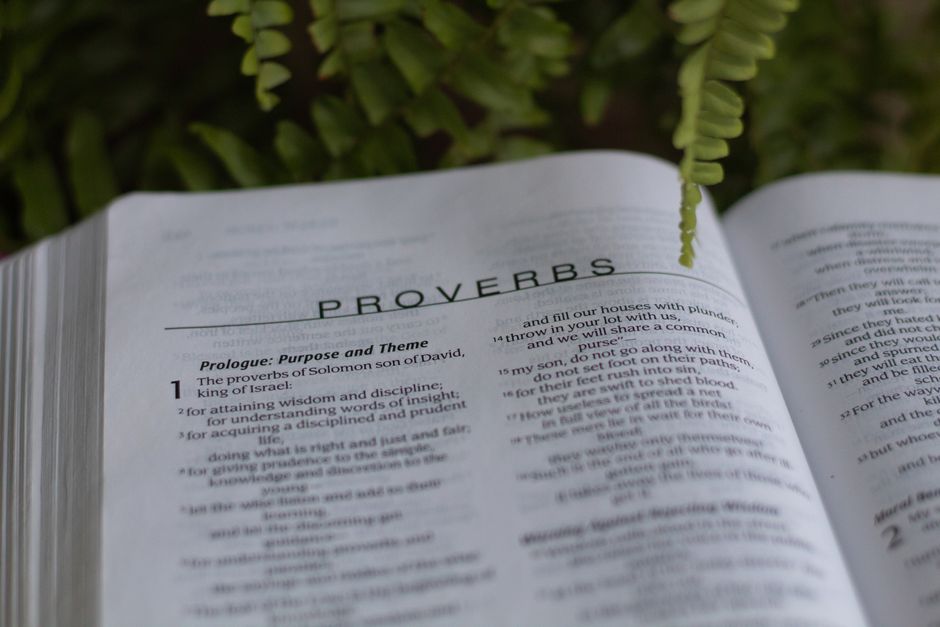
Welcome to this deep dive into one of the most profound chapters in the New Testament. As we explore 2 Corinthians 5, we will uncover the mysteries of our eternal hope, the transformative power of being a “new creature” in Christ, and the solemn yet glorious call to be ambassadors for the Kingdom of God.
2 Corinthians 5 — Historical and Spiritual Context
2 Corinthians 5 was penned by the Apostle Paul around 55–56 AD, likely from Macedonia, during a period of intense personal and ministerial strain. Paul was addressing a fractured church in Corinth, defending his apostolic authority against “false apostles” while navigating deep emotional wounds. The context is one of a leader pouring out his heart to a congregation that had deeply misunderstood his motives and his message.
The overarching theological theme of this chapter is the transition from our earthly, temporal existence to our eternal, heavenly reality. It serves as an anchor for the believer today, shifting our perspective from the “seen” (our current trials and bodily decay) to the “unseen” (the eternal weight of glory). To prepare your heart for this study, I encourage you to read 2 Corinthians 5 on Bible Gateway to familiarize yourself with the full flow of Paul’s inspired argument.
Verse-by-Verse Commentary on 2 Corinthians 5
2 Corinthians 5:1 — Meaning and Explanation
“For we know that if our earthly house of this tabernacle were dissolved, we have a building of God, an house not made with hands, eternal in the heavens.”
Paul begins with an analogy that would have resonated deeply with the tent-making trade he practiced. He refers to the human body as a “tabernacle” (Greek: *skēnos*, Strong’s G4638), which implies a temporary, portable dwelling. In the ancient world, tents were easily struck or destroyed; here, Paul contrasts this fragile “earthly house” with the “building of God,” a permanent structure that cannot be dismantled by time or death.
Theologically, this verse addresses the anxiety surrounding death. Paul uses the word “dissolved” (*kataluō*, Strong’s G2647), which means to loosen or unbind. He reassures the Corinthian believers—and us—that our identity is not bound to our physical health or longevity. We possess a “building of God” that is already secured in heaven, awaiting our arrival. This is the bedrock of Christian hope: our existence is not extinguished at death; it is relocated to a superior, eternal habitation.

2 Corinthians 5:7 — Meaning and Explanation
“(For we walk by faith, not by sight:)”
This verse serves as the operative principle for the Christian life. To “walk” (*peripateō*, Strong’s G4043) in this context refers to our daily conduct and moral progress. Paul draws a sharp dichotomy between the sensory, empirical evidence of our current circumstances (“sight”) and the conviction of God’s promises (“faith”).
In the original Greek, “faith” (*pistis*, Strong’s G4102) is not mere intellectual assent but a firm persuasion or reliance upon the character of God. When we are surrounded by suffering, betrayal, or confusion, “sight” tells us we are defeated. “Faith,” however, relies on the unseen reality of God’s sovereignty. To walk by faith is to prioritize the Word of God over the evidence of our eyes, trusting that the destination is secure even when the path is obscured by shadows.
2 Corinthians 5:17 — Meaning and Explanation
“Therefore if any man be in Christ, he is a new creature: old things are passed away; behold, all things are become new.”
This is perhaps the most famous verse in the chapter, defining the ontological change that occurs at conversion. To be “in Christ” is the essential status of every believer. The phrase “new creature” (*ktisis*, Strong’s G2937) can also be translated as “new creation.” It implies that salvation is not merely a behavioral modification or a “fresh start”; it is an entirely new creative act of God, akin to the original creation of the universe.
The “old things” refer to our former life under the dominion of sin, the old nature, and the former legalistic requirements of the Law. By the power of the Holy Spirit, the believer is ushered into a new order of existence. We are no longer defined by our past failures or our genealogical history; we are defined by our union with the resurrected Christ. This verse is the ultimate remedy for the shame and guilt that often paralyze the human spirit.

2 Corinthians 5:21 — Meaning and Explanation
“For he hath made him to be sin for us, who knew no sin; that we might be made the righteousness of God in him.”
This verse is the theological climax of the chapter, articulating the “Great Exchange.” Christ, who was perfectly sinless (*hamartia*, Strong’s G266), was “made” sin—meaning he was treated as a sin-offering on our behalf. He bore the legal penalty and the divine wrath that our transgressions demanded.
The result of this exchange is that we are “made the righteousness of God.” This is the doctrine of imputation: our record of sin was credited to Christ, and His perfect record of righteousness is credited to our account. As you can read in Blue Letter Bible, this is the core of the Gospel. We do not stand before God based on our own efforts, but on the borrowed, perfect righteousness of Jesus Christ. It is a status of justification that is permanent, secure, and entirely grace-based.
How to Apply 2 Corinthians 5 in Your Daily Life
Applying 2 Corinthians 5 begins with a radical shift in perspective. At work, when you face a challenging boss or a project that seems to fail, remember that your ultimate identity is not found in your performance or your career trajectory. You are a “new creation.” This allows you to work with excellence but without the crushing weight of anxiety, knowing that your “house” is in heaven and your worth is already settled by the blood of Christ.
In your family life, practice the ministry of reconciliation mentioned in verse 18. Because God has reconciled you to Himself, you have the supernatural capacity to initiate peace in your home. When conflict arises, choose to be an “ambassador for Christ,” representing His grace rather than your own ego. Walk by faith—believe that God is working in your spouse or children even when you cannot “see” the fruit of their growth yet. Trusting God’s timing will transform your relationships from arenas of friction into mirrors of divine grace.
A Prayer Based on 2 Corinthians 5
Guided Scriptural Prayer
Heavenly Father, I thank You that because I am in Christ, I am a new creation and my past no longer defines me. Help me, Lord, to walk by faith and not by sight, especially when the challenges of this world seem overwhelming. I ask that You would use me as an ambassador of Your reconciliation, bringing Your light into every room I enter. Thank You for the Great Exchange, where You took my sin and gave me Your perfect righteousness. May my life today be a reflection of the eternal weight of glory that awaits me in Your presence. Amen.
Frequently Asked Questions About 2 Corinthians 5
What is the main message of 2 Corinthians 5?
The main message of 2 Corinthians 5 is the believer’s eternal perspective. Paul encourages the church to look beyond current suffering and physical mortality, focusing instead on the “eternal house” prepared by God. The chapter highlights the transformation of the believer into a “new creature” (v. 17) and the mandate given to us to serve as ambassadors for Christ (v. 20), reconciling the world to God through the message of the Gospel. It is a call to live with an eternal, rather than a temporal, mindset.
What does “ambassadors for Christ” mean in 2 Corinthians 5:20?
To be an “ambassador for Christ” means we are the official representatives of the Kingdom of Heaven on earth. In the ancient world, an ambassador was sent by a king to a foreign land to negotiate terms and represent the king’s interests. As believers, we are “strangers and pilgrims” (1 Peter 2:11) living in a world that is not our home. Our mission is to carry the message of reconciliation—the Gospel—to others, urging them to be reconciled to God, just as Paul did in his ministry.
Why does Paul say we must all appear before the judgment seat of Christ in 2 Corinthians 5:10?
Paul mentions the “judgment seat of Christ” (the *bēma* seat) to remind believers that our lives are lived under the gaze of our Savior. Unlike the Great White Throne judgment, which is for the unsaved, the *bēma* seat is a place where believers receive rewards for their service and faithfulness (1 Corinthians 3:12-15). It serves as a holy motivation for us to live in a way that pleases Him, knowing that our earthly actions have eternal significance and will be evaluated by the One who loves us most.
May the grace of our Lord Jesus Christ, the love of God, and the fellowship of the Holy Spirit be with you as you meditate on these eternal truths.