
Welcome to this deep-dive study of Ephesians chapter 2, a profound passage that maps the journey from spiritual death to life in Christ. Together, we will unpack the riches of God’s grace, the reality of our reconciliation, and the mystery of the body of Christ.
Ephesians 2 — Historical and Spiritual Context
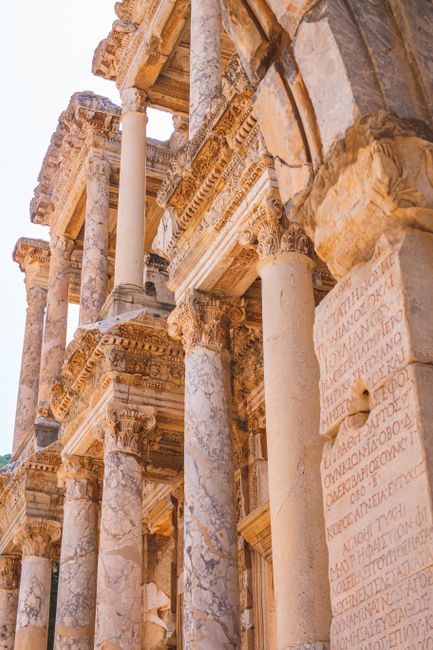
Ephesians 2 was penned by the Apostle Paul around 60–62 AD while he was under house arrest in Rome, serving as a circular letter intended for the believers in Ephesus and the surrounding regions. Writing to a church comprised of both Jewish and Gentile converts, Paul sought to solidify their identity in Christ amidst a culture steeped in pagan idolatry and social division. You can read Ephesians 2 on Bible Gateway to ground yourself in the text before we proceed.
The overarching theological theme of this chapter is the radical transformation provided by grace, which serves as the bedrock for Christian unity. For the modern believer, Ephesians 2 is a timeless reminder that our standing before God is not earned through merit, but is a gift of His mercy, effectively dismantling the walls of hostility that divide humanity. It bridges the gap between our past corruption and our future inheritance, establishing that through the cross, we are no longer strangers, but fellow citizens in the household of God.
Verse-by-Verse Commentary on Ephesians 2
Ephesians 2:1 — Meaning and Explanation
“And you hath he quickened, who were dead in trespasses and sins;”
Paul begins by establishing the “before” state of every human being: spiritual death. In the Greek, the word “quickened” is *suzoopoieo* (Strong’s G4806), meaning to “make alive together with.” This is a forensic term that implies we were not merely sick or wounded, but utterly devoid of the life of God. The “trespasses” (*paraptoma*, G3900) and “sins” (*hamartia*, G266) serve as the evidence of our separation from the Life-Giver.
Spiritually, this verse teaches that salvation is an act of resurrection. Just as Lazarus could not walk out of the tomb by his own power, the soul dead in sin cannot “choose” God until He first imparts the breath of spiritual life. This is the cornerstone of sovereign grace; it humbles the believer by reminding us that our revival began entirely with Christ’s initiative, not our own internal goodness.

Ephesians 2:8 — Meaning and Explanation
“For by grace are ye saved through faith; and that not of yourselves: it is the gift of God:”
This verse is arguably the most essential summary of the Gospel in the entire New Testament. The Greek term for “grace” is *charis* (G5485), signifying unmerited favor. Paul insists that our salvation is a “gift” (*doron*, G1435), which is a singular, concrete offering that cannot be earned. Even the “faith” (*pistis*, G4102) mentioned here is often understood by theologians to be part of the gift package provided by the Holy Spirit.
The historical context here is a direct refutation of the legalism prevalent in both Jewish and Gentile circles of the time. While the Jews relied on the works of the Law and the Gentiles relied on the appeasement of pagan deities, Paul declares that the currency of heaven is grace alone. It teaches the believer that we have nothing to boast about; our standing is entirely dependent upon the finished work of Jesus Christ.
Ephesians 2:10 — Meaning and Explanation
“For we are his workmanship, created in Christ Jesus unto good works, which God hath before ordained that we should walk in them.”
The Greek word for “workmanship” is *poiema* (G4161), from which we derive the word “poem.” It implies that every believer is a unique, carefully crafted masterpiece of God’s redemptive art. We are not saved *by* works, but we are saved *unto* works. The logic is sequential: first the new creation, then the fruit of that creation.
For the early church, this was a radical call to a new lifestyle. Being “created in Christ Jesus” meant that their old habits, cultural biases, and social status were secondary to their new identity as God’s art. For us today, it provides immense security. We are not random accidents of history; we are purposeful creations designed to manifest the character of God in a dark world.

Ephesians 2:14 — Meaning and Explanation
“For he is our peace, who hath made both one, and hath broken down the middle wall of partition between us;”
The “middle wall of partition” is a historical reference to the *Soreg*, the stone barrier in the Jerusalem Temple that separated the Court of the Gentiles from the inner courts. Paul uses this imagery to explain that Christ has abolished the religious and ethnic barriers that historically kept people groups divided. In the Greek, “broken down” is *luo* (G3089), meaning to loosen or dissolve, suggesting that the barrier didn’t just fall—it was rendered obsolete.
This verse is the theological basis for true biblical fellowship. If Christ is our peace, then the divisions we see in our modern society—based on race, class, or political ideology—are contrary to the reality of the cross. The lesson is clear: if God has reconciled us to Himself, we are mandated to live in reconciliation with one another. We are no longer two separate groups, but one new humanity.
How to Apply Ephesians 2 in Your Daily Life
Applying Ephesians 2 requires a shift from viewing your life as a series of personal achievements to viewing it as a continuous expression of grace. In your family life, this means extending the same radical forgiveness to your spouse or children that God extended to you when you were “dead in trespasses.” When you feel offended, remember that the “middle wall of partition” has been torn down; do not build it back up with bitterness or silent treatment.
In the workplace, view your professional tasks as the “good works” God prepared for you beforehand. You are not just punching a clock; you are a *poiema* (masterpiece) acting as an ambassador of Christ. When you face difficult coworkers or demanding deadlines, anchor yourself in the truth of Ephesians 2:8—that your value is not tied to your productivity, but to the grace you have already received. This truth provides a peace that the world’s competitive environment cannot offer.
A Prayer Based on Ephesians 2
Guided Scriptural Prayer
Heavenly Father, I thank You that while I was dead in my sins, You reached down and made me alive together with Christ. I confess that I have often looked to my own works for validation, forgetting that my salvation is an unmerited gift of Your grace. Please help me to walk in the good works You have ordained for me, acting as a light in my home and my workplace. I ask that You break down the walls of prejudice and pride in my heart, that I might truly live in unity with my brothers and sisters in Christ. May my life be a living poem of Your mercy and power. Amen.
Frequently Asked Questions About Ephesians 2
What is the main message of Ephesians 2?
The main message of Ephesians 2 is the reconciliation of humanity to God and to one another through the grace of Jesus Christ. It outlines the transition from spiritual death to spiritual life, emphasizing that salvation is entirely a gift from God, not a result of human effort (Ephesians 2:8-9). Furthermore, it teaches that the cross of Christ has dismantled the barriers between different groups of people—specifically Jews and Gentiles—uniting them into one body, the Church, which acts as the dwelling place of God through the Spirit (Ephesians 2:19-22).
Who wrote Ephesians and why?
The Apostle Paul wrote the Epistle to the Ephesians. He wrote this letter while imprisoned in Rome to strengthen the faith of the believers in Ephesus. The primary purpose was to remind the church of their identity as the Body of Christ and to encourage them to live in a way that reflects their new status as God’s children. By detailing the spiritual blessings in heavenly places (Chapter 1) and the unity brought by the cross (Chapter 2), Paul aimed to protect the church from false teachings and internal divisions.
What does verse 10 mean in Ephesians 2?
Ephesians 2:10 describes the believer as God’s “workmanship” (*poiema*), or masterpiece. This verse clarifies the role of good works in the Christian life. It asserts that we are not saved *by* our good deeds, but we are created *for* them. God has “before ordained” (or prepared) a unique path of service and character for every believer. Therefore, good works are the natural, expected evidence of a life that has been transformed by the grace of God, serving as an expression of our new identity in Christ.
May the peace of the Lord, which surpasses all understanding, guard your heart and mind as you meditate on these truths today.