
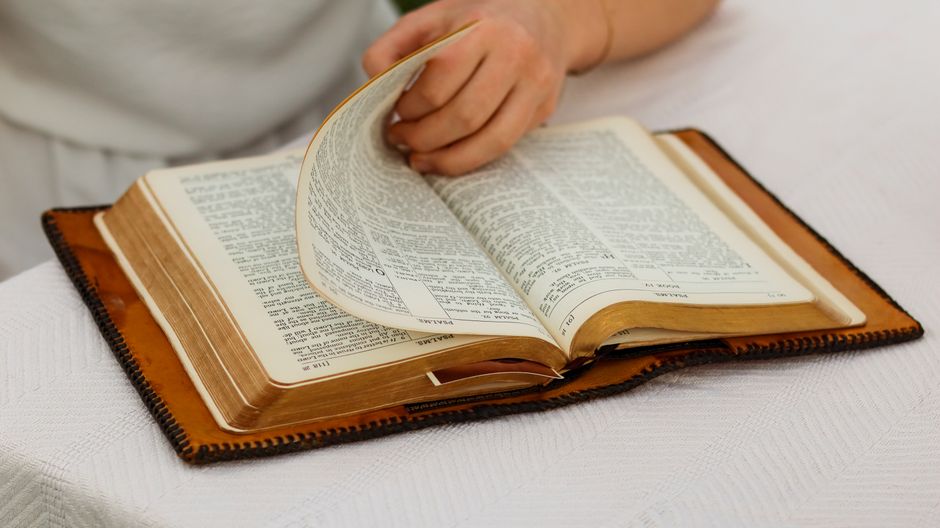
Welcome to this deep dive into the first chapter of the First Epistle of Peter. Together, we will explore the profound doctrines of divine election, the nature of suffering, and the living hope that serves as the anchor for every believer’s soul.
1 Peter 1 — Historical and Spiritual Context
1 Peter 1 was written by the Apostle Peter around 60–64 AD to Christians scattered throughout Asia Minor who were facing mounting persecution. Writing from “Babylon” (likely Rome), Peter addresses these “strangers” to provide theological grounding for their suffering, emphasizing that their identity is defined not by their earthly trials, but by their standing in Christ. You can read 1 Peter 1 on Bible Gateway to familiarize yourself with the text.
The overarching theme of 1 Peter 1 is the triumph of hope over trial. Peter reminds the believer that salvation is a work of the Triune God—planned by the Father, sanctified by the Spirit, and secured by the blood of the Son. Today, this chapter remains a vital manifesto for the church, teaching us that our faith is not a fragile sentiment but a “lively hope” that is refined and strengthened through the fire of life’s inevitable challenges.

Verse-by-Verse Commentary on 1 Peter 1
1 Peter 1:3 — Meaning and Explanation
**”Blessed be the God and Father of our Lord Jesus Christ, which according to his abundant mercy hath begotten us again unto a lively hope by the resurrection of Jesus Christ from the dead,”**
This verse serves as the doxological foundation for the entire epistle. Peter pivots from the reality of suffering to the fountain of praise, identifying the source of our new life as the “abundant mercy” of God. This is not a static hope; it is a “lively” (living) hope that is inextricably linked to the historical, bodily resurrection of Jesus.
The Greek word for “begotten again” is *anagennaō* (G313), which implies a spiritual rebirth or regeneration. Unlike human optimism, which relies on favorable circumstances, this hope is anchored in the finished work of the Cross. As Matthew Henry notes, our hope is “living” because it is grounded in a living Savior, ensuring that our future is as secure as the victory Christ won over the grave.

1 Peter 1:7 — Meaning and Explanation
**”That the trial of your faith, being much more precious than of gold that perisheth, though it be tried with fire, might be found unto praise and honour and glory at the appearing of Jesus Christ:”**
Peter uses the metaphor of metallurgy to explain the purpose of suffering in the life of a believer. Just as gold is heated in a furnace to remove impurities, the trials we face serve to purge our spiritual lives of dross, leaving behind a faith that is pure, refined, and ready for the return of the King.
The word for “trial” here is *dokimion* (G1383), which denotes a test that proves the quality or genuineness of something. This passage teaches us that suffering is not a sign of divine abandonment, but a divine process of sanctification. Our faith is more valuable than the most precious metals of earth because, while gold eventually perishes, a faith tested by fire will endure into eternity.
1 Peter 1:15 — Meaning and Explanation
**”But as he which hath called you is holy, so be ye holy in all manner of conversation;”**
This verse transitions from the theology of salvation to the mandate of sanctification. Peter argues that because we have been redeemed by the blood of Christ, our lives must reflect the character of our Redeemer. Holiness is not an optional pursuit for the “super-spiritual”; it is the natural, expected outcome of being set apart by God.
The Greek word for “holy” is *hagios* (G40), meaning to be set apart or consecrated for a specific purpose. Peter emphasizes this must be in “all manner of conversation”—a term that, in the KJV, refers to our entire lifestyle or conduct (*anastrophē*, G391). We are called to be distinct in our speech, our work ethics, and our relationships, mirroring the purity of the One who called us.

1 Peter 1:23 — Meaning and Explanation
**”Being born again, not of corruptible seed, but of incorruptible, by the word of God, which liveth and abideth for ever.”**
Peter concludes the first section by contrasting the fleeting nature of human existence with the permanence of the Gospel. He reminds his readers that their new identity was birthed by an “incorruptible seed,” the Word of God, which possesses the power to create life where there was once spiritual death.
The term “incorruptible” (*aphthartos*, G862) highlights the eternal, imperishable nature of the Gospel message. While our physical bodies age and the world around us decays, the Word of God remains an anchor that does not change. By rooting our identity in this eternal truth, we gain a perspective that transcends the temporary troubles of this life, allowing us to rest in the unchanging promises of Scripture. You can find more linguistic depth at Blue Letter Bible.
How to Apply 1 Peter 1 in Your Daily Life
Applying 1 Peter 1 in the modern world requires a shift in perspective from the temporal to the eternal. In your family life, when you face the “fire” of a difficult season—perhaps a wayward child or a strained marriage—remember that these trials are not evidence of failure, but opportunities for your faith to be refined. Instead of reacting with bitterness, use these moments to model the “living hope” of the Gospel, showing your family that your security is in Christ, not in their behavior.
In your professional life, practice “holiness in all manner of conversation.” This means refusing to participate in office gossip or unethical shortcuts, even when it costs you a promotion or social standing. By being “set apart” in your integrity, you become a living witness to the Gospel. When a colleague asks why you remain steadfast in the face of pressure, you have the perfect opening to share the hope that sustains you. Your conduct is the most powerful commentary on the Word you claim to believe.
A Prayer Based on 1 Peter 1
Guided Scriptural Prayer
Heavenly Father, I praise You for the abundant mercy that has begotten me again unto a living hope through the resurrection of Jesus Christ. When the fires of life threaten to overwhelm me, help me to remember that my faith is being refined for Your glory. Grant me the grace to live a life of holiness in every interaction, reflecting the character of the One who called me out of darkness. May Your incorruptible Word be the foundation upon which I stand, keeping me steady until the day of Christ’s appearing. Amen.
Frequently Asked Questions About 1 Peter 1
What is the main message of 1 Peter 1?
The main message of 1 Peter 1 is that believers possess a secure, living hope in Christ that transcends earthly suffering. Peter encourages his readers—who were facing persecution—to view their trials as a refining fire that proves the genuineness of their faith. By grounding their identity in their “regeneration” (v. 3) and the “incorruptible seed” of God’s Word (v. 23), believers are called to live holy, distinct lives. The chapter serves as a reminder that though we are “strangers” in this world, our inheritance in heaven is protected by the power of God.
Who wrote 1 Peter and why?
1 Peter was written by the Apostle Peter, one of the original twelve disciples of Jesus. He wrote this epistle to encourage and instruct Christians living in the provinces of Pontus, Galatia, Cappadocia, Asia, and Bithynia (1 Peter 1:1). The purpose was to prepare them for the “fiery trials” of persecution they were experiencing under the Roman Empire. Peter aims to ground them in the reality of their salvation, urging them to remain steadfast in holiness and hope, knowing that their suffering is temporary but their glory in Christ is eternal.
What does “lively hope” mean in 1 Peter 1:3?
The phrase “lively hope” refers to a hope that is active, enduring, and full of life. Unlike worldly hope, which is often a “wish” for a desired outcome, the biblical hope in 1 Peter 1:3 is a confident expectation based on the resurrection of Jesus Christ. Because Jesus is physically alive, the believer’s hope is anchored in a historical reality rather than an abstract idea. It is “lively” because it animates the believer, providing the strength to endure hardship and the assurance of an imperishable inheritance waiting in heaven.
May the peace of God, which surpasses all understanding, guard your heart and mind as you walk in the light of His truth.