
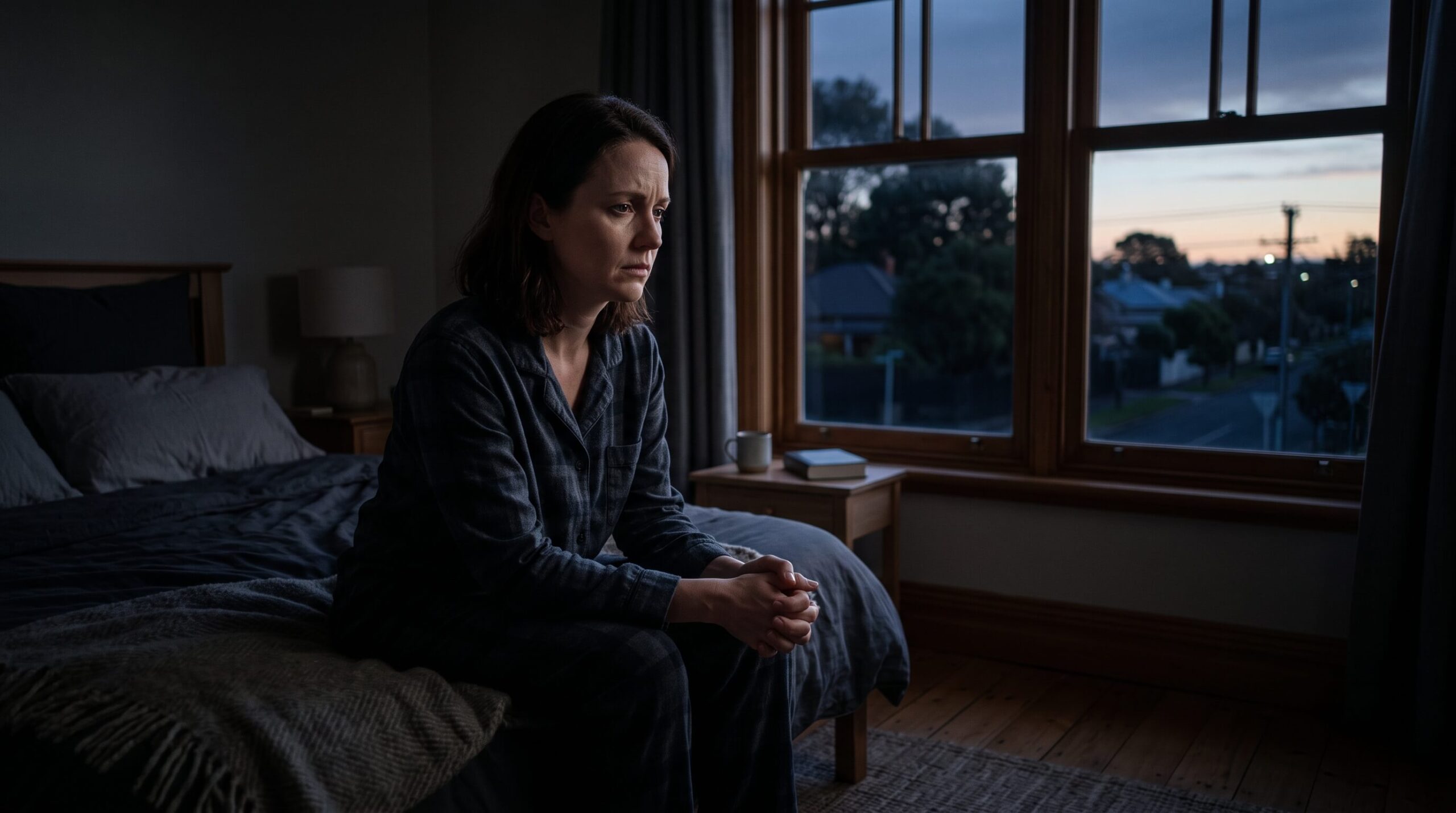
Feeling like something bad is going to happen can be frightening, especially when there is no clear reason for it. You may be sitting at home, driving to work, spending time with your family, or trying to fall asleep when a sudden sense of dread appears. But the feeling itself is not a prediction of the future. The Bible gives us a powerful way to think about this fear through Job 1, where Job faces the painful reality that he cannot control everything he loves. His story does not teach us to expect disaster; it teaches us how to keep fear from controlling the present when tomorrow is uncertain. Sometimes the hardest part is not knowing exactly what you are afraid of. You simply feel that something is wrong. Your mind begins searching for an explanation, imagining possibilities, and preparing for a problem that has not happened. Before long, the fear feels like evidence. It is not. There is an important difference between feeling that something bad will happen and actually knowing that something bad will happen. Once you understand that difference, you can begin responding to the fear instead of letting it decide what happens next.
Why do I feel like something bad is going to happen?
This feeling can appear when your mind becomes focused on possible danger, uncertainty, or things you cannot control. Sometimes there is a specific concern behind it. Other times, the fear seems to arrive without an obvious reason.
You may start thinking:
- What if something happens to my family?
- What if I lose my job?
- What if I get bad news?
- What if something happens while I am away?
- What if everything is going well now, but something ruins it?
The mind can be very good at creating possible futures.
The problem begins when every possibility starts feeling like a warning.
If you have no evidence that something is wrong, you do not need to treat the feeling as proof that something is wrong. You can acknowledge the fear without obeying it.
From a Christian perspective, this is where the story of Job becomes especially useful. Job 1 does not promise that life will always remain safe or predictable. Instead, it shows us what faith can look like when a person cannot control what happens next.
What Job 1 teaches when you are afraid something bad will happen
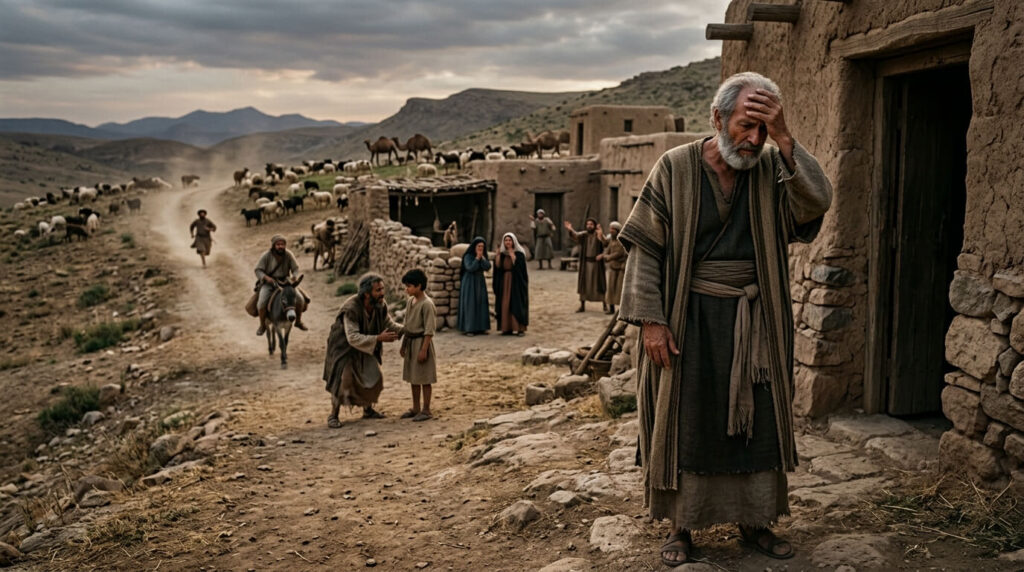
Job had plenty of reasons to care about what might happen to his family. Job 1 describes him as a man who feared God and turned away from evil. He had seven sons, three daughters, servants, livestock, and considerable wealth. He also regularly prayed and offered sacrifices for his children.
Then everything changed.
In a series of reports, Job learns that his livestock has been taken, servants have been killed, and eventually that his sons and daughters have died. The events happen so quickly that there is almost no time to process one loss before another messenger arrives.
But there is something important the reader knows that Job does not.
The reader sees the heavenly conversation at the beginning of the chapter. Job does not.
He never receives that explanation before the tragedies occur.
Job has to respond without knowing why.
That makes his response especially relevant when you are afraid of an unknown future. Job could not guarantee that his family would always be safe, his possessions would always remain, or his circumstances would never change.
Neither can we.
But that does not mean we have to spend every peaceful moment preparing ourselves for disaster.
A feeling is not the same thing as a warning
When you feel that something bad is about to happen, it is tempting to ask whether the feeling means something.
Sometimes the answer seems obvious:
“I feel this way, so something must be wrong.”
But feelings can be intense without being accurate predictions.
Fear can make an uncertain possibility feel almost certain.
That is why one of the most useful questions you can ask is:
What do I actually know right now?
Not what you imagine.
Not what could happen.
Not what happened to someone else.
What do you actually know?
If the answer is, “Nothing bad has happened,” then start there.
You do not have to convince yourself that nothing bad could ever happen. That would be impossible. You only need to recognize that you do not have evidence that the disaster you are imagining is happening right now.
Why trying to control everything can make the fear worse
Fear often creates the desire to control.
You check your phone again.
You search for symptoms.
You replay a conversation.
You check whether someone has arrived safely.
You think through every possible problem.
You imagine what you would do if the worst happened.
For a few minutes, this can feel like preparation.
But if you keep doing it, you may end up living inside possibilities instead of reality.
Job 1 gives us a difficult reminder: being careful does not give us complete control over the future.
Job cared about his family. He prayed for them. He lived responsibly. Yet he could not control every event that could possibly happen to them.
There is a difference between being responsible and trying to guarantee an outcome.
You can take reasonable precautions without spending the entire day searching for the next disaster.
What to do when you suddenly feel that something bad is going to happen
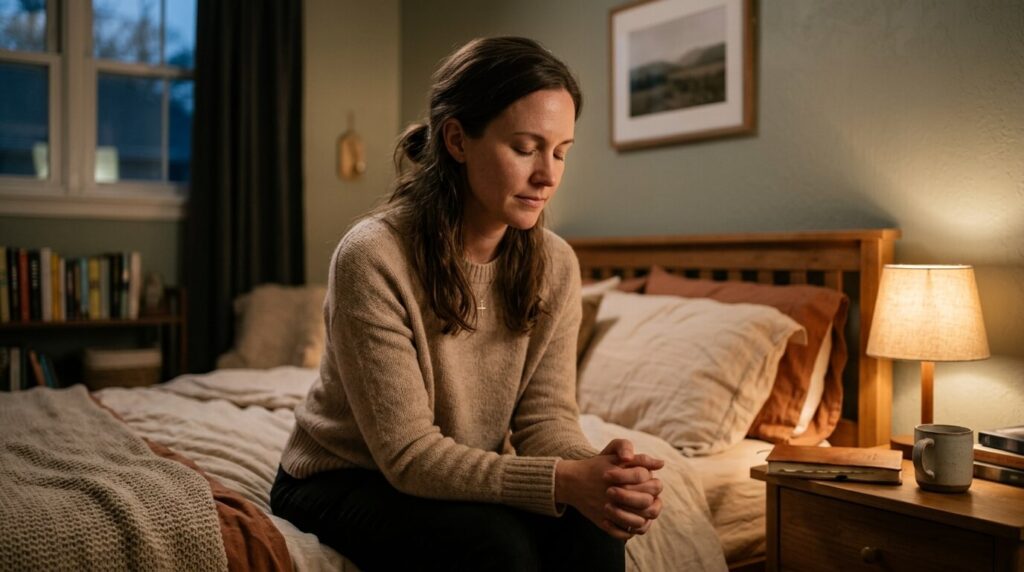
1. Stop and identify what is actually happening
Before reacting to the feeling, look at the present moment.
Ask yourself:
“What is happening right now?”
If your family is safe, acknowledge that.
If you have received no bad news, acknowledge that.
If you are worried about something that might happen tomorrow, acknowledge that too.
You are not denying the possibility of problems. You are separating the present from an imagined future.
2. Name the specific fear
“Something bad is going to happen” is so broad that your mind can attach almost anything to it.
Try completing this sentence:
“What I am actually afraid of is…”
Maybe it is losing someone you love.
Maybe it is losing your job.
Maybe it is financial trouble.
Maybe it is receiving bad news.
Once the fear has a name, you can ask a better question:
“Is there anything I can responsibly do about this today?”
If there is, do that one thing.
If there is not, you do not have to keep mentally solving the same problem.
3. Separate preparation from prediction
It is reasonable to prepare for life.
It is not possible to prepare for every possible disaster.
You can save money without constantly imagining bankruptcy.
You can care for your family without constantly imagining losing them.
You can take care of your health without assuming every physical sensation means something terrible.
Preparation deals with something you can actually do.
Prediction tries to guarantee what will happen.
When fear takes over, ask which one you are doing.
4. Bring the specific fear to God
Instead of praying only, “God, make this feeling go away,” try being specific.
“Lord, I am afraid that I will lose my job.”
“Lord, I am afraid something will happen to my family.”
“Lord, I am afraid of receiving bad news.”
“Lord, I am afraid of what I cannot control.”
Specific prayer gives the fear somewhere to go instead of allowing it to circle endlessly inside your mind.
5. Return to what you can do today
Once you have prayed, come back to the day in front of you.
There may be something you need to do.
Do it.
There may be someone you need to call.
Call them.
There may be nothing you need to fix.
Then allow yourself to continue with your day.
You do not have to keep checking whether the fear has disappeared before you are allowed to live normally.
What Job 1:21 means when you are afraid of losing everything
After Job receives the news of his losses, he falls to the ground and worships. Then he says:
“Naked came I out of my mother’s womb, and naked shall I return thither: the LORD gave, and the LORD hath taken away; blessed be the name of the LORD.”
Read Job 1:20-22 in the King James Version.
Job’s words are not a denial of pain.
He has just experienced devastating loss.
He mourns before he speaks.
That matters because biblical trust is not pretending that nothing hurts.
Job recognizes something else: the things he had were never completely under his control.
That is difficult to accept when you love your family, value your work, or finally reach a season of stability.
You naturally want to hold on to it.
But when your peace depends on the guarantee that nothing will ever change, fear will always have something to threaten.
Job 1:21 gives you another place to stand.
“I do not control everything. I can still trust God with what I cannot control.”
That is a much healthier response than spending the entire day trying to predict what might happen.
What to say to yourself when the fear comes back
When the feeling returns, you can use a short statement to interrupt the cycle:
“I am afraid something bad might happen, but I do not know that something bad will happen. I will deal with what is real today and trust God with what I cannot see.”
You can also keep Job 1:21 nearby and read it slowly.
The purpose is not to force yourself to feel calm immediately.
The purpose is to stop treating fear as if it has authority to tell you what the future holds.
Bible verses for when you feel like something bad is going to happen
If you need another Scripture to read when fear appears, these passages offer different ways to respond to uncertainty.
Psalm 56:3 — When you are afraid
“What time I am afraid, I will trust in thee.”
Notice that David does not say that he will never be afraid. He describes what he will do when fear comes.
Philippians 4:6-7 — When the worry keeps repeating
“Be careful for nothing; but in every thing by prayer and supplication with thanksgiving let your requests be made known unto God.”
Instead of letting the same concern run through your mind without an end, Paul directs it toward prayer.
Matthew 6:34 — When you are living tomorrow before it arrives
“Take therefore no thought for the morrow…”
The passage brings attention back to today instead of allowing tomorrow to consume the present.
1 Peter 5:7 — When the worry feels too heavy
“Casting all your care upon him; for he careth for you.”
You do not have to pretend that you have no concerns. You can bring those concerns to God.
A simple prayer for when you feel something bad is going to happen
Guided Scriptural Prayer
Heavenly Father,
I feel afraid right now, even though I cannot explain exactly why. My mind keeps telling me that something bad is going to happen, and I do not want fear to control the way I live today.
Help me separate what is happening from what I am imagining. Give me wisdom to recognize the things I can change and the humility to release the things I cannot control.
When I start living in tomorrow, bring me back to today.
When I become afraid of losing something I love, remind me that I can trust You without knowing what the future holds.
Teach me to care without constantly expecting disaster. Teach me to prepare without living in fear. Teach me to enjoy the good things You have placed in front of me without being afraid that they will suddenly disappear.
I give You my family, my future, my work, my plans, and the things I cannot control.
Help me trust You with what I cannot see.
In Jesus’ name, Amen.
Can fear make you feel like something bad is about to happen?
Yes. Strong fear or anxiety can sometimes create a powerful sense that danger is approaching even when there is no obvious external threat. People may describe this as dread, impending doom, or the feeling that something bad is about to happen. That experience can have different causes, so it is better not to assume that every episode has the same explanation.
If this feeling happens frequently or begins affecting your sleep, relationships, work, or ability to function normally, it is worth talking with a qualified healthcare professional rather than trying to handle everything alone.
Seeking help does not mean you lack faith.
You can pray and seek professional support at the same time.
Is it a sign from God when I feel like something bad is going to happen?
Not necessarily.
A feeling of dread should not automatically be treated as a message from God or a prediction of what will happen.
Instead of assuming that fear is a spiritual warning, slow down and examine what you actually know. Pray about the situation, use wisdom, and look for real evidence before making a decision.
Job 1 is a good reminder that human beings do not see everything that is happening. Job himself did not know the heavenly conversation that the reader was shown.
How can I stop worrying that something bad will happen?
Start by separating possibility from certainty. Something bad could happen someday, but that does not mean something bad is happening now.
When the fear appears, identify the specific concern, determine whether there is anything useful you can do today, pray about what you cannot control, and return your attention to the present.
You do not need to solve every possible future problem before you are allowed to enjoy today.
What does Job 1 teach about fear?
Job 1 teaches that faith does not depend on having complete control over life. Job had reasons to care deeply about his family and possessions, yet he could not guarantee that everything would remain exactly as it was.
His response shows that grief and faith can exist together. He mourned deeply, but he did not allow his loss to become proof that God was no longer worthy of trust.
You can read a deeper chapter study in Job 1 Meaning and Explanation.
When you feel like something bad is going to happen, come back to today
You may never be able to guarantee that tomorrow will be free from problems.
Neither can anyone else.
But you do not have to spend today experiencing tomorrow’s imaginary disaster.
When that familiar feeling appears, pause.
Ask what is actually happening.
Name what you are afraid of.
Do what you can.
Give God what you cannot control.
Then return to the life that is happening right now.
Job 1 does not promise that nothing painful will ever happen. It offers something more honest: a picture of faith in a world where certainty is impossible.
You can care about what happens without trying to control everything.
You can acknowledge fear without treating it as prophecy.
You can prepare for tomorrow without living there.
And when you cannot see what comes next, you can still choose where to place your trust today.