
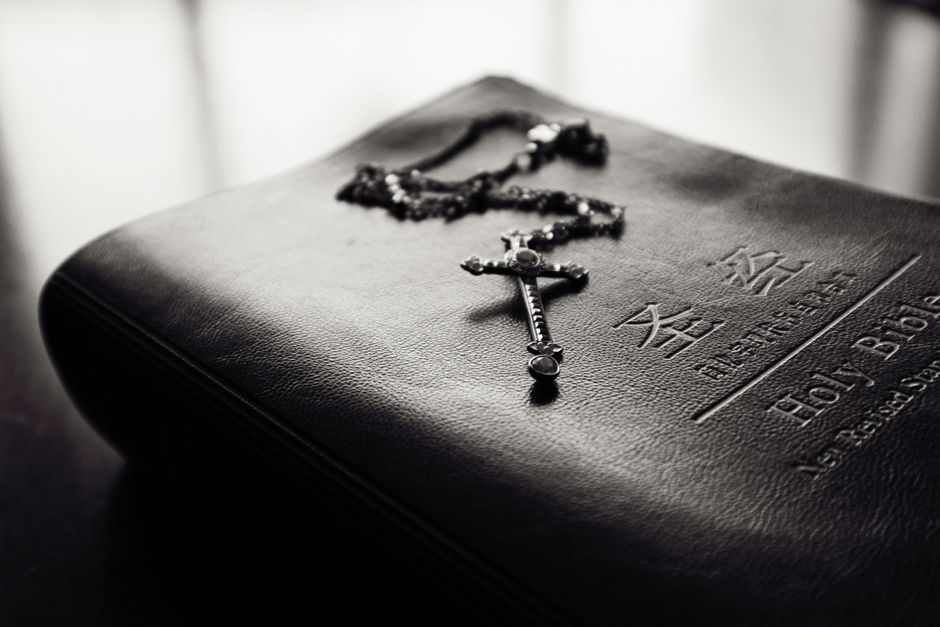
What Does the Bible Say About the cross?
The Bible teaches that the cross is the intersection of divine justice and infinite mercy, serving as the instrument of Christ’s atoning sacrifice for humanity. It represents the ultimate victory over sin, death, and the power of the enemy, marking the transition from the law of works to the grace of God.
In the Old Testament, the cross is foreshadowed through various types, such as the bronze serpent lifted in the wilderness (Numbers 21:9) and the sacrificial system that pointed toward a future, perfect Lamb. In the New Testament, the Greek word for cross is stauros (Strong’s G4716), which refers to an upright stake or pale. However, in the theological context of the New Testament, it signifies far more than a physical object; it is the emblem of the believer’s identification with Christ. For a deeper study of the linguistic roots of this term, you can explore the Blue Letter Bible entry for stauros.
Modern Christians often struggle to grasp the scandal of the cross because we have sanitized it into a piece of jewelry. Yet, the Apostle Paul reminds us that the cross was a “stumbling block” to the Jews and “foolishness” to the Greeks (1 Corinthians 1:23). To understand the cross today, we must view it not as a relic, but as a dynamic, daily reality. It is the place where our “old man” was crucified with Him, that the body of sin might be destroyed (Romans 6:6). Without a proper theological foundation, the cross becomes a mere symbol; with it, it becomes the power of God unto salvation.
Most Powerful Bible Verses About the cross (KJV)
1. Galatians 2:20
I am crucified with Christ: nevertheless I live; yet not I, but Christ liveth in me: and the life which I now live in the flesh I live by the faith of the Son of God, who loved me, and gave himself for me. (KJV) Galatians 2:20
Paul wrote this letter to the churches in Galatia to combat the influence of legalists who insisted that Gentile converts must follow the Mosaic Law. In this specific passage, Paul is establishing the foundational truth of substitutionary atonement. He addresses the believers who were tempted to return to their former lives, reminding them that their old identity was legally and spiritually terminated the moment they placed their faith in Jesus.
The Greek word used for “crucified” is systauroō (Strong’s G4957), which carries the prefix syn-, meaning “together with.” This is a profound grammatical indicator of our union with Christ. By consulting the Strong’s Concordance, we see that this is a perfect passive participle, indicating a completed action with ongoing results. We did not merely witness the crucifixion; we were mystically and legally included in it.
The spiritual lesson here is one of “exchanged life.” We are called to live not out of our own strength or religious performance, but out of the life of Christ residing within us. Practically, this means when you face a moment of anger, pride, or despair, you must remind yourself: “That version of me died on the cross.” You are now operating as a vessel for the life of the Son of God.
2. 1 Corinthians 1:18
For the preaching of the cross is to them that perish foolishness; but unto us which are saved it is the power of God. (KJV) 1 Corinthians 1:18
In his first letter to the Corinthian church, Paul addresses the factionalism and intellectual pride threatening the congregation. The Greeks valued philosophical wisdom, while the Jews sought miraculous signs. The message of a crucified Messiah fit neither category, appearing to be a sign of weakness and failure. Paul counters this by declaring that the cross is the ultimate display of God’s wisdom and strength.
The word “power” here is dynamis (Strong’s G1411), from which we get the word “dynamite.” It denotes inherent, miraculous efficacy. Paul contrasts this with “foolishness,” or mōria (Strong’s G3472), the root of our word “moron.” To the carnal mind, the cross makes no sense because it demands the death of the self—a concept the world rejects entirely.
This verse serves as a litmus test for our spiritual maturity. If the message of the cross feels “boring” or irrelevant, it suggests a drift toward worldly thinking. Application involves daily “preaching the cross” to yourself. When the world tells you to seek self-actualization, you must pivot to the cross, which tells you to seek self-denial. It is the only place where true, divine power is accessed.
3. Colossians 2:14
Blotting out the handwriting of ordinances that was against us, which was contrary to us, and took it out of the way, nailing it to his cross; (KJV) Colossians 2:14
Colossians was written to counter a heresy that mixed legalism and asceticism. Paul wanted the believers to understand that their standing before God was not dependent on their adherence to ritualistic laws. He uses the powerful imagery of a legal document—a “handwriting of ordinances” or a certificate of debt—being physically cancelled by the act of the crucifixion.
The Greek term for “handwriting” is cheirographon, referring to a handwritten document of debt, like an IOU. By “nailing it to the cross,” Christ effectively nullified the legal claims that our sins held against us. You can find more linguistic depth on these terms at Bible Gateway.
The application is profound for the believer struggling with guilt. When the enemy accuses you of past sins, you are to visualize the certificate of your debt—your failures, your shortcomings, your past life—nailed to the cross. It is not merely hidden; it is “blotted out.” You are legally free because the debt was paid in full by the One who took your place.
Key Takeaways: Bible Verses About the cross
| Verse Reference (KJV) | Core Spiritual Message | How to Apply Today |
|---|---|---|
| Galatians 2:20 | Union with Christ | Live by Christ’s life, not your own ego. |
| 1 Corinthians 1:18 | The Power of God | Reject worldly pride; embrace humility. |
| Colossians 2:14 | Forgiveness of Debt | Stop dwelling on past, forgiven sins. |
| Luke 9:23 | Daily Discipleship | Choose obedience over comfort daily. |
How Can I Apply Bible Verses About the cross in My Daily Life?
When You Feel Overwhelmed at Work
When the pressure of deadlines and expectations mounts, remember that your ultimate identity is not found in your career, but in your crucifixion with Christ. Instead of striving for perfection to prove your worth, pause and breathe a prayer: “Lord, I am crucified with Christ; my value is secure in Him.” This shifts your perspective from performance to grace, allowing you to work with excellence but without the crushing weight of anxiety.
When a Relationship Hurts
If you are struggling with bitterness or unforgiveness, visualize the person who hurt you standing before the cross. Recognize that the “handwriting of ordinances” against them—and the offense they committed against you—was nailed to the cross. To hold onto the hurt is to try to collect a debt that Christ has already paid. Release the person by choosing the path of the cross, which is the path of radical forgiveness.
During Financial Hardship
Financial stress often leads to a sense of abandonment. Turn to Colossians 2:14 and remind yourself that if God was willing to provide the ultimate payment for your soul, He is capable of providing for your daily bread. Use this time to practice “dying to self-sufficiency.” Rather than panic, offer your budget to the Lord, trusting that your life is hidden in Him and that your provision comes from His storehouse, not your own labor.
A Prayer for the cross
Guided Scriptural Prayer
Heavenly Father, I approach the throne of grace today, mindful of the cross where my Savior bore my shame and my sin. Thank You for the finished work of Jesus, for nailing my debt to that rugged tree, and for granting me a life that is no longer my own, but Thine. Help me to grasp the height, depth, and breadth of the love that held Him there, and may that love transform my heart from a place of pride into a sanctuary of Your presence.
Lord, let the power of the cross be the lens through which I view my daily trials. When the world calls me to boast, remind me of the humility of Calvary. When I feel defeated by my own weaknesses, remind me that I am crucified with Christ and that Your grace is sufficient for me. May I walk worthy of this sacrifice, carrying my own cross daily with joy and unwavering trust in Your eternal plan. Amen.
Frequently Asked Questions About the cross in the Bible
Does the Bible say that we must carry our own cross?
Yes, Jesus explicitly commanded this in Luke 9:23 (KJV): “If any man will come after me, let him deny himself, and take up his cross daily, and follow me.” Carrying one’s cross is not about suffering for the sake of suffering; it is a metaphor for total surrender. It means choosing to align your will with God’s will, even when it is inconvenient or painful. It is a daily decision to put the desires of the “old man” to death so that the life of Christ can be manifested through your actions and attitudes.
Is it a sin to wear a cross necklace?
The Bible does not explicitly forbid or command the wearing of a cross. However, the principle of the heart is paramount. If a cross is worn as a superstitious talisman or a “lucky charm,” it borders on idolatry. If it is worn as a symbol of one’s faith and a reminder of the sacrifice of Christ, it can be a beautiful testimony. The key, as with all outward symbols, is that the internal reality—a crucified life—must match the external profession of faith.
How does God use the cross to show His love?
The cross is the supreme demonstration of God’s love because it involved the greatest possible cost. Romans 5:8 (KJV) states, “But God commendeth his love toward us, in that, while we were yet sinners, Christ died for us.” God did not wait for us to clean ourselves up; He intervened while we were in active rebellion. The cross shows that God is both perfectly holy, requiring a penalty for sin, and perfectly loving, choosing to pay that penalty Himself so that we could be reconciled to Him.
What is the difference between the cross of Christ and our own cross?
The cross of Christ is unique and sufficient for salvation; it is the “finished work” that paid the penalty for the sins of the world (John 19:30). Our own cross is a matter of sanctification and discipleship. We do not die on our crosses to pay for our sins—only Jesus could do that. Instead, we “carry” our crosses to signify our ongoing identification with Him. His cross was an altar of atonement; our cross is an altar of obedience, where we surrender our will to His every day.