
Welcome to this deep-dive study into one of the most beloved narratives in the Word of God. As we journey through 1 Samuel 17, we will uncover the profound intersection of human weakness and divine strength, learning how to confront the “giants” in our own lives through the power of faith in the living God.
1 Samuel 17 — Historical and Spiritual Context
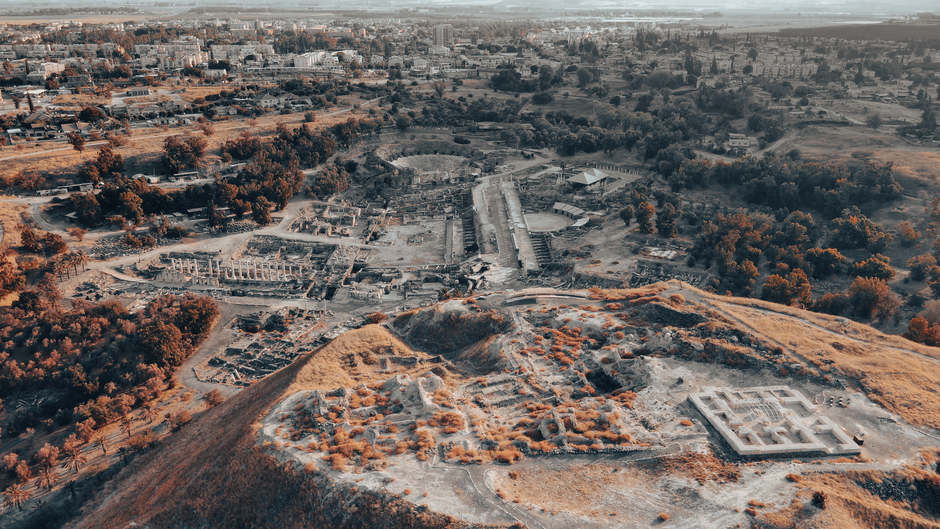
1 Samuel 17 takes place during the early monarchy of Israel, amidst a protracted conflict between the Israelites and the Philistines. The narrative occurs in the Valley of Elah, a strategic location where the armies of Saul and the Philistines stood in a tense stalemate, defined by the psychological warfare of the giant Goliath. You can read 1 Samuel 17 on Bible Gateway to ground yourself in the text before we proceed.
Theologically, this chapter serves as a profound typology of the victory of the Anointed One over the forces of darkness. It shifts the focus from the outward appearance of Saul—who, despite his physical stature, lacked the faith to trust God—to the heart of David, the shepherd-king. For the modern believer, this narrative is not merely a story of a boy and a giant; it is a mandate to rely on the “name of the Lord of hosts” rather than the armor of human systems when facing the insurmountable challenges of life.
Verse-by-Verse Commentary on 1 Samuel 17
1 Samuel 17:32 — Meaning and Explanation
“And David said to Saul, Let no man’s heart fail because of him; thy servant will go and fight with this Philistine.”
In this verse, David displays a bold, singular focus that stands in stark contrast to the trembling army of Israel. The Hebrew word for “fail” is *naphal* (Strong’s H5307), which literally means to fall or be cast down. David recognizes that the true battle is not just against a physical giant, but against the spiritual paralysis of fear that has gripped the hearts of God’s people.
David’s confidence is rooted in his identity as a “servant” (*ebed* – Strong’s H5650). He does not offer his own strength or military prowess; he offers his availability to the Lord. As Matthew Henry notes, David’s courage was not born of arrogance but of a holy indignation for the honor of God, which Goliath had openly insulted. The lesson here is clear: when we realize that the battle belongs to the Lord, our hearts are fortified against the intimidation of the enemy.
1 Samuel 17:37 — Meaning and Explanation
“David said moreover, The Lord that delivered me out of the paw of the lion, and out of the paw of the bear, he will deliver me out of the hand of this Philistine. And Saul said unto David, Go, and the Lord be with thee.”
David’s testimony here is a classic example of “remembering.” He uses his past experiences of God’s faithfulness as a foundation for his present crisis. The Hebrew term for “delivered” is *natsal* (Strong’s H5337), implying a snatching away or a rescue from danger. David had been faithful in the private fields with the sheep, and because of that, God was preparing him for the public battlefield.
The spiritual principle is that our “lion and bear” moments—those seemingly small, private struggles where we trusted God—are the training grounds for the “giants” we face later. We often demand a miracle for the giant before we have proven our faith in the minor trials. David’s faith was not a blind leap; it was a logical conclusion based on his history with a God who is unchanging and all-powerful.

1 Samuel 17:45 — Meaning and Explanation
“Then said David to the Philistine, Thou comest to me with a sword, and with a spear, and with a shield: but I come to thee in the name of the Lord of hosts, the God of the armies of Israel, whom thou hast defied.”
This is the climax of the confrontation, where the contrast between worldly power and spiritual authority is laid bare. Goliath trusts in his weaponry—the sword (*chereb* – Strong’s H2719) and spear—while David trusts in the “name” of the Lord. In biblical thought, the “name” represents the character, authority, and presence of God Himself.
To come in the name of the Lord is to stand on the authority of His revelation. David identifies God as the “Lord of hosts” (*Yahweh Sabaoth*), the Commander of the heavenly armies. By invoking this title, David reminds Goliath that he is not fighting a boy, but the sovereign King of the universe. For the believer, this is a reminder that our victory is never about our own intellect or resources, but about our alignment with the purposes and the authority of the Almighty.
1 Samuel 17:50 — Meaning and Explanation
“So David prevailed over the Philistine with a sling and with a stone, and smote the Philistine, and slew him; but there was no sword in the hand of David.”
The irony of this verse is profound: the one who had no sword ended the life of the one who had nothing but swords. The word “prevailed” (*chazaq* – Strong’s H2388) denotes being strengthened or becoming firm. It was not the stone that killed Goliath; it was the power of God directed through the obedience of a faithful servant.
This verse teaches us that God delights in using the “foolish things of the world” to confound the wise and the strong (1 Corinthians 1:27). The sling and the stone were humble tools, but they were sufficient when placed in the hand of one who was completely yielded to God. We often feel we lack the “armor” or the “sword” to handle our problems, but we must remember that God’s grace is sufficient, and His power is made perfect in our weakness.

How to Apply 1 Samuel 17 in Your Daily Life
Applying 1 Samuel 17 requires a shift in how you view your daily challenges. At work, when you face a “giant” of ethical compromise or overwhelming pressure, do not lean on your own defensive “armor” of manipulation or anxiety. Instead, recall the “lions and bears” God has helped you through in your past. Document those victories in a journal, and when a new crisis arises, present those past deliverances to the Lord as evidence of His unchanging character.
In your family life, teach your children that they do not need to be the strongest or the smartest to be victorious; they simply need to be the most faithful. When your family faces financial or emotional giants, gather them together to pray, acknowledging that you are coming “in the name of the Lord of hosts.” This turns a moment of panic into an act of worship, modeling for your household that God is a present help in times of trouble.
A Prayer Based on 1 Samuel 17
Guided Scriptural Prayer
Heavenly Father, I come before You today acknowledging that the battles I face are often too large for my own strength, just as the giant was for the army of Israel. I thank You that You are the Lord of hosts, and that in Your name, there is victory over every fear and every obstacle. Help me to remember the ways You have delivered me in the past, that my faith may be emboldened for the present. Like David, may I stand firm in my identity as Your servant, trusting that the battle belongs to You. Let my life be a testimony that the weapons of the world are nothing compared to the power of Your presence. In the name of Jesus Christ, I pray, Amen.
Frequently Asked Questions About 1 Samuel 17
What is the main message of 1 Samuel 17?
The main message of 1 Samuel 17 is that true victory is found through faith in God rather than reliance on human strength or worldly armor. While Saul and his army were paralyzed by the physical size and weapons of Goliath, David saw the situation through the lens of God’s sovereignty. The chapter demonstrates that when a believer acts in obedience and trusts in the character of the “Lord of hosts,” even the most intimidating “giants” can be defeated. It serves as an enduring reminder that God often uses the weak and the small to accomplish His purposes, ensuring that the glory belongs to Him alone.
What does “The battle is the Lord’s” mean in 1 Samuel 17?
In 1 Samuel 17:47, David declares, “for the battle is the Lord’s, and he will give you into our hands.” This statement expresses the core of biblical faith: the outcome of any conflict is under God’s sovereign control. It means that David was not fighting for his own glory or out of personal hatred, but to defend the honor of the living God. For the Christian, this signifies a release of anxiety; when we are in the center of God’s will, we can stop fighting in our own strength and trust that He will provide the victory in His way and in His time.
Why did Saul offer David his armor in 1 Samuel 17?
Saul offered David his armor in 1 Samuel 17:38-39 because he was still thinking in worldly, military terms. As a king, Saul believed that the only way to defeat a giant was to be better equipped with the standard weapons of war. However, the armor did not fit David because he was not called to fight in Saul’s way. This moment highlights the difference between relying on human traditions and relying on God’s unique leading. David rejected the armor because he knew his success depended entirely on his agility, his faith, and his reliance on God, not on the king’s heavy equipment.
May the Lord grant you the courage of a shepherd and the faith of a king as you face the giants in your own valley today.