

What Does the Bible Say About Faith in God?
The Bible presents faith in God not merely as a mental assent to facts, but as a dynamic, life-altering trust in the character and promises of the Creator. Scripture defines faith as the substance of things hoped for and the evidence of things not seen, serving as the essential foundation for a relationship with the Almighty.
In the Old Testament, the Hebrew word for faith, emunah (Strong’s H530), carries the connotation of firmness, steadiness, and reliability. It is the same word used to describe the stability of Moses’ hands during battle. In the New Testament, the Greek word pistis (Strong’s G4102) signifies a conviction and reliance upon Christ. For a deeper study into these linguistic roots, you can explore the Greek Lexicon on Blue Letter Bible. Faith is the mechanism by which the believer moves from a state of alienation to reconciliation, acting as the “hand” that reaches out to receive the grace offered through the Gospel.
Modern Christians often struggle to maintain this vertical trust amidst the noise of a secularized society. The biblical call to faith is a call to anchor one’s identity in the eternal rather than the temporal. When we examine the lives of the patriarchs and the apostles, we see that faith is rarely an easy path; rather, it is a persistent refusal to be defined by circumstances, choosing instead to be governed by the revealed Word of God.
Most Powerful Bible Verses About Faith in God (KJV)
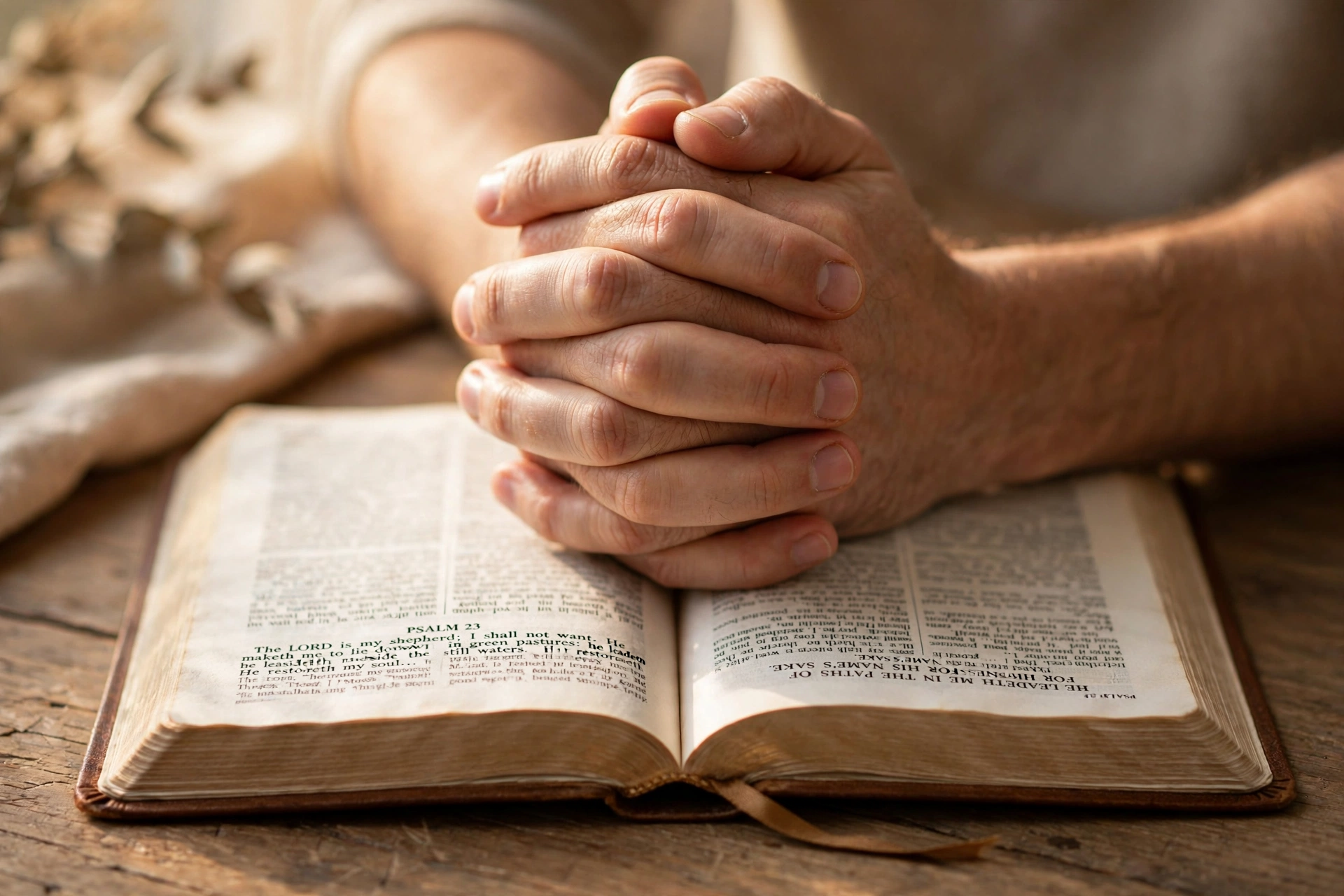
Now faith is the substance of things hoped for, the evidence of things not seen. Hebrews 11:1
The Epistle to the Hebrews was written to Jewish Christians who were tempted to return to the rituals of the Mosaic Law to escape persecution. The author uses this opening statement of chapter 11 to establish that true spiritual reality exists beyond the physical realm. By defining faith as “substance” (Greek: hupostasis), the author emphasizes that faith provides the literal foundation or “title deed” for the believer’s future hope.
The word hupostasis, found in Strong’s Concordance as G5287, implies a “standing under” or a support. It suggests that faith is not a fleeting emotion but a solid platform upon which we stand. The “evidence” (Greek: elenchos) refers to a conviction that is so powerful it acts as proof, even when the object of that faith remains invisible to the human eye.
For the modern believer, this verse serves as a litmus test for our daily anxieties. We are encouraged to stop viewing our current struggles as the final word. Instead, we are to let our “hope” in God’s promises become the very substance that sustains us through the dark nights of the soul, knowing that the invisible God is more real than the visible trial.
For by grace are ye saved through faith; and that not of yourselves: it is the gift of God. Ephesians 2:8
Paul the Apostle, writing to the church at Ephesus, sought to combat the heresy of legalism—the idea that human effort could merit salvation. He asserts that the entirety of our standing before God is a result of His grace, with faith acting as the instrument through which we appropriate this salvation.
The Greek word for faith here, pistis, combined with the context of grace (charis), reminds us that even the capacity to believe is a “gift” (doron) from God. We do not manufacture our own faith; we receive it from the Holy Spirit. This humility is essential, as it prevents spiritual pride and keeps the believer focused on the finished work of Christ.
In practice, this means we can stop “striving” to earn God’s favor. When you feel inadequate or discouraged, remember that your salvation is not held in place by your fluctuating performance, but by the immutable gift of God. Faith is simply the act of saying “yes” to what He has already accomplished.
And Jesus answering saith unto them, Have faith in God. Mark 11:22
In the context of this verse, Jesus had just cursed the fig tree, and the disciples were amazed at its immediate withering. Jesus uses this moment to pivot away from the miracle itself and toward the source of the power: God. He is teaching his followers that the object of their faith is infinitely more important than the intensity of their faith.
The Greek phrase for “have faith in God” can be translated as “have the faith of God.” It implies a reliance on the faithfulness inherent in God’s own nature. When we study the word pistis via Bible Gateway, we see that it is not about “believing in belief,” but about anchoring our trust in the character of the One who cannot lie.
Today, when you face an “impossible” situation—be it a broken relationship or a financial crisis—Jesus’ command is simple: stop looking at the mountain and look at the Mover of mountains. Your faith is only as strong as the God you trust; therefore, the remedy for weak faith is a deeper, more intentional study of who God is.
Key Takeaways: Bible Verses About Faith in God
| Verse Reference (KJV) | Core Spiritual Message | How to Apply Today |
|---|---|---|
| Hebrews 11:1 | Faith is the foundation of our hope. | Write down a promise from Scripture and act as if it is already true. |
| Ephesians 2:8 | Salvation is a gift, not a wage. | Stop trying to “earn” God’s love through works; rest in His grace. |
| Mark 11:22 | Focus on God, not the obstacle. | When worried, pray specifically about God’s power rather than your problem. |
How Can I Apply Bible Verses About Faith in God in My Daily Life?
When You Feel Overwhelmed by Uncertainty
When the future feels like a fog, practice the discipline of “remembrance.” Take a journal and write down three specific ways God has provided for you in the past. Faith is built on the foundation of past faithfulness. Read Psalm 77:11 (KJV) and consciously choose to meditate on His works rather than your worries. By anchoring your mind in history, you prepare your heart for the future.
When Your Prayers Seem Unanswered
In times of silence, it is easy to mistake God’s delay for God’s absence. Instead of questioning His love, shift your focus to His sovereignty. Use this time to pray through the Psalms, particularly those of lament. Acknowledge your frustration to God—He is big enough to handle your questions. Remember that faith is often refined in the “waiting room” of prayer, where your desires are aligned with His perfect will.
During Moments of Moral Failure or Guilt
When you stumble, the enemy will tempt you to rely on your own strength to “make it right.” Instead, exercise faith by immediately confessing and accepting the sufficiency of Christ’s sacrifice (1 John 1:9, KJV). Faith in God means believing that His grace is greater than your greatest sin. Stop punishing yourself, receive His forgiveness, and walk forward in the freedom He purchased for you.
A Prayer for Faith in God
Guided Scriptural Prayer
Heavenly Father, I come before You acknowledging that my faith is often weak and easily shaken by the storms of this world. I ask that You would increase my trust in Your character, reminding me that You are the author and finisher of my faith. Help me to look beyond the visible trials that surround me and fix my eyes upon the substance of Your promises, knowing that You are working all things together for my good.
Lord, let my life be a testament to Your grace. When I am tempted to rely on my own understanding or my own efforts, draw me back to the foot of the cross where I find the gift of salvation. May I walk by faith and not by sight, trusting that because You are God, I have nothing to fear. In the precious name of Jesus, I pray, Amen.
Frequently Asked Questions About Faith in God in the Bible
Does the Bible say that faith is the same thing as positive thinking?
No, the Bible does not equate faith with positive thinking or “manifesting” outcomes. Positive thinking is a human-centered psychological tool, whereas biblical faith is God-centered and rooted in truth. As seen in Hebrews 11:1, faith is the “evidence of things not seen,” meaning it is a conviction based on the reality of God’s Word, not a desire to change reality through optimism. Faith acknowledges the reality of suffering but trusts in the sovereignty of God over that suffering, regardless of the outcome.
Is it a sin to have doubts if I have faith in God?
Doubt is not necessarily a sin, but rather a struggle that can lead to deeper faith if handled correctly. The father in Mark 9:24 (KJV) cried out, “Lord, I believe; help thou mine unbelief.” This shows that God is compassionate toward our honest struggles. Doubts become sinful when we harbor them as an excuse to reject God’s truth or stop seeking Him. Instead of hiding your questions, bring them to God in prayer, studying His Word to find the answers He has already provided.
How does God reward our faith?
The primary reward of faith is a relationship with God Himself, which is the greatest treasure a human can possess. While Scripture speaks of rewards in heaven, the immediate reward of faith is the “peace of God, which passeth all understanding” (Philippians 4:7, KJV). Faith does not guarantee a life free from hardship; rather, it guarantees the presence of God within that hardship. As we trust Him, He conforms us to the image of Christ, which is the ultimate goal of the Christian life.
What is the difference between saving faith and intellectual belief?
The difference lies in surrender and trust. James 2:19 (KJV) notes that even the devils believe—and tremble—but they do not have saving faith because they do not submit to God. Intellectual belief is merely agreeing that certain facts are true, such as the existence of God or the historical reality of Jesus. Saving faith, however, is a personal, active reliance upon Christ as one’s only hope for salvation. It is the difference between knowing about a boat and actually stepping into it to cross the sea.