

What Does the Bible Say About Faith in God?
The Bible teaches that faith in God is the foundational prerequisite for salvation and a life pleasing to the Creator. It is defined as the substance of things hoped for and the evidence of things not seen, acting as the primary vehicle through which a believer experiences God’s grace and power.
In the Old Testament, faith is often synonymous with “trust” or “leaning upon” God, as seen in the life of Abraham, who was counted righteous because he believed God’s promises despite the impossibility of his circumstances. In the New Testament, the Greek word for faith, pistis (G4102), moves beyond mere intellectual assent to encompass a total reliance, loyalty, and commitment to Jesus Christ as Savior and Lord. You can explore the depth of this term further through a comprehensive Greek study of Pistis.
For the modern Christian, understanding faith is critical because we live in an age of skepticism that demands empirical proof for every truth claim. Biblical faith, however, is not a blind leap; it is a response to the revealed character of God. Without faith, it is impossible to walk in the Spirit, navigate trials with peace, or maintain a consistent prayer life. It is the spiritual lens through which we view our temporal struggles as eternal opportunities for God to demonstrate His faithfulness.
Most Powerful Bible Verses About Faith in God (KJV)
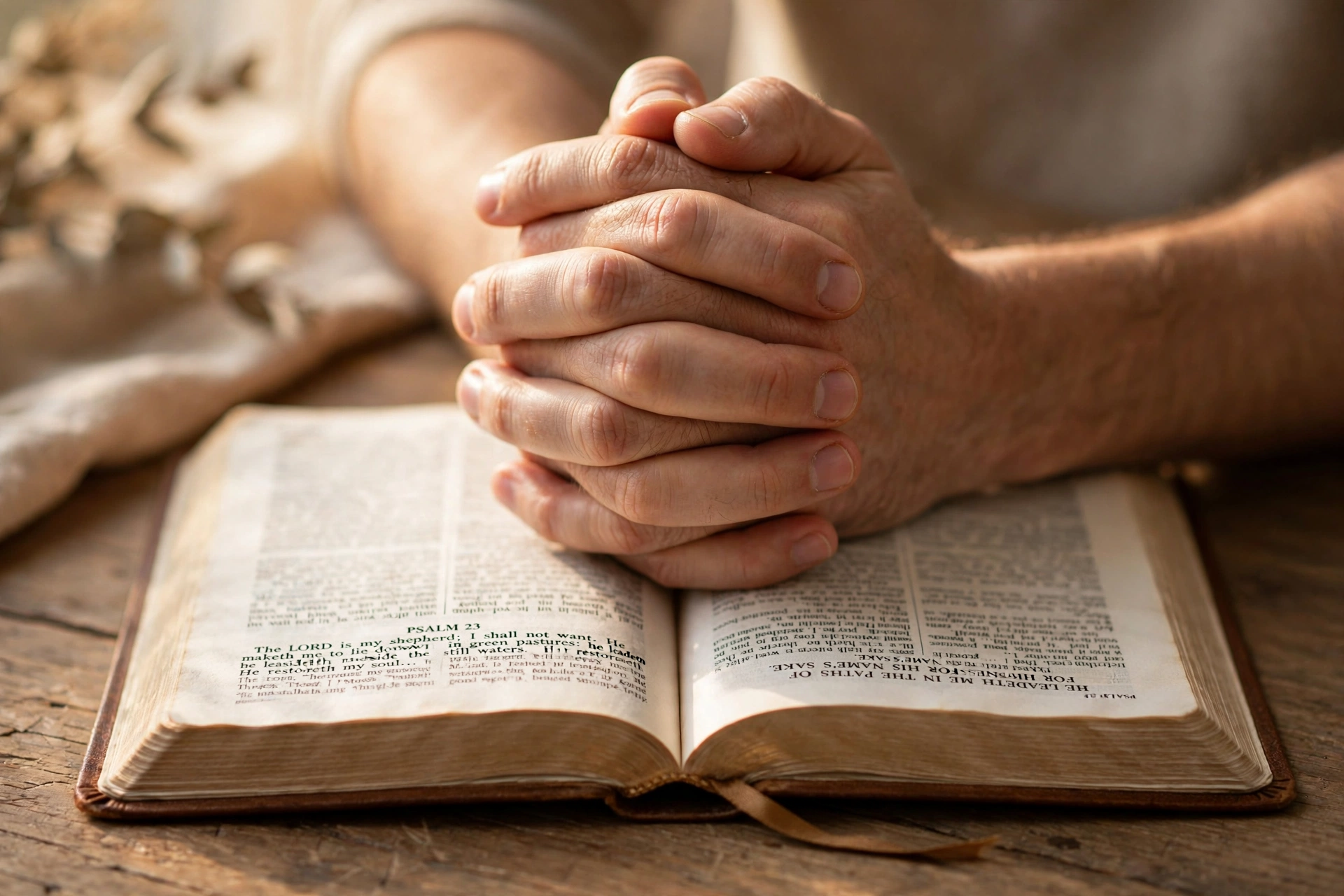
Now faith is the substance of things hoped for, the evidence of things not seen. Hebrews 11:1 (KJV)
The Epistle to the Hebrews was written to Jewish believers who were tempted to revert to the rituals of the Mosaic Law to escape persecution. By defining faith in chapter 11, the author provides a “Hall of Fame” of ancestors who endured suffering not because they saw the finish line, but because they trusted the One who promised it.
The Greek word for “substance” is hupostasis (Strong’s G5287), which literally means “that which stands under”—a foundation or guarantee. Faith provides the structural support for our spiritual life. The word “evidence” (elenchos) implies a conviction or proof that is so strong it compels the mind to accept what is not visually present.
The spiritual lesson here is that our current circumstances—no matter how painful—are temporary. Faith acts as our “title deed” to the promises of God. Practically, this means when you are facing a financial crisis or a health battle, you must choose to stand on the “substance” of God’s Word rather than the “evidence” of your bank account or medical report.
For by grace are ye saved through faith; and that not of yourselves: it is the gift of God. Ephesians 2:8 (KJV)
Paul wrote this letter to the church at Ephesus to remind them that their standing before God was entirely an act of sovereign grace. In a culture obsessed with merit and social status, Paul strips away human pride, declaring that even the faith required for salvation is not a self-generated work but a divine provision.
The term “grace” (charis, Strong’s G5485) refers to unmerited favor. Paul emphasizes that faith is the instrument (the “through”) by which we receive this grace. It is not that our faith earns salvation, but that our faith is the empty hand extended to receive the gift that God has already purchased through the cross.
This is a vital lesson for modern believers struggling with “performance-based” Christianity. You cannot work your way into God’s favor. Your faith is a gift, and because it is a gift, you can rest in the assurance that your salvation is secure, not because of the strength of your faith, but because of the object of your faith: Jesus Christ.
But without faith it is impossible to please him: for he that cometh to God must believe that he is, and that he is a rewarder of them that diligently seek him. Hebrews 11:6 (KJV)
Contextually, this verse follows the account of Enoch, who walked with God. The author is establishing the non-negotiable requirement for fellowship with the Creator. To “come to God” implies an active pursuit, not a passive acknowledgment of His existence.
The Greek word for “diligently seek” is ekzeteo (Strong’s G1567), which means to seek out or search for with intense effort. It is the same word used for a hunter tracking prey or a person searching for a lost treasure. God does not reward laziness; He rewards those who press into His presence.
The application is profound: God wants to be found, but He demands our wholehearted focus. If you feel distant from God, this verse serves as a diagnostic tool. Have you stopped “diligently seeking” Him? Are you merely going through the motions? True faith manifests in a daily, intentional pursuit of the Father’s heart.
Key Takeaways: Bible Verses About Faith in God
| Verse Reference (KJV) | Core Spiritual Message | How to Apply Today |
|---|---|---|
| Hebrews 11:1 | Faith is the foundation of our hope. | Anchor your decisions in God’s promises rather than current feelings. |
| Ephesians 2:8 | Salvation is a gift, not a wage. | Release the guilt of trying to “earn” God’s love through works. |
| Hebrews 11:6 | God rewards those who seek Him. | Schedule daily time to seek His face in prayer and Scripture. |
How Can I Apply Bible Verses About Faith in God in My Daily Life?
When You Feel Overwhelmed by Uncertainty
When the future feels foggy and you are anxious about your career or family, anchor your mind in the “substance” of Hebrews 11:1. Stop looking at the changing circumstances and start writing down three specific promises from Scripture that address your fear. Read them aloud every morning. By doing this, you are shifting your “evidence” from the world’s instability to God’s unchanging character.
When You Feel Distant from God
If your prayer life feels dry, apply the principle of ekzeteo (diligent seeking) from Hebrews 11:6. Set a “divine appointment” time each day—even if it is just ten minutes—where you do nothing but read a Psalm and talk to God. Do not wait for a “feeling” of closeness. Faith is an act of the will; by showing up consistently, you are demonstrating the very faith that pleases Him.
When You Are Tempted by Perfectionism
If you find yourself constantly worrying that you aren’t “doing enough” to be a good Christian, return to Ephesians 2:8. Write this verse on a sticky note and place it on your mirror. Every time you feel the pressure of performance, pray: “Lord, thank you that my salvation is a gift. Help me to work out of love for you, not for approval from you.” This practice will dismantle the burden of legalism and restore your joy.
A Prayer for Faith in God
Guided Scriptural Prayer
Heavenly Father, I come before You today acknowledging that my faith is often weak and easily shaken by the storms of this life. Lord, increase my faith. Help me to move beyond mere intellectual belief and into a deep, abiding trust that acts on Your Word even when I cannot see the path ahead. I thank You that my salvation is a gift of Your grace, and I choose to rest in the finished work of Your Son, Jesus.
Grant me the discipline to seek You diligently, knowing that You are a rewarder of those who pursue Your heart. When the world demands proof, let me stand firm on the “substance” of Your promises. May my life be a testimony of what is possible when a person stops leaning on their own understanding and starts walking by faith. In the precious name of Jesus Christ, I pray. Amen.
Frequently Asked Questions About Faith in God in the Bible
Does the Bible say that faith is the same thing as positive thinking?
No, the Bible does not equate faith with the secular concept of “positive thinking” or “manifesting” desires. Biblical faith is not focused on the power of the human mind to shape reality, but on the power of the Almighty God to fulfill His sovereign will. As seen in Romans 8:28 (KJV), faith believes that God is working all things for good, even when the circumstances are objectively negative or painful. While positive thinking relies on optimism, biblical faith relies on the historical and covenantal reliability of God’s character, regardless of whether the outcome matches our personal preferences.
Is it a sin to have doubts if you have faith in God?
Doubt is not inherently a sin, but a struggle common to the human condition. The Bible provides the example of the father in Mark 9:24 (KJV), who cried out, “Lord, I believe; help thou mine unbelief.” His honesty was met with compassion rather than condemnation. Doubt becomes a problem when it leads to a hardened heart or a rejection of God’s truth. However, when doubt is brought to God in prayer, it often serves as a catalyst for a deeper, more mature faith, as we seek answers in His Word rather than walking away from Him.
How does God grow our faith when we are suffering?
God uses trials as a refining fire to purge our reliance on worldly comforts and increase our dependence on Him. James 1:3 (KJV) states that the “trying of your faith worketh patience.” Suffering forces the believer to move from a theoretical knowledge of God to an experiential one. When we have nothing left but God, we discover that He is enough. Through every season of hardship, the Holy Spirit uses the Word of God to remind us of His past faithfulness, which builds the necessary resolve to trust Him through our current valley.
What is the difference between saving faith and temporary belief?
Saving faith is a permanent, life-transforming work of the Holy Spirit, whereas temporary belief is often an emotional or intellectual response that lacks roots. In the Parable of the Sower (Matthew 13:20-21, KJV), Jesus describes those who receive the word with joy but have no root, causing them to fall away when tribulation arises. True saving faith is evidenced by “the fruit of the Spirit”—a lasting change in character and a persistent obedience to God’s commands. If a person claims to have faith but shows no desire for holiness or growth in God, it calls into question the nature of that belief, as genuine faith always results in a transformed life.