

What Does the Bible Say About Faith in God?
The Bible teaches that faith in God is the foundational assurance of things hoped for and the conviction of things not seen, serving as the essential catalyst for salvation and a righteous life. It is not merely an intellectual assent to facts, but a total, trust-filled reliance upon the character and promises of the Creator.
Scripture consistently portrays faith as the bridge between human frailty and divine omnipotence. In the Old Testament, the Hebrew word for faith, emunah (Strong’s H530), carries the weight of firmness, constancy, and steadiness. It describes a life anchored in the faithfulness of Yahweh. You can explore the depths of this term further through the Blue Letter Bible. This biblical faith is not a passive emotion; it is an active movement of the soul that persists even when circumstances contradict God’s promises.
In the New Testament, the Greek term pistis (Strong’s G4102) expands this concept, emphasizing a firm persuasion based upon hearing the Word of God. Modern believers often struggle with faith because they confuse it with “feeling confident.” However, biblical faith is often most potent when feelings are absent. It is the spiritual discipline of “walking by faith, not by sight” (2 Corinthians 5:7, KJV). As we navigate a secularized culture, returning to the biblical definition of faith is necessary to anchor our identities in the unchanging nature of Christ rather than the shifting sands of human experience.
Most Powerful Bible Verses About Faith in God (KJV)
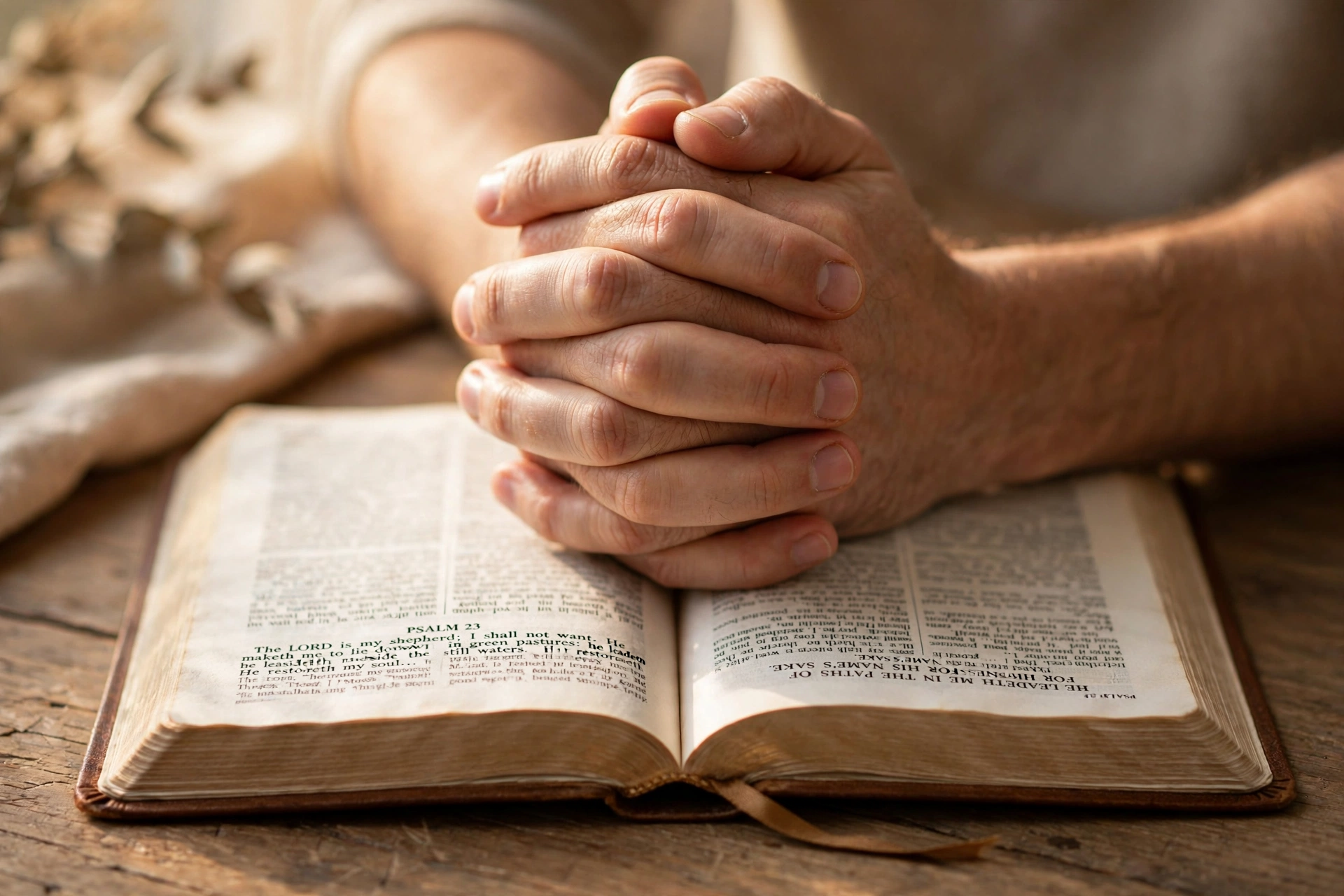
Now faith is the substance of things hoped for, the evidence of things not seen.
Hebrews 11:1 (KJV)
The author of Hebrews writes to a group of Jewish Christians who were tempted to return to the rituals of the Mosaic Law under the pressure of persecution. By defining faith in this manner, the writer provides a spiritual anchor, reminding them that the reality of God’s kingdom is more “substantial” than the temporal trials they currently faced.
The Greek word for “substance” is hupostasis (Strong’s G5287), which literally means “that which stands under”—a foundation or a guarantee. Faith acts as the title deed to the promises of God. When we hold this “deed,” we own the promise even before we see the physical manifestation. The “evidence” (elegchos) implies a legal proof that convinces the mind of the truth, even when the truth is invisible to the natural eye.
The spiritual lesson here is that our faith is not a gamble; it is a response to the reliability of God. In modern application, when you face a season of uncertainty or waiting, remember that your faith is the “substance” that keeps you steady. You do not need to see the end of the road to know that the One who built the road is faithful.
For by grace are ye saved through faith; and that not of yourselves: it is the gift of God:
Ephesians 2:8 (KJV)
Paul the Apostle, writing from prison to the church at Ephesus, sought to humble the believers by reminding them that their standing before God was entirely an act of unmerited favor. In a culture of works-righteousness, this message was revolutionary, shifting the focus from human effort to divine initiative.
The word “faith” here is pistis, but the context emphasizes that even this faith is a “gift” (doron). It suggests that God does not just provide the salvation; He provides the very capacity to believe in Him. When we examine this in the Strong’s Concordance, we see that faith is not a human achievement that “earns” grace; it is the empty hand extended to receive the grace God has already provided.
Today, this truth liberates us from the anxiety of “trying hard enough” to be saved. If your faith feels weak, look to the Giver of faith. You are saved by the quality of the Object of your faith (Christ), not the intensity of your own ability to believe.
But without faith it is impossible to please him: for he that cometh to God must believe that he is, and that he is a rewarder of them that diligently seek him.
Hebrews 11:6 (KJV)
This verse serves as the theological centerpiece for the “Hall of Faith” in Hebrews 11. The writer establishes the basic requirement for any relationship with the Creator: we must acknowledge His existence and His character. To come to God is to approach Him with the confidence that He is a benevolent Father who notices our pursuit.
The Greek word for “diligently seek” is ekzeteo, which implies an intense, persistent, and exhaustive search—like a merchant looking for a pearl of great price. It is not a casual glance toward heaven; it is a life oriented toward discovering God’s will. Linking this to Bible Gateway resources, one finds that God is not a distant deity, but a personal Rewarder.
Modern application involves auditing our daily habits. Do your actions reflect a belief that God is watching and rewarding your pursuit of Him? When you pray, study, or serve, do so with the conviction that you are not speaking into a void, but into the presence of the One who delights in your diligence.
Key Takeaways: Bible Verses About Faith in God
| Verse Reference (KJV) | Core Spiritual Message | How to Apply Today |
|---|---|---|
| Hebrews 11:1 | Faith is the foundation of reality. | Trust God’s word over your current feelings. |
| Ephesians 2:8 | Faith is a gift, not a work. | Stop performing; rest in God’s grace. |
| Hebrews 11:6 | God rewards those who seek Him. | Prioritize daily prayer and seeking His face. |
How Can I Apply Bible Verses About Faith in God in My Daily Life?
When You Feel Overwhelmed by Life’s Circumstances
When the weight of the world presses in, move from “looking at the storm” to “looking at the Shepherd.” Take a physical moment to close your eyes and recite Hebrews 11:1 aloud. Consciously choose to treat the promises of God—such as His presence in your trouble—as more “substantial” than the bills, conflicts, or health issues you face. Write down one promise from Scripture that directly counters your fear, and place it where you will see it throughout the day.
When You Doubt Your Standing with God
If you feel like you haven’t done “enough” to be a good Christian, return to Ephesians 2:8. Remind yourself that your salvation is a gift, not a wage. Stop trying to “earn” God’s love through performance. Instead, spend five minutes in silence each morning, not asking for anything, but simply thanking God for the gift of faith that allows you to be His child. This shifts your focus from your performance to His finished work.
When You Are Searching for Direction
In times of decision-making, apply the principle of “diligently seeking” found in Hebrews 11:6. Don’t just wait for a burning bush; open the Scriptures and ask God for wisdom. Dedicate a specific time each day to seek His face through prayer and the study of His Word. Believe that as you seek Him with your whole heart, He will reward your diligence by clarifying your next step. Faith is often built one obedient step at a time.
A Prayer for Faith in God
Guided Scriptural Prayer
Heavenly Father, I come before You acknowledging that my faith is often small and flickering like a candle in the wind. I thank You that You are the author and finisher of my faith, and that even when I struggle to believe, You remain faithful. Help me to grasp the substance of Your promises, anchoring my soul in the reality of Your kingdom rather than the shifting shadows of this world. May I walk with the confidence that You are a rewarder of those who diligently seek You, even when the path ahead is obscured by mystery.
Lord, let Your grace be the foundation of my identity. Free me from the burden of trying to earn Your favor, and let me rest in the gift of salvation provided through Christ. When I am overwhelmed, remind me that my faith is not in my own strength, but in Your omnipotence. Strengthen my heart to trust You in the waiting, the working, and the wondering. In the name of Jesus Christ, my Savior and my Lord, I pray. Amen.
Frequently Asked Questions About Faith in God in the Bible
Does the Bible say that faith is the same thing as positive thinking?
No, the Bible does not define faith as mere positive thinking or “manifesting” desires through mental effort. While positive thinking is a psychological state, biblical faith is an objective trust in the character and word of God. In Matthew 17:20 (KJV), Jesus speaks of faith as small as a grain of mustard seed moving mountains; this is not about the strength of human willpower, but about the power of the God in whom the believer places their trust. Faith is grounded in truth, whereas positive thinking is often grounded in the self.
Is it a sin to have doubts if you have faith in God?
The Bible does not treat doubt as an unforgivable sin, but rather as an invitation to seek God more deeply. In Mark 9:24 (KJV), the father of a demon-possessed boy cries out, “Lord, I believe; help thou mine unbelief.” This honest admission was met with compassion by Jesus. Doubt is often the shadow cast by a desire to know God truly. It becomes a problem only when we allow doubt to become a settled rejection of God, rather than a struggle that drives us to search the Scriptures for answers.
How does God build our faith when we go through suffering?
God uses trials as a refiner’s fire to burn away the impurities of our self-reliance. James 1:2-3 (KJV) teaches that the “trying of your faith worketh patience.” When we suffer, we are forced to move beyond theoretical faith to experiential faith—learning that God is our only true support. Suffering strips away the idols of comfort and control, leaving us with nothing but the promises of God. As we endure, we discover that God is not just a concept, but a present help in time of trouble.
What is the difference between “saving faith” and “dead faith”?
The distinction is found in the presence of spiritual fruit. James 2:17 (KJV) explicitly states, “Even so faith, if it hath not works, is dead, being alone.” Saving faith is a living, active trust in Christ that naturally results in a transformed life. If a person claims to have faith but shows no desire for holiness, no love for God’s Word, and no fruit of the Spirit, the Bible suggests that their faith is merely intellectual assent—an agreement with facts that does not reach the heart or change the direction of one’s life.