

What Does the Bible Say About Faith in God?
The Bible presents faith in God not merely as a mental assent to facts, but as a dynamic, life-altering trust in the character and promises of the Creator. Scripture defines faith as the substance of things hoped for and the evidence of things not seen, serving as the foundational requirement for salvation and a righteous walk with the Lord.
Throughout both the Old and New Testaments, faith is portrayed as the bridge between human limitation and divine omnipotence. In the Hebrew Scriptures, the concept of faith is deeply rooted in the word emunah (Strong’s H530), which signifies firmness, steadfastness, and fidelity. To have faith in God is to lean entirely upon His reliability, much like a child resting in the arms of a parent. You can explore the depth of this term further at the Blue Letter Bible.
For the modern Christian, understanding faith is essential because we live in an era of skepticism and sensory dependence. Faith acts as a spiritual anchor, allowing believers to navigate life’s storms by anchoring their hope in the unchanging nature of God. It is not an absence of doubt, but a decision to trust God despite the presence of uncertainty, moving from a passive belief to an active, obedient relationship with Jesus Christ.
Most Powerful Bible Verses About Faith in God (KJV)
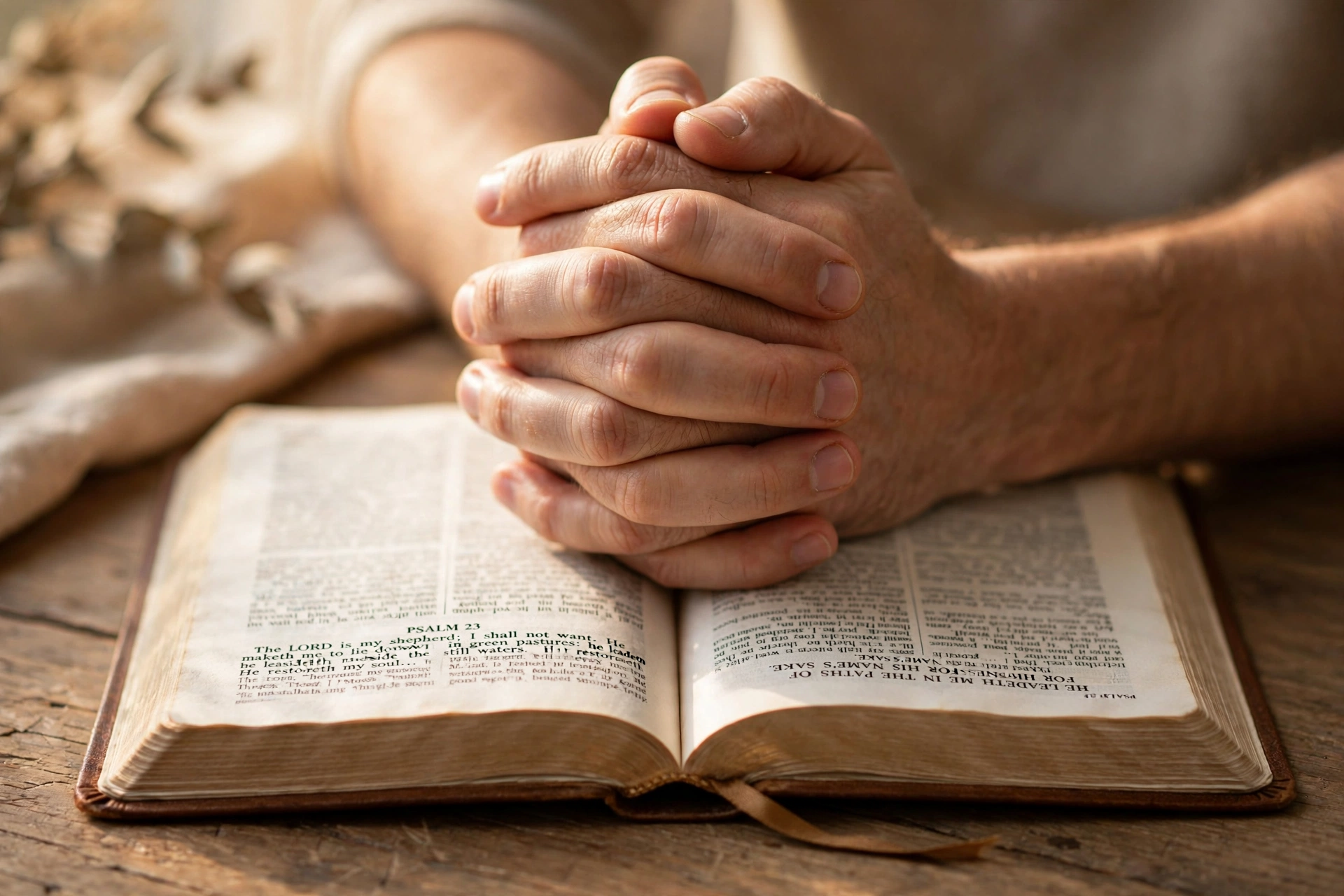
Now faith is the substance of things hoped for, the evidence of things not seen. Hebrews 11:1 (KJV)
The Apostle Paul, writing to the Hebrew Christians, crafts this definitive statement to encourage believers who were facing persecution and the temptation to return to Judaism. The “substance” (Greek hupostasis, Strong’s G5287) literally means a “foundation” or “under-standing.” It implies that faith provides the reality upon which we build our lives, even when the desired outcomes are not yet visible.
The term “evidence” (Greek elegchos) suggests a legal proof or a conviction that is so strong it settles the case. In the original Greek, this word conveys the idea of a demonstration that leaves no room for doubt in the heart of the believer. It is the spiritual equivalent of a title deed to a property one has not yet moved into.
Modern application involves shifting our focus from current circumstances to eternal realities. When you face a financial deficit or a health crisis, faith is the “substance” that allows you to act as though God’s promises are already true, because, in the spiritual realm, they are. It is the active practice of trusting God’s Word over your current feelings.
For by grace are ye saved through faith; and that not of yourselves: it is the gift of God. Ephesians 2:8 (KJV)
Writing from prison to the church at Ephesus, Paul emphasizes that salvation is entirely a work of divine grace. The Greek word for grace, charis, signifies an unmerited favor. Paul is correcting the notion that human effort or religious pedigree could ever earn a right standing before a holy God.
The word “faith” here is pistis (Strong’s G4102), which denotes a firm persuasion based on hearing the truth. Crucially, Paul notes that this faith is not a product of human willpower; it is a gift from God. We do not generate our own faith; we receive it as we interact with the Holy Spirit and the Word of God.
The spiritual lesson here is humility. If faith is a gift, then we have no ground for boasting. When we feel our faith is weak, we should not despair, but rather ask the Author and Finisher of our faith to increase it. We apply this by constantly turning to Him as the source of our strength, acknowledging our total dependence on His grace.
But without faith it is impossible to please him: for he that cometh to God must believe that he is, and that he is a rewarder of them that diligently seek him. Hebrews 11:6 (KJV)
This verse serves as the theological hinge for the “Hall of Faith” in Hebrews 11. The author is reminding the readers that God is not impressed by external rituals, but by the posture of the heart. The word “diligently” (Greek ekzeteo) implies a persistent, intense, and focused search, like a miner digging for gold.
The Greek term pisteuo (to believe) goes beyond acknowledging existence. It implies trusting in His character. To believe “that he is” is to accept His sovereignty, while believing He is a “rewarder” is to trust in His goodness and His intentional involvement in the lives of His children.
Today, this means that our daily walk must be characterized by an intentional pursuit of God. It is not enough to believe God exists; we must act upon that belief by praying, reading Scripture, and waiting for His guidance. If you feel distant from God, this verse encourages you to return to the basics: seek Him with your whole heart, and trust that He is waiting to reveal Himself to you.
Key Takeaways: Bible Verses About Faith in God
| Verse Reference (KJV) | Core Spiritual Message | How to Apply Today |
|---|---|---|
| Hebrews 11:1 | Faith is the reality of the unseen. | Focus on God’s promises rather than current problems. |
| Ephesians 2:8 | Faith is a gift, not a work. | Humble yourself and ask God to strengthen your faith. |
| Hebrews 11:6 | God rewards those who seek Him. | Make daily prayer and Bible study a non-negotiable priority. |
How Can I Apply Bible Verses About Faith in God in My Daily Life?
When You Feel Overwhelmed by Uncertainty
When the future feels blurry, practice “Scripture Anchoring.” Take a specific promise—such as Isaiah 41:10—and write it on a card. When anxiety rises, read the verse aloud. Faith is strengthened by the hearing of the Word (Romans 10:17). By vocalizing God’s truth, you replace the internal narrative of fear with the external authority of God’s unchanging promise.
When Your Prayers Seem Unanswered
During seasons of silence, transition from “asking” to “worshipping.” Hebrews 11:6 reminds us that God rewards those who diligently seek Him, not just those who get what they want. Use this time to thank God for His character—His sovereignty, His love, and His wisdom—even when you cannot see His hand at work. This builds a mature, resilient faith that is not dependent on circumstances.
When You Face Moral or Ethical Dilemmas
In moments of decision, ask yourself, “Does this action demonstrate reliance on God or reliance on my own cleverness?” Faith is the active choice to obey God even when the worldly path seems more efficient. Practice the “Pause of Faith”: stop, pray for wisdom (James 1:5), and choose the path that aligns with Biblical principles, trusting that God will handle the consequences of your obedience.
A Prayer for Faith in God
Guided Scriptural Prayer
Heavenly Father, I come before You acknowledging that my faith often feels small in the face of life’s giants. Please forgive me for the times I have relied on my own understanding rather than Your perfect wisdom. As it is written in Hebrews 11:1, I pray that You would make Your promises the substance of my life. Grant me the grace to see beyond the visible trials and to trust in the unseen realities of Your kingdom.
Lord, increase my faith as I diligently seek You day by day. Help me to rest in the gift of Your grace, knowing that I am saved not by my works, but by Your finished work on the cross. When I am weak, be my strength; when I am confused, be my light. May my life be a living testimony to the power of trusting in You, so that all I do may be pleasing in Your sight. In Jesus’ name, Amen.
Frequently Asked Questions About Faith in God in the Bible
Does the Bible say that faith is the same thing as feelings?
No, the Bible clearly distinguishes between faith and feelings. Feelings are fluctuating and often dependent on external circumstances, whereas faith is rooted in the objective truth of God’s Word. As noted in Hebrews 11:1, faith is the “substance” and “evidence” of things unseen, implying a solid foundation that exists independently of our emotional state. Christians are called to walk by faith, not by sight or by the shifting sands of human emotion. When your feelings tell you that God has abandoned you, faith tells you that He is always with you, based on His promise in Hebrews 13:5.
Is it a sin to have doubts while believing in God?
Doubt is not necessarily a sin, but rather an invitation to deeper study and closer relationship with God. The father in Mark 9:24 honestly cried out, “Lord, I believe; help thou mine unbelief.” His honesty was met with compassion, not condemnation. Doubt becomes problematic only when we choose to embrace it and turn away from God entirely. If you are struggling with doubt, bring it to the Lord in prayer, read the Gospels to see the character of Jesus, and seek counsel from mature believers. God is patient with those who are sincerely seeking to know Him better.
How does God increase our faith?
God typically increases our faith through the “means of grace”: the reading of His Word, the practice of prayer, and the experience of life’s trials. James 1:2-4 teaches that the testing of your faith produces patience and spiritual maturity. By allowing us to face situations that require us to trust Him, God stretches our capacity to rely on Him rather than ourselves. Additionally, as we read the Bible, the Holy Spirit illuminates the truth, confirming God’s faithfulness in the past and building our confidence for the future. Faith grows as we exercise it, like a muscle that becomes stronger through consistent use.
What is the difference between saving faith and temporary belief?
Saving faith is a permanent, life-transforming trust in Jesus Christ as Lord and Savior, while temporary belief is often merely an intellectual acceptance of facts that lacks depth or commitment. The Parable of the Sower in Matthew 13 describes seeds that fall on stony ground—they sprout quickly but wither because they have no root. True, saving faith, as described in Ephesians 2:8, is a gift from God that results in a changed life and persistent obedience. If someone claims to believe in God but shows no desire to follow His commandments or grow in holiness, it may indicate that their “faith” is not the saving faith described in Scripture.