

What Does the Bible Say About Faith in God?
The Bible presents faith in God as the foundational substance of the Christian life, defining it as the confident assurance of things hoped for and the conviction of things not seen. It is not merely an intellectual assent to facts, but a total, transformative reliance upon the character and promises of the Creator.
Scripture teaches that faith is both a gift from God and a necessary response to His revelation. From the Old Testament patriarchs who walked in obedience to the New Testament call to “have faith in God,” the narrative remains consistent: God honors those who trust Him despite outward appearances. In the Greek New Testament, the word for faith is pistis (G4102), which denotes a firm persuasion, a conviction based upon hearing, and a surrender to the object of that faith. You can explore a deeper lexical analysis of this term at Blue Letter Bible.
In our modern era, where empirical evidence and secular skepticism often dominate the cultural discourse, the biblical call to faith serves as an anchor. It challenges the believer to look beyond the temporal and recognize the sovereign hand of God in history. True biblical faith requires a surrender of the ego, acknowledging that our understanding is limited, while God’s wisdom is infinite. It is this active, vibrant trust that sustains the soul through seasons of trial and uncertainty.
Most Powerful Bible Verses About Faith in God (KJV)
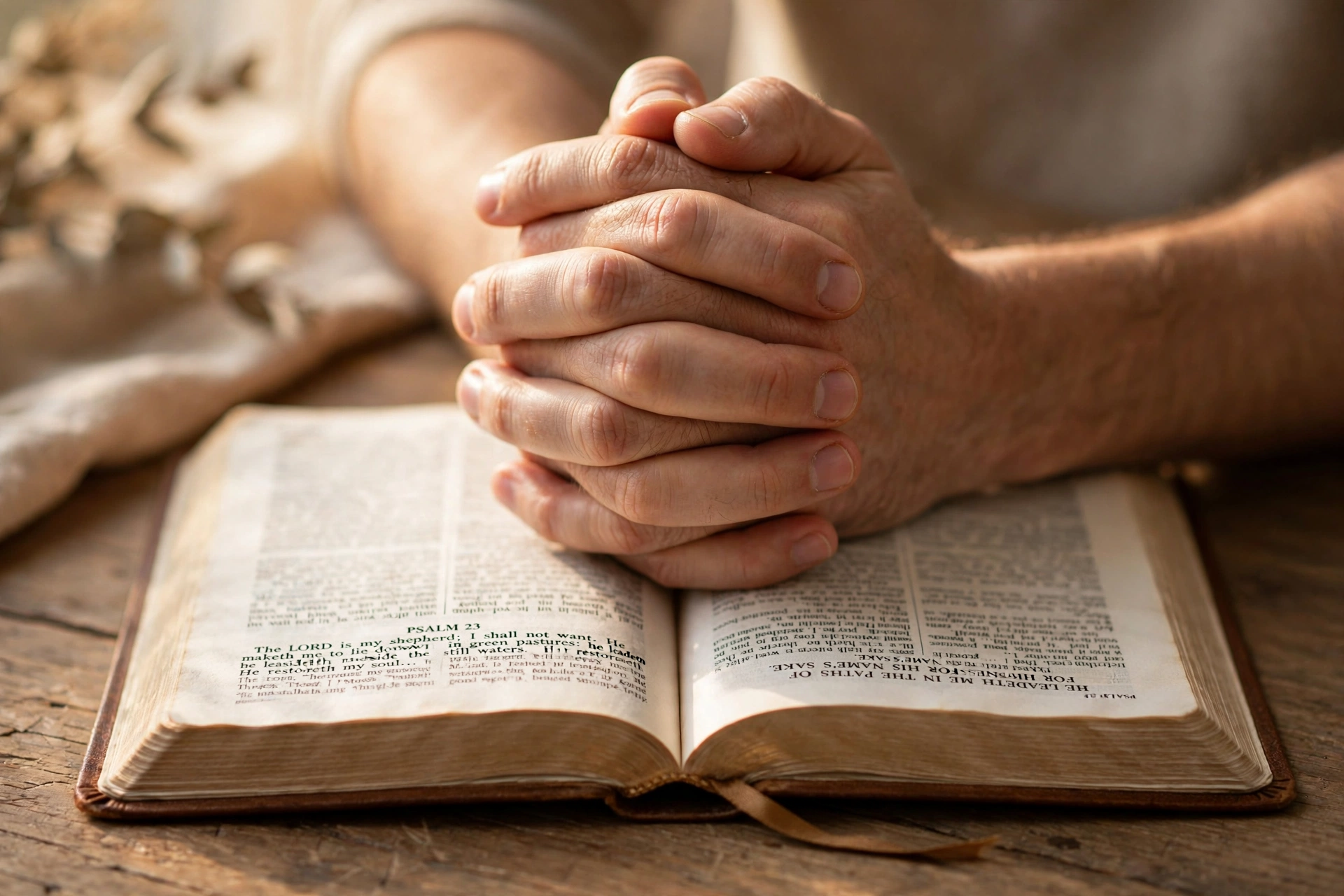
Now faith is the substance of things hoped for, the evidence of things not seen. Hebrews 11:1 (KJV)
The Epistle to the Hebrews was written to Jewish Christians who were facing severe persecution and were tempted to revert to the rituals of the Mosaic Law. The author provides a “hall of fame” of faith to encourage these believers to persevere by looking to the unseen realities of God’s kingdom rather than their immediate suffering.
The Greek word for “substance” is hypostasis (G5287), a term often used in legal contexts to mean a “title deed.” It implies that faith provides the actual reality of what we hope for, even before it manifests physically. To study the nuances of this word further, consult the Strong’s Concordance. Faith acts as the spiritual evidence—the proof—of God’s promises.
The lesson here is that faith is not a blind leap into the dark; it is a calculated step onto a firm foundation provided by God’s character. Today, this means that even when your circumstances look bleak, you can stand on the “title deed” of God’s Word, knowing that His promises are more real than the problems you face.
And Jesus answering saith unto them, Have faith in God. Mark 11:22 (KJV)
This verse occurs during the final week of Christ’s ministry, immediately after He cursed the fig tree. Jesus uses this object lesson to teach His disciples about the power of faith, contrasting the physical appearance of the tree with the spiritual authority granted to those who truly trust in the Father.
In the original Greek, the phrase “have faith in God” can be translated as “have the faith of God.” This implies a faith that originates from Him—a faith that is not limited by human logic or physical limitations. By looking at the Bible Gateway commentary on this passage, we see that Jesus is emphasizing that the source of our strength must be the infinite power of God, not our own internal resolve.
In modern application, this is a call to recalibrate. When you feel overwhelmed, do not look at your own resources or your ability to fix a situation. Instead, fix your eyes upon the character of God. Faith in God means believing that He is capable of doing what He says He will do, regardless of the perceived impossibility.
For we walk by faith, not by sight: 2 Corinthians 5:7 (KJV)
Paul the Apostle wrote these words to the church in Corinth to explain the motivation behind his ministry. Despite his frequent near-death experiences and physical hardships, he remained unmoved because he viewed life through the lens of eternity rather than the lens of temporal experience.
The word “walk” here is peripateo (G4043), which refers to one’s lifestyle or daily conduct. It suggests a continuous, rhythmic motion. We are not just to “believe” in God in moments of crisis, but to make faith the very rhythm of our daily lives. The contrast between “faith” and “sight” highlights the tension between the physical world and the spiritual kingdom.
For the modern Christian, this means that our decisions—how we spend money, how we treat neighbors, and how we react to stress—should be dictated by what God says is true, even when the world tells us something different. It is a commitment to the invisible truth over the visible lie.
Key Takeaways: Bible Verses About Faith in God
| Verse Reference (KJV) | Core Spiritual Message | How to Apply Today |
|---|---|---|
| Hebrews 11:1 | Faith is the legal title deed to God’s promises. | Hold onto God’s Word as your proof during uncertainty. |
| Mark 11:22 | Our faith must rest in God’s power, not ours. | Surrender your need for control and trust His sovereignty. |
| 2 Corinthians 5:7 | Lifestyle is defined by truth, not appearances. | Make choices based on Scripture, even when they seem illogical. |
How Can I Apply Bible Verses About Faith in God in My Daily Life?
When You Feel Overwhelmed at Work
When professional pressures mount, practice the “Pause of Faith.” Step away for three minutes, close your eyes, and recite Hebrews 11:1. Acknowledge that while you see deadlines and stress, God sees the ultimate outcome. Pray specifically: “Lord, I am looking at the mountain, but I choose to trust the One who moves it.” This shifts your perspective from the burden to the Burden-Bearer.
When a Relationship Hurts
In the heat of interpersonal conflict, our natural tendency is to rely on “sight”—our hurt feelings and the other person’s faults. Instead, apply 2 Corinthians 5:7 by choosing to “walk by faith.” Treat the person with the grace God has shown you, trusting that God is working in their heart and yours. Faith in this context means believing that God’s way of reconciliation is better than your way of retaliation.
During Financial Hardship
Financial anxiety often stems from a lack of trust in God’s provision. To apply Mark 11:22, start your day by thanking God for what He has already provided, no matter how small. Create a “Faith Journal” where you write down one way God has provided for you in the past. When fear strikes, read these entries to remind yourself that your Provider has not changed, even if your account balance has.
A Prayer for Faith in God
Guided Scriptural Prayer
Heavenly Father, I come before You today acknowledging that my faith is often weak and easily shaken by the circumstances of this world. Please forgive me for the times I have relied more on my sight than on Your eternal promises. I ask that You would increase my faith, helping me to see the world not as it appears, but as You have declared it to be in Your Word. May my life be a testament to the power of trusting in Your sovereignty, even when the path ahead is obscured by shadows.
Lord, I anchor my soul in the truth that You are my substance and my evidence. When I am overwhelmed, remind me to have faith in You alone. Teach me to walk by faith, making choices that honor You even when it contradicts the logic of the world. Let my heart be a wellspring of trust, rooted deeply in Your unchanging character. In the precious and holy name of Jesus Christ, I pray. Amen.
Frequently Asked Questions About Faith in God in the Bible
Does the Bible say faith is a feeling?
No, the Bible does not define faith as a feeling. In fact, feelings are often volatile and subject to our physical surroundings, whereas biblical faith is defined in Hebrews 11:1 as a “substance” and a “conviction.” Faith is an act of the will, a deliberate choice to rely on the unchanging character of God regardless of how we feel in the moment. While faith can produce peace and joy, it is not dependent upon them. It is a settled assurance that remains intact even when our emotions are in turmoil, anchored firmly in the truth of God’s Word.
Is it a sin to have doubts while believing in God?
Doubt is not necessarily a sin, but a struggle common to the human condition. We see in the Gospels a father who cried out to Jesus, “Lord, I believe; help thou mine unbelief” (Mark 9:24, KJV). Jesus did not rebuke him for his honesty; rather, He honored his desire for more faith. Doubt becomes a problem only when we allow it to drive us away from God rather than toward Him. Instead of hiding your questions, bring them to God in prayer, asking Him to reveal the truth and strengthen your resolve.
How does God grow our faith?
God typically grows our faith through the “school of trial.” James 1:3 (KJV) states, “Knowing this, that the trying of your faith worketh patience.” Just as a muscle is strengthened through resistance training, our faith is refined when we are placed in situations that require us to trust God beyond our own capacity. Through the study of Scripture, consistent prayer, and navigating life’s difficulties while holding onto His promises, our reliance on God moves from a intellectual concept to a deeply ingrained spiritual reality.
What is the difference between faith and works?
The Bible teaches that faith and works are intimately linked, though they serve different functions. Ephesians 2:8-9 (KJV) clarifies that salvation is by grace through faith, not of works, so that no man can boast. However, James 2:17 (KJV) reminds us that “faith, if it hath not works, is dead, being alone.” This means that while our good deeds cannot earn our salvation, they are the necessary evidence that our faith is alive. True faith in God will naturally produce a life that seeks to obey Him and serve others, reflecting the transformation He has wrought within.