
What Does the Bible Say About Faith in God?
The Bible teaches that faith in God is the foundational conviction of the believer, defined as the substance of things hoped for and the evidence of things not seen. It is not merely an intellectual assent to facts, but a transformative, active trust in the person and promises of Jesus Christ.
Scripture consistently portrays faith as the mechanism through which humanity accesses the grace of God. In the Old Testament, faith is often synonymous with “trust” or “leaning upon,” while in the New Testament, the Greek word pistis (Strong’s G4102) carries the nuance of a firm, unwavering persuasion. You can explore the depths of this term through Blue Letter Bible’s lexicon analysis. Faith is not a feeling; it is an active reliance on the unchanging character of the Creator, even when circumstances suggest otherwise.
For the modern Christian, understanding faith is essential because we live in an era of skepticism and temporal obsession. Faith acts as an anchor for the soul, keeping the believer grounded in the eternal reality of God’s sovereignty. Without this, the believer is prone to being “tossed to and fro” by the shifting winds of culture. True biblical faith requires a daily surrender, recognizing that our own understanding is limited, but God’s wisdom is infinite and sufficient for every trial.
Most Powerful Bible Verses About Faith in God (KJV)
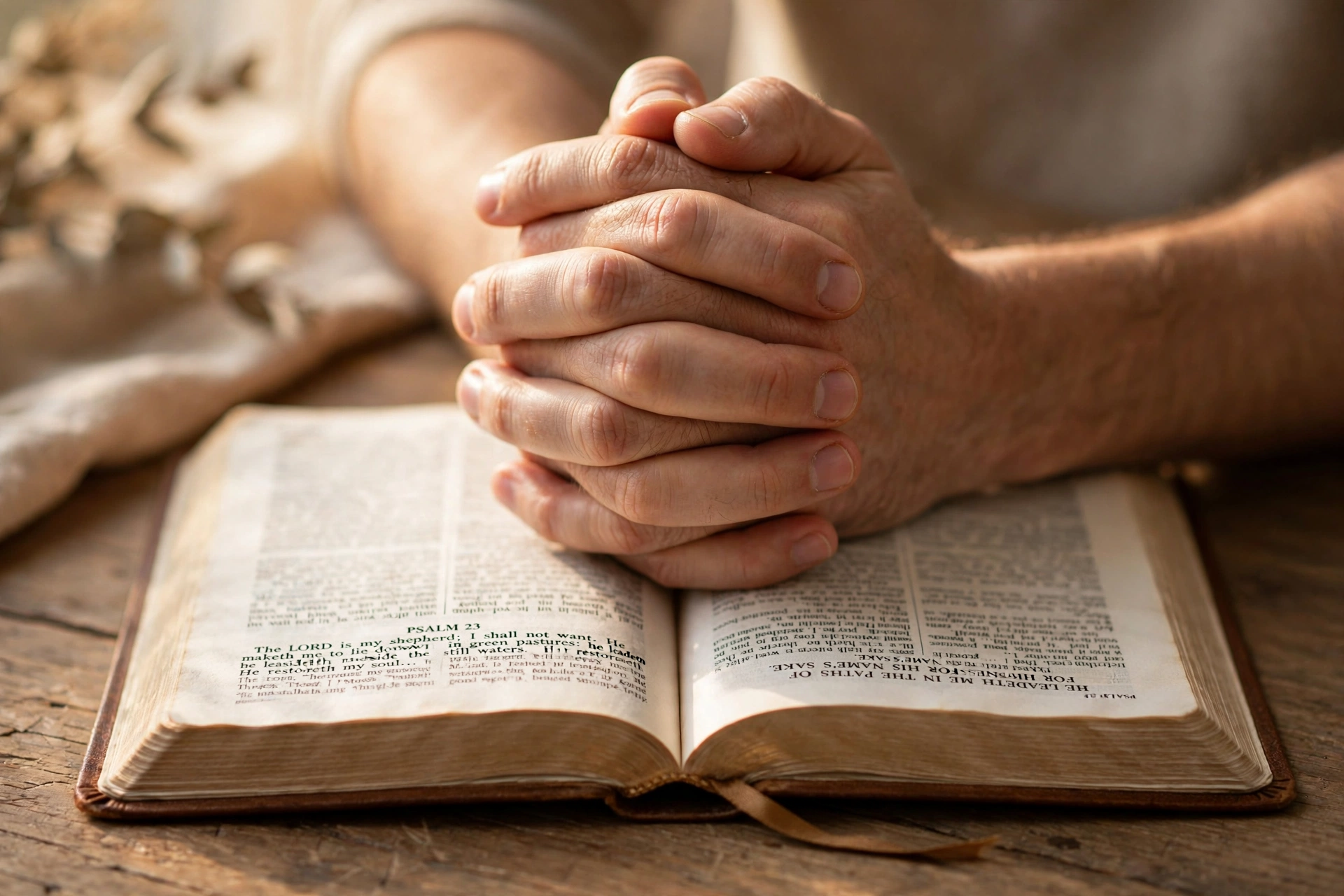
“Now faith is the substance of things hoped for, the evidence of things not seen.” Hebrews 11:1
The Epistle to the Hebrews was written to Jewish Christians who were tempted to abandon their faith in Christ and return to the shadows of the Old Covenant due to severe persecution. The author defines faith here as the “substance” (Greek: hupostasis), which literally means the “foundation” or “under-girding” of our existence. By providing this definition, the author encourages the readers to look beyond their current suffering to the eternal reality of God’s promises.
The term hupostasis is foundational to understanding the weight of this verse. When we look at the Strong’s Concordance entry for this word, we see it implies a “standing under” or a “guarantee.” It is the title deed to a property we haven’t occupied yet. Faith is the spiritual evidence (Greek: elenchos, meaning a conviction or proof) that God is working behind the veil of our human sight.
The spiritual lesson here is that faith is not a blind leap into the dark; it is a step into the light of God’s character. In your modern life, this means that even if you cannot see the resolution to a financial crisis or a health battle, your faith serves as the legal, spiritual evidence that God is already present and active in that situation.
“For by grace are ye saved through faith; and that not of yourselves: it is the gift of God.” Ephesians 2:8
Paul the Apostle wrote this letter to the church at Ephesus to emphasize the supremacy of Christ and the nature of salvation. He addresses the common human tendency to rely on “works” or self-improvement to gain favor with God. Paul clarifies that salvation is entirely a work of God’s grace, and faith is the channel through which that grace is received.
The word “faith” here is pistis, denoting a firm conviction. It is crucial to note that Paul says even this faith is a “gift” (Greek: doron). We do not manufacture faith from our own willpower; rather, it is a capacity granted by the Holy Spirit. This humbles the believer, reminding us that we are entirely dependent on God, not only for our salvation but for the very ability to trust Him.
Modern application involves humility. When you struggle to believe, stop trying to “force” your faith. Instead, pray, “Lord, I believe; help Thou mine unbelief” (Mark 9:24). Acknowledge that your capacity to trust is a gift from God, and ask Him to increase it. You are not earning your standing with God; you are resting in what He has already provided.
“Trust in the LORD with all thine heart; and lean not unto thine own understanding. In all thy ways acknowledge him, and he shall direct thy paths.” Proverbs 3:5-6
Proverbs is the wisdom literature of Israel, often attributed to Solomon. This passage serves as a foundational command for the covenant community. It pits “our own understanding”—our limited, finite, and often biased perspective—against the infinite, omniscient nature of God. To “trust” here is the Hebrew word batach, which means to cast oneself upon something, like a person falling into the arms of a friend.
The Hebrew word batach (Strong’s H982) is a verb of security and refuge. It is the opposite of anxiety. When we “lean not unto our own understanding,” we are essentially refusing to rely on our own analysis of a problem. We are instead choosing to “acknowledge” (Hebrew: yada, to know intimately) God in every facet of our lives.
In your daily life, this means surrendering your need to “figure everything out.” When you face a crossroads, do you immediately begin to worry and strategize, or do you pause to acknowledge God’s presence? True faith is the practice of bringing every decision, no matter how small, before the Lord, trusting that He is the one who ultimately directs your path.
Key Takeaways: Bible Verses About Faith in God
| Verse Reference (KJV) | Core Spiritual Message | How to Apply Today |
|---|---|---|
| Hebrews 11:1 | Faith is the spiritual foundation of reality. | Hold onto God’s promises even when your circumstances look bleak. |
| Ephesians 2:8 | Salvation and faith are gifts of grace. | Stop trying to be “perfect” and rest in God’s provided grace. |
| Proverbs 3:5-6 | Total reliance on God over human logic. | Pray before making decisions rather than relying on your own intellect. |
How Can I Apply Bible Verses About Faith in God in My Daily Life?
When You Feel Overwhelmed by Uncertainty
When the future feels like a fog, stop trying to predict the outcome. Create a “Faith Journal” where you write down one specific promise from Scripture each morning, such as Philippians 4:6-7. Spend five minutes in silence, visualizing yourself handing the burden of the “unknown” over to God. Repeat this daily until your mind recognizes that uncertainty is not a sign of failure, but an opportunity to lean on God’s sovereignty.
When You Are Facing a Major Decision
Before making a significant life choice, implement a 24-hour “Wait and Seek” rule. Instead of rushing to a logical conclusion, commit to fasting or focused prayer for one day. Ask God to align your desires with His will and to reveal any blind spots in your reasoning. By intentionally delaying your own “understanding,” you open the door for the Holy Spirit to guide your path as promised in Proverbs 3:6.
When You Struggle with Doubts About Your Salvation
Doubts often arise when we look at our own performance rather than Christ’s finished work. When you feel “not good enough,” read Ephesians 2:8-9 aloud. Remind yourself that faith is not something you produce; it is a gift you receive. Instead of analyzing your sins, shift your focus to the character of the Savior. Thank God for the gift of faith, recognizing that He is the author and finisher of it.
A Prayer for Faith in God
Guided Scriptural Prayer
Heavenly Father, I come before You today acknowledging that my own strength is insufficient for the challenges I face. Lord, I thank You that faith is not a burden I must carry, but a gift You have graciously bestowed upon me. When my heart is troubled and my understanding is clouded by the chaos of this world, help me to fix my eyes upon You. Grant me the grace to trust in Your sovereignty, knowing that You are the substance of all I hope for.
Lord, please deepen my conviction and quiet my anxious thoughts. I surrender my need to control the outcome of my life and instead choose to lean on Your perfect wisdom. May my life be a testament to the fact that You are faithful to those who seek You. Direct my paths, steady my heart, and increase my faith, so that I may walk in the peace that passes all understanding. In the precious name of Jesus Christ, I pray. Amen.
Frequently Asked Questions About Faith in God in the Bible
Does the Bible say that faith is the same as believing in a set of facts?
No, the Bible distinguishes between intellectual assent and biblical faith. James 2:19 notes that even the devils believe—and tremble—which proves that knowing facts about God is not the same as having saving, transformative faith. True faith involves the heart, the will, and the life. It is a “living” faith that manifests in obedience and trust. According to Hebrews 11:1, faith is a “substance” or a foundational reality, not just a mental agreement with doctrine. To have faith in God is to entrust your entire existence to His care, moving from knowing *about* Him to *knowing* Him personally.
Is it a sin to have doubts while trying to have faith in God?
The Bible does not condemn the presence of doubt, but it encourages us to bring our doubts to God. Consider the father in Mark 9:24 who cried out, “Lord, I believe; help thou mine unbelief.” His honesty was met with grace, not judgment. Doubt becomes a problem only when we allow it to distance us from God rather than using it as a catalyst to seek Him more deeply. Faith is not the absence of doubt; it is the choice to trust God in spite of the questions that linger in your mind.
How does God increase our faith when we feel weak?
God typically increases our faith through the “school of trial.” Romans 5:3-4 explains that tribulation works patience, experience, and hope. Just as physical muscle grows through resistance, our spiritual faith grows when we are forced to rely on God in situations where our own resources fail. Additionally, Romans 10:17 states, “So then faith cometh by hearing, and hearing by the word of God.” By consistently immersing yourself in the Scriptures, you feed your spirit with the truth of who God is, which naturally builds your capacity to trust Him.
What is the difference between “blind faith” and biblical faith?
Biblical faith is never “blind”; it is always based on the historical and experiential evidence of God’s character. We have the testimony of Scripture, the resurrection of Jesus Christ, and the witness of the Holy Spirit. Unlike “blind faith,” which ignores reality, biblical faith acknowledges the reality of the world but chooses to trust in a higher reality—the sovereignty of God. As mentioned in Hebrews 11:1, faith is “the evidence of things not seen.” It is a calculated reliance on the One who has proven Himself trustworthy throughout history, making it a rational response to the truth of God’s Word.