

What Does the Bible Say About Faith in God?
The Bible teaches that faith in God is the foundational response to His revelation, defined as the substance of things hoped for and the evidence of things not seen. It is not merely an intellectual assent to facts, but a total, life-transforming reliance upon the character, promises, and sovereignty of the Almighty.
In the Old Testament, faith is often synonymous with “trust” or “leaning” upon the Lord, while the New Testament clarifies it as an active, living commitment to Jesus Christ. The Greek word for faith, pistis (Strong’s G4102), carries the nuance of conviction, belief, and fidelity. You can conduct a deep-dive word study on this term at the Blue Letter Bible. Faith is the instrument by which the believer apprehends the grace of God; it is the “hand” that receives what God has provided through the finished work of Christ.
Modern Christians often struggle with faith because they mistake it for a feeling or a tool for personal gain. However, biblical faith is anchored in the objective truth of Scripture. It is the steady anchor in the storms of life, shifting our gaze from our limited circumstances to the infinite power of a covenant-keeping God. Without this faith, it is impossible to please Him, for it is the only posture that honors His authority and goodness.
Most Powerful Bible Verses About Faith in God (KJV)
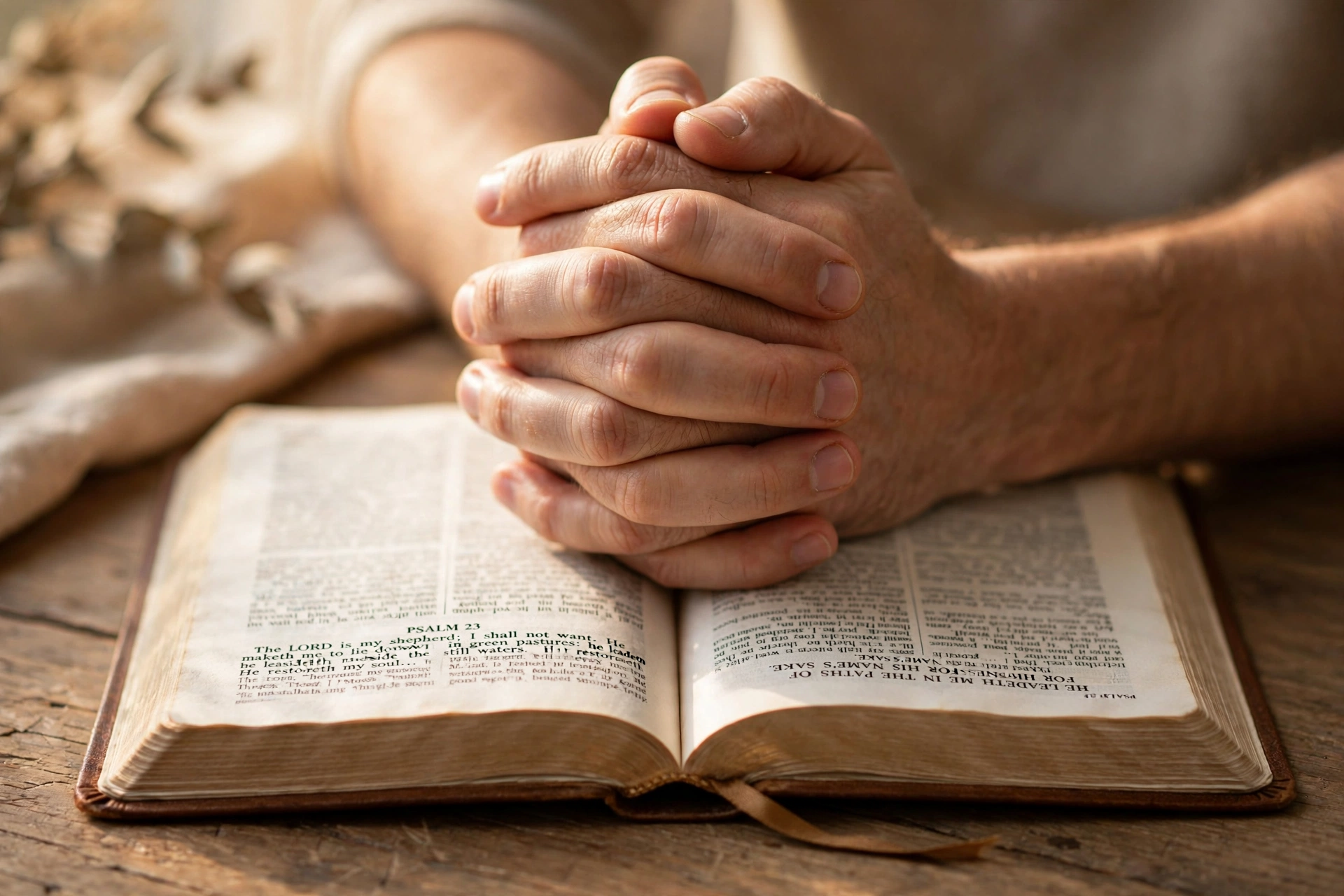
“Now faith is the substance of things hoped for, the evidence of things not seen.” Hebrews 11:1
Hebrews 11 is famously known as the “Hall of Faith.” The author, likely the Apostle Paul or a close associate, wrote to a group of Jewish Christians who were tempted to return to the rituals of the Mosaic Law to escape persecution. By defining faith here, he provides them with the theological bedrock necessary to endure suffering without physical evidence of relief.
The Greek word for “substance” is hupostasis (Strong’s G5287), meaning a foundation or a setting under. It implies that faith gives “reality” to the promises of God before they are physically realized. “Evidence” (elenchos) suggests a conviction or proof that is so powerful it acts as an argument for the truth of the unseen.
The spiritual lesson is profound: faith is not “blind” or irrational. It is based on the character of the One who promised. When we walk by faith, we treat God’s word as more real than our current circumstances, allowing His future promises to dictate our present actions.
“Trust in the LORD with all thine heart; and lean not unto thine own understanding. In all thy ways acknowledge him, and he shall direct thy paths.” Proverbs 3:5-6
These verses, penned by Solomon, serve as a timeless mandate for wisdom. During the time of the monarchy, trust in the Lord was the dividing line between those who relied on foreign alliances and those who relied on the covenant of Sinai. It remains the essential command for every believer navigating the complexities of modern decision-making.
The Hebrew word for “trust” is batach, which implies a sense of safety and security, like a child resting in a parent’s arms. To “lean” (sha’an) suggests supporting oneself on a staff or a wall. Solomon warns us not to use our own finite, fallen human reasoning as our primary support structure, but to rely entirely on the strength of God’s wisdom.
The modern application is clear: we must move from “problem-solving” mode to “God-acknowledging” mode. By bringing Him into every detail of our lives, we shift the burden of our future from our shoulders to His, trusting Him to align our steps according to His perfect will.
“For by grace are ye saved through faith; and that not of yourselves: it is the gift of God.” Ephesians 2:8
Writing from a Roman prison, Paul penned this letter to the church in Ephesus to emphasize their identity in Christ. This verse serves as the theological hinge of the entire epistle, clarifying that human effort, religious ritual, or “good works” cannot secure a right standing with a holy God.
The Greek word for “gift” is doron, which implies a voluntary offering without expectation of return. Our faith is not a self-generated work; it is sparked by the Spirit of God. We are the recipients of grace, and faith is the vessel through which that grace is applied to our souls.
The lesson here is one of total humility. If faith is a gift, then we have no grounds for boasting. This realization should produce a life of gratitude and total dependence on Christ, knowing that our salvation is secure not because of our ability to hold onto Him, but because of His ability to hold onto us.
Key Takeaways: Bible Verses About Faith in God
| Verse Reference (KJV) | Core Spiritual Message | How to Apply Today |
|---|---|---|
| Hebrews 11:1 | Faith gives reality to God’s promises. | Act on God’s Word even when you don’t see results. |
| Proverbs 3:5-6 | Surrender your logic to God’s wisdom. | Pray before making decisions; seek His guidance first. |
| Ephesians 2:8 | Faith is a gift, not a human achievement. | Rest in His grace; stop trying to earn His love. |
How Can I Apply Bible Verses About Faith in God in My Daily Life?
When You Feel Overwhelmed at Work
When professional pressures mount, stop and practice “mental surrender.” Instead of spiraling into anxiety, recite Proverbs 3:5. Close your eyes, visualize yourself literally “leaning” your weight onto God rather than your own stress-filled thoughts. Ask yourself: “Is my performance my god, or is the Lord my God?” Commit your day’s tasks to Him in a short, silent prayer, acknowledging that your career is a stewardship, not your ultimate identity.
When a Relationship Hurts
In the wake of relational conflict, faith is often tested by the desire for revenge or self-protection. Apply Hebrews 11:1 by choosing to believe what God says about your value and your enemy’s value, rather than how you feel in the moment. Pray for the person who hurt you. This “unseen” act of obedience is a physical demonstration of faith that God is the ultimate Judge and Healer, taking the burden of retribution off your shoulders.
During Financial Hardship
Financial stress often triggers a scarcity mindset. To combat this, practice “gratitude accounting.” Each morning, list three things God has provided that you didn’t earn (e.g., breath, salvation, the beauty of nature). Read Ephesians 2:8 to remind your soul that if God gave you the greatest gift—His Son—He is certainly capable of providing your daily bread. This shifts your faith from a focus on what is lacking to a focus on the Giver.
A Prayer for Faith in God
Guided Scriptural Prayer
Heavenly Father, I come before You today, acknowledging that my faith is often weak and easily shaken by the storms of this world. Please forgive me for leaning on my own understanding and for doubting Your goodness when my circumstances are difficult. I ask that You increase my faith, as it is a gift from Your hand, and help me to hold fast to the truth that You are the substance of all my hopes and the anchor of my soul.
Lord, guide my paths as I surrender my heart entirely to You. May I live each day not by sight, but by the conviction of Your Holy Spirit. When I am overwhelmed, remind me that I am saved by Your grace and kept by Your power. Let my life be a testament to the reality of the unseen, reflecting Your love and truth to everyone I meet. In the precious name of Jesus Christ, I pray. Amen.
Frequently Asked Questions About Faith in God in the Bible
Does the Bible say that faith is the same thing as belief?
While often used interchangeably in casual conversation, the biblical concept of faith (pistis) goes deeper than mere intellectual belief. In the New Testament, one can “believe” that God exists—a fact the demons also acknowledge (James 2:19)—but biblical faith requires a total surrender of the will. It is a relational trust that leads to obedience. True faith is an active, living commitment to Jesus Christ, whereas mere belief can remain a stagnant, clinical agreement with facts. Authentic faith produces fruit in the life of the believer.
Is it a sin to have doubts while trying to have faith in God?
The Bible presents doubt not necessarily as a sin, but as a struggle that calls for further leaning upon God. We see this in the life of the man who cried out to Jesus, “Lord, I believe; help thou mine unbelief” (Mark 9:24). Jesus did not rebuke him but honored his honesty. Doubt becomes a problem when it is nurtured into rebellion or willful disbelief. Instead of hiding your questions, bring them to God in prayer. He is big enough to handle your honest inquiries and steady enough to strengthen your resolve.
How does God grow our faith?
God typically grows our faith through the “laboratory” of life’s trials. James 1:2-3 teaches us that the testing of our faith produces patience. By allowing us to face situations where our own strength is insufficient, God forces us to rely entirely on His grace. Through the study of His Word, the practice of prayer, and the faithful endurance of hardship, our spiritual “muscles” are strengthened. Every time we choose to trust Him through a difficult season, our faith moves from a theoretical concept to an experienced reality.
What is the difference between faith and hope in the Bible?
While closely related, they perform different functions in the Christian life. Faith is the current “substance” or foundation upon which we stand (Hebrews 11:1), while hope is the confident expectation of the future fulfillment of God’s promises. Faith is the present-tense conviction that God is who He says He is; hope is the future-tense anticipation of what He will do. You might think of it this way: faith is the anchor that holds the ship in the present, while hope is the light on the horizon toward which the ship is sailing.