
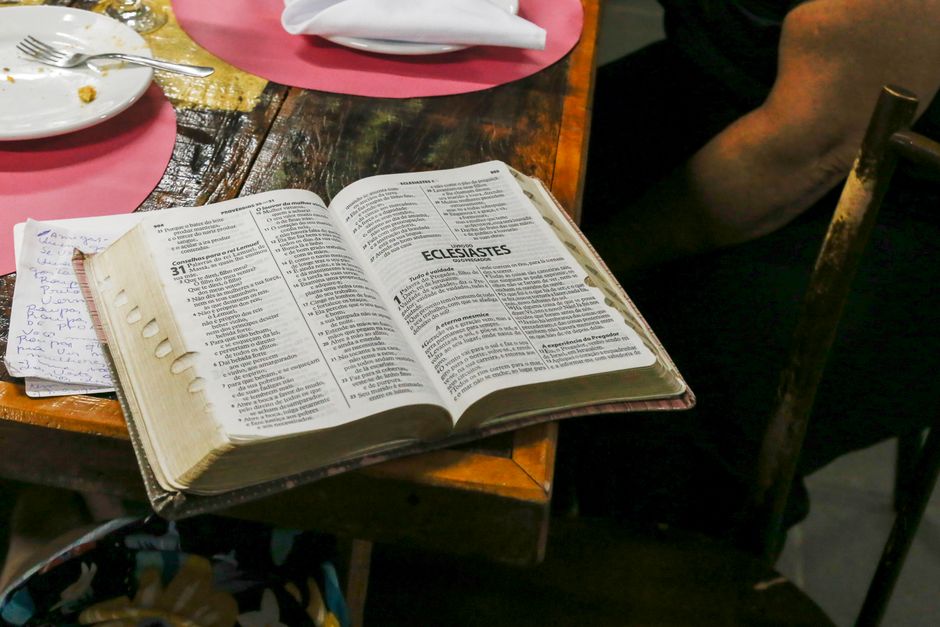
Welcome to this deep dive into one of the most beloved and profound passages in all of Scripture. In this study of Ecclesiastes chapter 3, we will explore the divine rhythm of life, learning how to find peace and purpose in the changing seasons of our existence under the sovereignty of God.
Ecclesiastes 3 - Historical and Spiritual Context
Ecclesiastes, traditionally attributed to King Solomon, is a work of "wisdom literature" that explores the meaning of life from an earthly perspective. In chapter 3, the author shifts his focus from the vanity of human achievement to the divine orchestration of time. Solomon, writing as the "Preacher" (Qoheleth), observes that human life is not a random series of chaotic events, but a structured sequence governed by a Creator who holds eternity in His hands. By contrasting opposing human experiences—birth and death, weeping and laughing, war and peace—he highlights the limitation of human control and the necessity of trusting in God’s perfect timing.
Spiritually, this chapter serves as a soothing balm for the anxious heart. The overarching theme is that while we often feel buffeted by the unpredictable winds of life, every season serves a higher purpose within God’s redemptive plan. The intent of the passage is to move the reader away from the frustration of trying to manipulate their circumstances and toward the serenity of "God-centered living." It teaches us that true wisdom is found in recognizing that we are not the masters of our own timeline; rather, we are participants in a grand, divinely ordered narrative that is beautiful in its own time.

Detailed Verse-by-Verse Commentary
Study of Ecclesiastes 3:1
**"To everything there is a season, a time for every purpose under heaven."**
This foundational verse establishes the principle of divine sovereignty over human chronology. The Hebrew word for "time" here is *zeman*, which refers to a specific, appointed, or fixed period. It implies that God has not merely created the world and left it to chance; He has inscribed a schedule into the fabric of reality. Theologically, this teaches us that our current circumstances—whether they feel like a time of "planting" or "uprooting"—are not accidental. They are part of a deliberate "purpose" (*chephets* in Hebrew), suggesting that God is actively working toward a specific goal in our lives.
Study of Ecclesiastes 3:11
**"He has made everything beautiful in its time. Also He has put eternity in their hearts, except that no one can find out the work that God does from beginning to end."**
This is perhaps the most profound verse in the book. The Hebrew word for "eternity" is *olam*, which can signify both the concept of everlasting time and the "hiddenness" of the divine perspective. God has placed within humanity a longing for something that transcends our current mortal existence. We are "infinite-seeking" creatures trapped in finite bodies. The "beauty" Solomon speaks of is not necessarily what we find pleasant in the moment, but the perfect, fitting nature of God’s work when viewed from the vantage point of eternity. We struggle because we see only the threads of the tapestry, while God sees the finished masterpiece.
Study of Ecclesiastes 3:12-13
**"I know that nothing is better for them than to rejoice, and to do good in their lives, and also that every one should eat and drink and enjoy the good of all his labor—it is the gift of God."**
Solomon concludes that since we cannot master time, the most rational and spiritual response is to embrace the present. He emphasizes that enjoying simple, daily blessings—eating, drinking, and working—is not a sign of worldliness, but a "gift of God." This is a call to "sanctified contentment." Instead of being paralyzed by the mysteries of the future or the regrets of the past, the believer is encouraged to find joy in the immediate task and the immediate meal, recognizing that these small moments are the currency of a life well-lived.

Practical Application for Your Daily Life
Applying Ecclesiastes 3 to your modern life begins with a radical shift in perspective regarding your schedule and your stress. When you find yourself in a season of "tearing down"—perhaps a job loss, a relationship breakdown, or a period of intense grief—remind yourself that this is an appointed time, not a permanent state. You can practice "season-awareness" by intentionally slowing down your internal pace to match the rhythm God has set for you, rather than fighting against the current. In your work and family life, this means being fully present in the current task, knowing that the season for "building up" will surely come in its own time.
Furthermore, cultivate a heart of gratitude for the "simple gifts" mentioned in verse 13. In our fast-paced culture, we often bypass the joy of a shared meal or the satisfaction of honest labor because we are too focused on the next milestone. Practice the spiritual discipline of "savoring": stop to acknowledge the goodness of your daily bread and the dignity of your labor as direct gifts from the Father. By finding joy in the mundane, you effectively anchor your soul in the present, where God’s grace is always available and sufficient for the season you are currently in.
Daily Prayer and Reflection
Guided Scriptural Prayer
Heavenly Father, thank You for the seasons of my life and for Your perfect sovereignty over every moment. I confess that I often struggle when my timeline does not match Your plan, and I ask for the grace to trust Your timing even when I cannot see the end from the beginning. Please help me to find beauty in the current season, whether it is a time of harvest or a time of waiting. Grant me the wisdom to be fully present today, enjoying the simple gifts You have placed before me with a heart of deep gratitude. Amen.
May you walk through this day with a peaceful heart, knowing that you are held securely in the hands of the One who makes all things beautiful in His time. Have a blessed day!