

Welcome to this deep-dive study into the heart of the Book of Esther. In this chapter, we witness the transition from passive observation to courageous action, exploring themes of divine providence, the weight of responsibility, and the power of fasting and intercession in the face of existential crisis.
Esther 4 — Historical and Spiritual Context
Esther 4 occurs during the reign of Ahasuerus (Xerxes I) in the Persian Empire, approximately 473 B.C. Following Haman’s genocidal decree against the Jewish people, Mordecai initiates a public display of mourning, forcing Esther to confront the reality that her royal status cannot shield her from the impending destruction of her heritage. You can read Esther 4 on Bible Gateway to ground yourself in the text.
The overarching theological theme of Esther 4 is the intersection of human agency and divine providence. While God is not explicitly named in the book, His fingerprints are everywhere. This chapter challenges the believer to recognize that personal comfort is never the ultimate goal of life; rather, we are placed in our specific “palaces”—our jobs, families, and communities—for a divine purpose that often requires sacrificial courage.
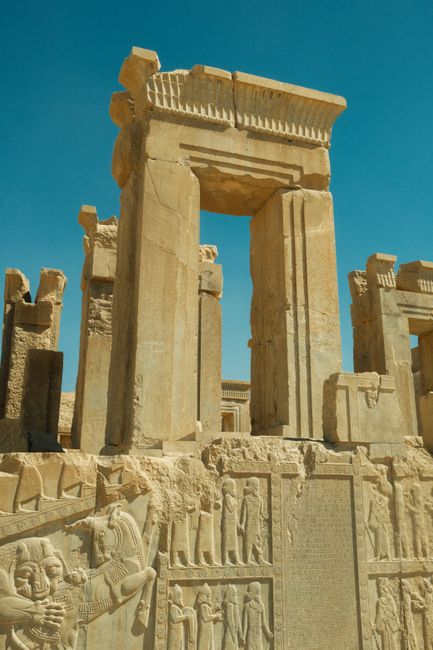
Verse-by-Verse Commentary on Esther 4
Esther 4:1 — Meaning and Explanation
**When Mordecai perceived all that was done, Mordecai rent his clothes, and put on sackcloth with ashes, and went out into the midst of the city, and cried with a loud and a bitter cry;**
Mordecai’s reaction to the royal decree is an outward expression of profound grief and national identification. By rending his clothes and donning sackcloth and ashes, he adopts the traditional Hebrew posture of mourning. This was not merely a personal reaction to a threat against his kin; it was a prophetic act of intercession.
The Hebrew word for “cried” here is *za’aq* (Strong’s H2199), which implies a cry for help or a summons for assistance. Mordecai refused to suffer in silence. He brought the crisis into the “midst of the city,” effectively forcing the Jewish community to acknowledge the reality of their situation. For the believer, this teaches the necessity of lamenting evil and injustice before God and man rather than ignoring the suffering of others.
Esther 4:13 — Meaning and Explanation
**Then Mordecai commanded to answer Esther, Think not with thyself that thou shalt escape in the king’s house, more than all the Jews.**
Mordecai’s message to Esther serves as a reality check regarding the illusion of safety. Esther, hidden behind the walls of the palace, was tempted to believe her position as Queen would grant her immunity. Mordecai corrects this false sense of security, reminding her that her identity as a Jew is inseparable from the fate of her people.
The word “escape” in Hebrew is *malat* (Strong’s H4422), signifying deliverance or being let go. Mordecai is telling Esther that there is no “neutral ground” when it comes to the preservation of God’s people. In a spiritual sense, this serves as a warning against the temptation to remain silent in the face of moral crises simply because we feel personally secure in our current circumstances.

Esther 4:14 — Meaning and Explanation
**For if thou altogether holdest thy peace at this time, then shall there enlargement and deliverance arise to the Jews from another place; but thou and thy father’s house shall be destroyed: and who knoweth whether thou art come to the kingdom for such a time as this?**
This is the hinge of the book. Mordecai expresses a profound theology of providence: if Esther fails to act, God will still fulfill His promises of preservation, but Esther will have missed her divine appointment. The phrase “for such a time as this” reminds us that our circumstances are orchestrated by a sovereign God.
The word “deliverance” is *revachah* (Strong’s H7324), which literally means “wide space” or “respite.” Mordecai asserts that God is not dependent on any single human agent. This humbles the believer; while God invites us to participate in His work, He is always the ultimate Deliverer. Our calling is simply to be faithful to the task assigned to our specific moment in history.
Esther 4:16 — Meaning and Explanation
**Go, gather together all the Jews that are present in Shushan, and fast ye for me, and neither eat nor drink three days, night or day: I also and my maidens will fast likewise; and so will I go in unto the king, which is not according to the law: and if I perish, I perish.**
Esther’s resolution marks her transformation from a sheltered queen to a courageous leader. She acknowledges the danger—entering the king’s presence unsummoned was punishable by death—but she chooses obedience to God over the law of man. Her request for corporate fasting reveals that she understands the battle is spiritual, not merely political.
The phrase “if I perish, I perish” is an act of absolute surrender. It is not an expression of despair, but of total commitment to the outcome God ordains. By fasting, Esther and the Jews were stripping away their reliance on physical sustenance, turning instead to the Creator. You can find further historical context on this event at Blue Letter Bible.

How to Apply Esther 4 in Your Daily Life
Applying Esther 4 in the modern world requires us to look at our own “palaces.” Perhaps your palace is a high-pressure corporate job, a position in local government, or even a role within your family dynamic. Like Esther, you may feel that speaking up about your faith or standing for righteousness could cost you your social standing, your promotion, or your comfort. The lesson here is that God has placed you exactly where you are for a reason. Instead of asking “How can I stay safe?”, ask “How can I be a vessel for God’s truth in this specific moment?”
Practical application involves intentional intercession. When you face a crisis—whether it is a difficult diagnosis, a moral dilemma at work, or a family breakdown—do not rely solely on your own wits. Esther’s first response was to call for a fast. In your daily life, this means prioritizing prayer and seeking the counsel of other believers before taking action. When you do act, do so with the same “if I perish, I perish” resolve, trusting that your life is ultimately in God’s hands, not in the hands of the people you fear.
A Prayer Based on Esther 4
Guided Scriptural Prayer
Heavenly Father, I acknowledge that You have placed me in my current circumstances for a divine purpose. When I am tempted to prioritize my own comfort or safety over Your truth, remind me of Esther’s courage and her resolve: “If I perish, I perish.” Grant me the wisdom to recognize the needs of those around me and the boldness to act when You call me to stand in the gap. Help me to remember that You are the true Deliverer, and that my life finds its deepest meaning when it is poured out for Your kingdom. May I be found faithful in this, my “time as this.” Amen.
Frequently Asked Questions About Esther 4
What is the main message of Esther 4?
The main message of Esther 4 is the concept of divine providence and the responsibility of the believer to act courageously in the face of injustice. Even though God is not mentioned by name, His sovereignty is evident in the timing of Esther’s rise to the throne. The chapter teaches that God places us in specific positions of influence not for our own security, but to be agents of deliverance for others. When we face moral crises, we are called to seek God through fasting and prayer, then act with total commitment, trusting Him with the outcome.
What does “for such a time as this” mean in Esther 4:14?
This phrase, spoken by Mordecai to Esther, suggests that her life and her position as Queen were not accidental. It implies that God orchestrates human history to place specific people in specific roles to accomplish His purposes. It serves as a powerful reminder for every believer that their current location, career, and relationships are potential platforms for God’s work. It challenges the reader to stop viewing their life through the lens of self-interest and instead view it as a strategic assignment from the Almighty for the benefit of His people and His glory.
Why did Esther and the Jews fast for three days in Esther 4:16?
In the ancient Near East, fasting was a profound sign of mourning, repentance, and total dependence on God. By choosing to neither eat nor drink for three days, Esther and the Jewish community were physically demonstrating that their survival depended entirely on God’s intervention, not on their own plans or Esther’s charm. It was a corporate act of spiritual preparation. Before Esther could perform a dangerous, world-altering act, she needed to align her heart and her people with God’s will. This teaches us that before we face our “kings,” we must first meet with the King of Kings.
May you be emboldened by the truth of God’s sovereignty as you walk out your purpose today.