
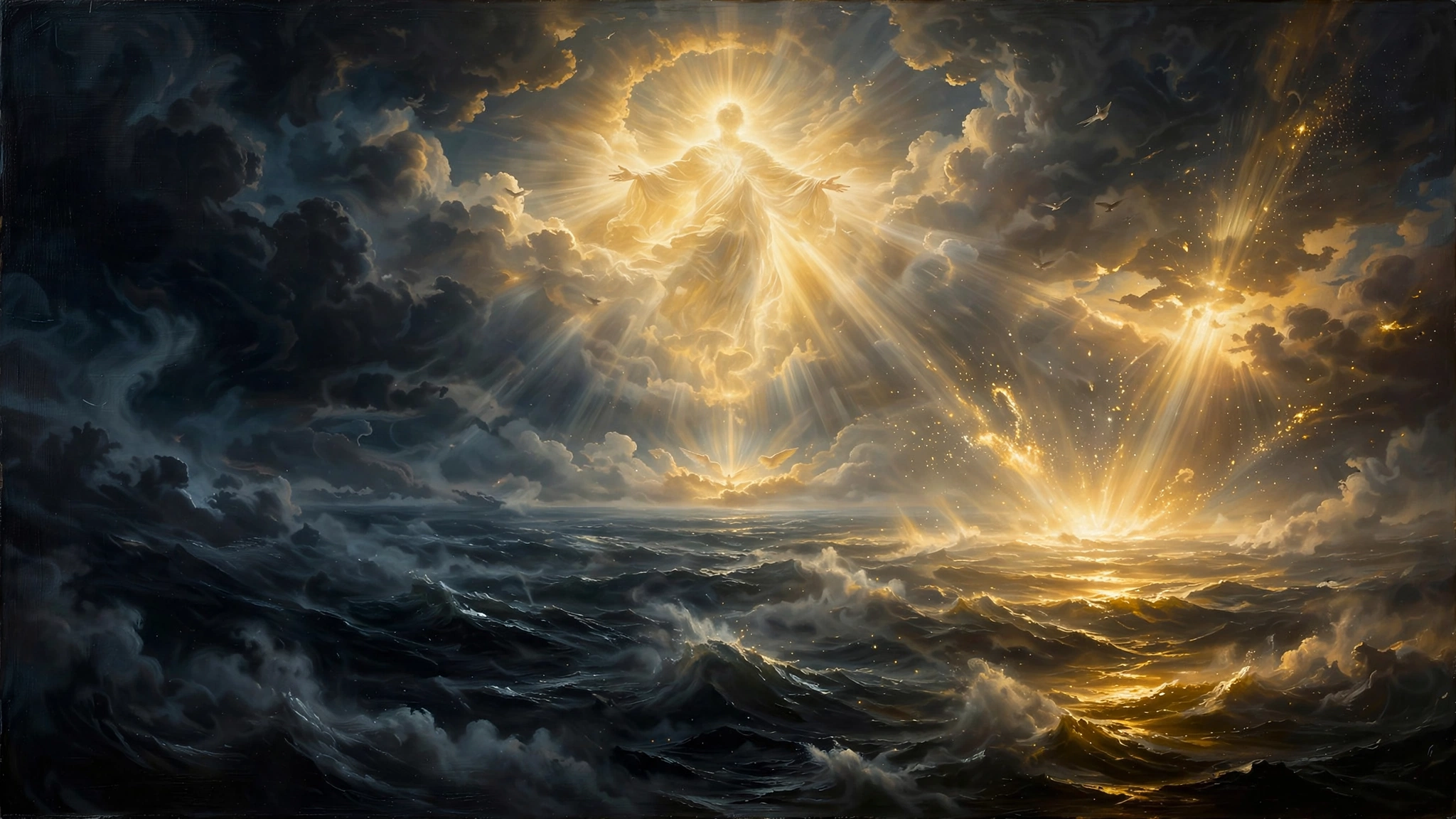
Genesis 1 – Historical and Spiritual Context
Genesis 1 serves as the foundational cornerstone of the entire biblical narrative, written under the inspiration of the Holy Spirit—traditionally attributed to Moses—to provide the Israelites with a definitive understanding of their origin and their relationship to the Creator. In an ancient Near Eastern world saturated with polytheistic myths where gods were birthed from chaos or conflict, the Genesis account stands as a radical, revolutionary declaration of monotheism. It portrays a God who exists outside of time and matter, bringing the universe into existence not through struggle, but through the sovereign, effortless power of His spoken Word. The text is not intended as a modern scientific textbook, but rather as a theological polemic designed to establish that the cosmos is not a product of chance, but a deliberate, ordered creation by a purposeful, loving God.
The overarching spiritual theme of Genesis 1 is the sovereignty of God and the inherent dignity of humanity as His image-bearers. By organizing creation into six distinct days of forming and filling, the author emphasizes that God is a God of order, beauty, and intentionality. The climax of this narrative—the creation of man and woman—reveals that humanity is the pinnacle of creation, designed for relationship with the Divine and entrusted with the stewardship of the earth. Understanding this chapter is essential for the modern believer because it anchors our identity: we are not cosmic accidents, but intentional creations crafted for a specific purpose, living in a world that, despite its fallen state, still reflects the glorious handiwork of its Architect.
Detailed Verse-by-Verse Commentary
Study of Genesis 1:1
“In the beginning God created the heavens and the earth.”
This verse is the most significant declaration in the history of theology. The Hebrew verb used for “created” is bara, a term exclusively reserved for divine activity. Unlike human craftsmanship, which requires pre-existing materials, bara signifies creation ex nihilo—out of nothing. The Hebrew name for God here is Elohim, a plural noun that hints at the complexity of the Godhead, suggesting that even at the dawn of time, the Trinity was present and active. This verse establishes that God is transcendent (separate from creation) yet imminent (involved in its formation), setting the stage for a relationship between the Creator and the created.
Study of Genesis 1:3
“And God said, ‘Let there be light,’ and there was light.”
Here we encounter the concept of the “creative Word.” In the ancient world, speech was an extension of one’s authority and essence. The Hebrew word for “said” is amar, implying an utterance of power. It is profound to note that light, the symbol of truth, holiness, and revelation, is the first thing called into existence. This mirrors the New Testament revelation in John 1:1-5, where Jesus is identified as the Light of the world. Spiritually, this suggests that God’s primary act in any situation—whether in the chaos of creation or the darkness of a human heart—is to introduce His light to dispel the shadows.
Study of Genesis 1:27
“So God created mankind in his own image, in the image of God he created them; male and female he created them.”
The term “image of God” (Hebrew: tselem Elohim) is the bedrock of human dignity. In ancient cultures, only kings were considered the “image” of a god, meant to represent that deity’s rule on earth. Genesis 1 revolutionizes this by declaring that all humans—regardless of status, gender, or background—are royalty. Being made in His image means we possess the capacity for moral reasoning, creative expression, relational depth, and spiritual communion. It is a mandate to reflect God’s character in the world, acting as His stewards and representatives in every sphere of life.
Practical Application for Your Daily Life
Applying Genesis 1 to your daily life begins with a shift in perspective regarding your identity and your work. When you wake up, remind yourself that you are not a random collection of atoms, but a deliberate creation made in the image of a sovereign God. This truth should transform how you interact with others; if every person you encounter is also an image-bearer of God, you are called to treat them with radical dignity and grace, even when it is difficult. In your professional life, view your work as an extension of God’s creative activity. Whether you are building spreadsheets, teaching children, or performing manual labor, you are participating in the “filling” and “subduing” of the earth, bringing order and beauty to your corner of the world.
Furthermore, cultivate a rhythm of rest and reflection that mirrors God’s own pattern of creation. Just as God established a cycle of work and completion, you must learn to step back and declare your work “very good.” In your spiritual walk, spend time in the “light” of His Word daily, allowing His truth to illuminate the dark or chaotic areas of your thoughts and anxieties. By anchoring your life in the foundational truth that God is the author of your story, you can move through your daily responsibilities with a sense of calm, knowing that the same God who brought light out of darkness is actively working to bring order and purpose to your life today.
Daily Prayer and Reflection
Guided Scriptural Prayer
Heavenly Father, Creator of the heavens and the earth, I stand in awe of Your sovereign power and the intentionality of Your design. Thank You for crafting me in Your image and calling me to reflect Your light and love in this world. As I navigate the challenges of today, help me to see others through Your eyes and to perform my work with a spirit of excellence and stewardship. May my life be a testament to Your creative grace, bringing order and beauty to the places You have placed me. Amen.
<hr />
<p style=”text-align: center; color: #64748b; font-size: 14px; font-style: italic;”>We hope this study guide on Genesis 1 blessed your day.</p>