
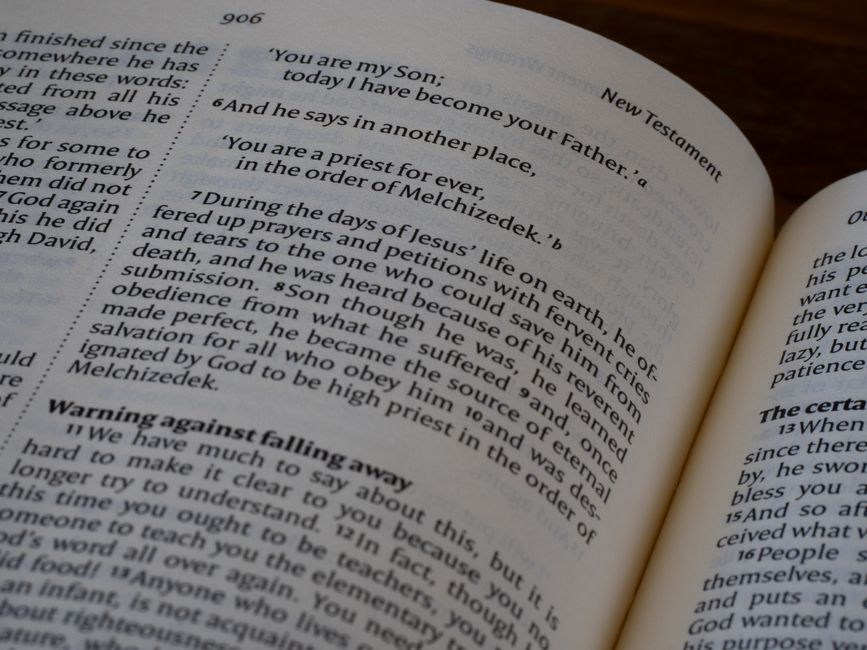
Welcome to this deep dive into the profound mysteries of Hebrews chapter 6, a passage that serves as both a stern warning and a comforting anchor for the soul. Together, we will explore the call to spiritual maturity, the dangers of drifting from the faith, and the absolute certainty of God’s promises in Christ Jesus.
Hebrews 6 — Historical and Spiritual Context
Hebrews 6 was written to a community of Jewish Christians facing intense persecution and the temptation to revert to the rituals of the Mosaic Law. Composed likely before the destruction of the Jerusalem Temple in 70 AD, the author—whose identity remains a subject of scholarly debate—urgently calls these believers to move beyond the “first principles” of the faith toward spiritual maturity.
The overarching theme of this chapter is the necessity of perseverance in the grace of God. It matters deeply to the modern believer because it addresses the universal struggle of spiritual stagnation. By contrasting the danger of apostasy with the reliability of God’s immutable oath, the author provides a roadmap for holding fast to the hope set before us. You can read Hebrews 6 on Bible Gateway to ground yourself in the text before we proceed.

Verse-by-Verse Commentary on Hebrews 6
Hebrews 6:1 — Meaning and Explanation
“Therefore leaving the principles of the doctrine of Christ, let us go on unto perfection; not laying again the foundation of repentance from dead works, and of faith toward God,”
The author calls the reader to move beyond elementary teachings to reach spiritual maturity. The Greek word for “perfection” here is teleiotēs (Strong’s G5047), which implies not sinless perfection, but rather the completion or full growth of a believer. The “foundation” mentioned refers to the initial, necessary steps of conversion that should not be the limit of one’s spiritual life.
Historically, this addressed those who were “stuck” in the transition between Judaism and Christianity. The “dead works” likely refer to the rituals of the Law, which, while formerly ordained by God, could no longer provide the life found only in the finished work of Christ. The spiritual lesson is that the Christian life is intended to be one of constant progression; we are meant to grow from milk to solid food.
Hebrews 6:4 — Meaning and Explanation
“For it is impossible for those who were once enlightened, and have tasted of the heavenly gift, and were made partakers of the Holy Ghost,”
This verse introduces one of the most debated warnings in Scripture regarding the state of those who appear to participate in the life of the church but ultimately reject the faith. The term “enlightened” (Greek: phōtizō, Strong’s G5461) suggests an intellectual or spiritual illumination, often associated with the initial reception of the Gospel message.
Theologically, this passage has sparked centuries of debate regarding the security of the believer. However, as Matthew Henry often noted, the warning is not meant to cast doubt on the salvation of the faithful, but to serve as a severe caution against the hardening of the heart. The “impossibility” of renewal mentioned here refers specifically to the act of “crucifying to themselves the Son of God afresh,” a total and final apostasy that rejects the only means of grace.

Hebrews 6:11 — Meaning and Explanation
“And we desire that every one of you do shew the same diligence to the full assurance of hope unto the end:”
The author encourages the readers to demonstrate active “diligence” (Greek: spoudē, Strong’s G4710) to maintain their hope. This “full assurance” is not a feeling that fluctuates, but a settled conviction anchored in the character of God. It is the practical outworking of faith that sustains a believer through the “end” or the completion of their earthly race.
This verse bridges the gap between theology and practical living. It teaches that the antidote to spiritual drift is not more head knowledge, but a dedicated, diligent pursuit of God. When we serve others and remain faithful in the mundane tasks of life, we are actively strengthening the “anchor” of our soul, ensuring that our hope remains fixed on the promise of Christ’s return.
Hebrews 6:19 — Meaning and Explanation
“Which hope we have as an anchor of the soul, both sure and stedfast, and which entereth into that within the veil;”
This is the climax of the chapter, using the metaphor of an anchor to describe our hope in Christ. The “veil” refers to the Holy of Holies in the Tabernacle, symbolizing the very presence of God in heaven. Just as an anchor is thrown downward into the depths to hold a ship, our “hope” is cast upward into the heavenly sanctuary where Jesus serves as our High Priest.
The Greek word for “sure” is asphalēs (Strong’s G804), meaning certain or reliable. Because Christ has entered into the presence of the Father on our behalf, our security is not based on our own strength or faithfulness, but on the immutable nature of God’s oath. It is a powerful reminder that in the storms of life, our connection to God is secure because it is held by the One who has already passed through the veil for us.

How to Apply Hebrews 6 in Your Daily Life
Applying Hebrews 6 begins with a commitment to move from “milk to meat.” In your spiritual walk, this means refusing to be satisfied with merely knowing the stories of the Bible. Instead, cultivate a daily discipline of study and prayer that seeks to understand the “deep things” of God. If you find your prayer life has become repetitive or your Bible reading stagnant, ask the Holy Spirit to sharpen your appetite for the deeper truths of His Word.
In your family and work life, this chapter encourages an “anchor” mentality. When work becomes stressful or family dynamics feel chaotic, remind yourself that your true security is not found in your performance, your bank account, or the approval of others. Your anchor is in heaven. By living with this “full assurance of hope,” you can be a steadying presence for those around you, offering peace in the midst of turmoil because your own soul is anchored to the unchanging promise of God.
A Prayer Based on Hebrews 6
Guided Scriptural Prayer
Heavenly Father, I thank You that You are the God of immutable promises who cannot lie. I confess that my heart often drifts toward the “dead works” of my own effort, and I ask that You would grant me the diligence to press on toward full maturity in Christ. May my life be anchored firmly within the veil, fixed upon the work of my Great High Priest, Jesus. When the storms of life arise, let my hope be the steadying force that keeps me from drifting. I trust in Your oath and Your grace, now and forever, Amen.
Frequently Asked Questions About Hebrews 6
What is the main message of Hebrews 6?
The main message of Hebrews 6 is a dual call: to persevere in spiritual growth and to trust entirely in the certainty of God’s promises. The author warns against the danger of spiritual stagnation and the catastrophic consequences of falling away from the truth. By using the metaphor of an anchor, the chapter emphasizes that the believer’s security is found not in personal merit, but in the finished work of Jesus Christ, who has entered the presence of God as our eternal High Priest.
Who wrote Hebrews and why?
While the author of Hebrews is anonymous, the purpose is clear: to encourage Jewish Christians who were tempted to return to Judaism to escape persecution. The author writes to demonstrate the superiority of Christ over the Old Covenant system. Hebrews 6 specifically serves to move these believers past their elementary understanding of the faith, urging them to mature in their understanding of Christ’s priesthood so they might remain faithful under pressure. You can explore further scholarly insights on Blue Letter Bible.
What does Hebrews 6:4-6 mean regarding salvation?
Hebrews 6:4-6 is one of the most solemn passages in the New Testament. It describes those who have been “enlightened” and experienced the power of the Holy Spirit, yet fall away. Most theologians interpret this as a hypothetical warning or a description of apostasy—those who reject the only sacrifice for sin. Rather than teaching that a genuine believer can lose their salvation, it emphasizes the absolute necessity of continuing in faith and warns against the hardness of heart that would lead one to reject the Gospel after having clearly understood it.
May the peace of God, which surpasses all understanding, guard your heart and mind as you continue to grow in the grace and knowledge of our Lord and Savior, Jesus Christ.