
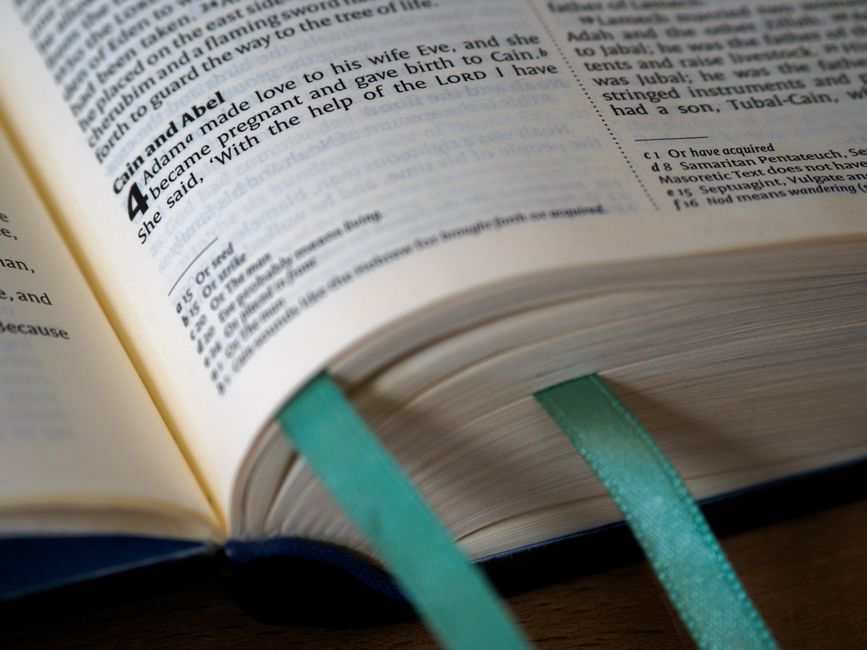
Welcome to this deep dive into one of the most radiant chapters of the Old Testament. As we explore Isaiah 9, we will uncover the profound contrast between the darkness of human rebellion and the brilliant, eternal light of the coming Messiah.
Isaiah 9 — Historical and Spiritual Context
Isaiah 9 is set against the backdrop of the Syro-Ephraimite War during the 8th century B.C., as the northern kingdom of Israel faced the looming threat of Assyrian conquest. Isaiah prophesies to a nation suffering from the consequences of their apostasy, offering a stark warning of judgment alongside the promise of a future, light-bearing King. You can read Isaiah 9 on Bible Gateway to ground yourself in the original text.
Theologically, this chapter serves as a bridge between the despair of human failure and the hope of divine redemption. For the modern believer, it illustrates that no matter how deep the national or personal darkness may be, the light of Christ is sovereign and sufficient. It reminds us that our hope is not founded on human political systems or earthly strength, but on the “Wonderful Counselor” who governs with justice and peace.
Verse-by-Verse Commentary on Isaiah 9
Isaiah 9:2 — Meaning and Explanation
“The people that walked in darkness have seen a great light: they that dwell in the land of the shadow of death, upon them hath the light shined.”
This verse marks the transition from the gloom of judgment to the dawn of messianic hope. Historically, it refers to the region of Galilee (Zebulun and Naphtali), which was the first to suffer under the Assyrian invasion, yet it acts as a prophecy of Christ’s future ministry in that same region. The Hebrew word for light is ‘owr (Strong’s H216), denoting not just physical illumination, but divine revelation and spiritual deliverance.
The “shadow of death” (Hebrew: tsalmaveth) describes a state of total hopelessness and spiritual separation from God. Isaiah declares that the coming Messiah is not merely a flicker of hope, but a “great light” that breaks the suffocating darkness of sin. For the believer, this is a reminder that Christ is the light of the world, capable of penetrating the darkest corners of our lives, whether they be depression, grief, or the lingering consequences of past mistakes.

Isaiah 9:6 — Meaning and Explanation
“For unto us a child is born, unto us a son is given: and the government shall be upon his shoulder: and his name shall be called Wonderful, Counsellor, The mighty God, The everlasting Father, The Prince of Peace.”
This verse is the pinnacle of Old Testament messianic prophecy, identifying the future King as God Himself in human form. The phrase “son is given” emphasizes the incarnation—the willing gift of the Father’s love. The titles assigned to the Messiah are profound: “Wonderful” (pala’, Strong’s H6381) implies something beyond human comprehension, a miracle of divine intervention.
The title “Mighty God” (El Gibbor) leaves no room for doubt regarding the deity of Jesus Christ. As Matthew Henry notes, this government is not one of earthly coercion, but of internal transformation. When Isaiah says the government is upon His shoulder, he uses the Hebrew word misrah, signifying the weight of sovereignty. Christ carries the burden of our redemption and the administration of His kingdom, ensuring that His rule is characterized by wisdom, eternal protection, and profound peace.
Isaiah 9:7 — Meaning and Explanation
“Of the increase of his government and peace there shall be no end, upon the throne of David, and upon his kingdom, to order it, and to establish it with judgment and with justice from henceforth even for ever. The zeal of the LORD of hosts will perform this.”
Isaiah here confirms that the Messiah’s kingdom is not finite or subject to the collapse of human empires. The “increase” of His government implies a kingdom that grows in influence and depth, transforming hearts throughout history. The Hebrew word for zeal, qin’ah (Strong’s H7068), conveys an intense, burning passion—a jealous commitment that God has to fulfill His covenant promises.
This verse provides the believer with immense security. We live in a world of shifting political landscapes and crumbling institutions, yet we serve a King whose justice is eternal. The “zeal of the Lord of hosts” is the guarantee that God will bring His purposes to pass. We can rest in the knowledge that our future is anchored in a kingdom that is being established right now, through the reign of Christ in the hearts of His people.

Isaiah 9:13 — Meaning and Explanation
“For the people turneth not unto him that smiteth them, neither do they seek the LORD of hosts.”
This verse serves as a sobering indictment of a people who remain stubborn despite divine discipline. The “smiting” refers to the chastisements God uses to get our attention when we stray. In the Hebrew text, the word for “seek” is darash (Strong’s H1875), which means to tread, to frequent, or to consult as an oracle. It implies an active, intentional pursuit of God’s will.
The spiritual lesson here is the danger of a hardened heart. When life becomes difficult, our first instinct is often to blame our circumstances or to search for human solutions. Isaiah reminds us that these difficulties are often “divine nudges” intended to return us to the source of our strength. True repentance is not just feeling bad about our sin, but turning from our self-reliance and actively seeking the counsel of the Lord of hosts in every situation.
How to Apply Isaiah 9 in Your Daily Life
Applying the truths of Isaiah 9 involves moving from theological understanding to daily surrender. In your family life, look at the titles of the Messiah—Wonderful Counselor and Prince of Peace—and invite Him into your home. When tensions rise or decisions need to be made, stop and pray together, acknowledging that the “government” of your household belongs to the Prince of Peace, not to your own anxieties or temper.
In your workplace, you can model the “justice and judgment” mentioned in verse 7 by being a person of integrity and fairness. When you face professional darkness—perhaps a toxic environment or the fear of failure—remember that you are a child of the “Great Light.” You do not have to operate out of fear or cutthroat ambition. Instead, you can work with the quiet confidence that your ultimate promotion and security come from the Lord of hosts, who is working behind the scenes of your career.
A Prayer Based on Isaiah 9
Guided Scriptural Prayer
Heavenly Father, I thank You that even when I walk through the darkest valleys, the light of Your Messiah has shined upon me. You are my Wonderful Counselor and the Prince of Peace, and I surrender the government of my life to Your capable shoulders. Please soften my heart so that I may always seek You, especially when life feels overwhelming or difficult. I trust in Your zeal to fulfill Your promises in my life and in this world. May Your kingdom of justice and peace continue to grow within me today. Amen.
Frequently Asked Questions About Isaiah 9
What is the main message of Isaiah 9?
The main message of Isaiah 9 is the contrast between the darkness of human rebellion and the brilliant hope of the coming Messiah. It serves as a prophecy of the birth of Jesus Christ, who is described as the “Mighty God” and “Prince of Peace.” The chapter warns that judgment is inevitable for those who reject God, yet it promises an eternal, righteous kingdom for those who recognize the Messiah’s authority. It is a message of hope for the brokenhearted, assuring them that God is actively working to redeem His people.
Who wrote Isaiah and why?
The book of Isaiah was written by the prophet Isaiah, the son of Amoz, who ministered in Jerusalem during the reigns of Uzziah, Jotham, Ahaz, and Hezekiah. He wrote to call the people of Judah back to covenant faithfulness and to warn them of the coming judgment by foreign powers. However, Isaiah also wrote to provide comfort to the faithful remnant, offering profound prophecies about the future Messiah who would eventually restore Israel and bring salvation to the Gentiles.
What does Isaiah 9:6 mean for Christians today?
For Christians, Isaiah 9:6 is the foundational prophecy of the Incarnation. It confirms that Jesus is not merely a prophet or a teacher, but God Himself who took on human flesh to save His people. The titles given to the Messiah—Wonderful Counselor, Mighty God, Everlasting Father, and Prince of Peace—provide a comprehensive view of who Jesus is to the believer. It means that in every situation, we have access to divine wisdom, eternal security, and a peace that surpasses human understanding, because the very Ruler of the universe is our Savior and friend.
May the light of the Prince of Peace shine brightly in your heart and home as you continue your walk with Him.