
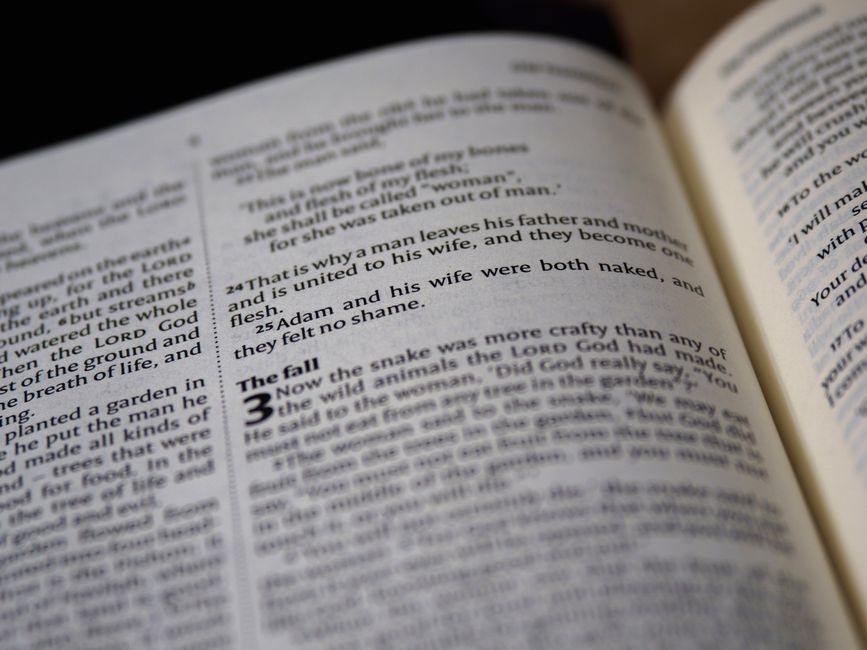
Welcome to this deep-dive exploration of Mark chapter 14, a pivotal section of Scripture that chronicles the final, agonizing, and glorious steps of our Lord Jesus Christ toward the Cross. In this study, we will uncover profound truths regarding sacrificial devotion, the reality of betrayal, the weight of the cup of suffering, and the ultimate sovereignty of God’s redemptive plan.
Mark 14 — Historical and Spiritual Context
Mark 14 provides a detailed historical account of the events leading up to the crucifixion of Jesus, written by John Mark under the influence of the Apostle Peter. Composed likely in the late 50s or early 60s AD for a Roman audience, it emphasizes Jesus as the suffering Servant who acts with authority and urgency. You can read Mark 14 on Bible Gateway to ground yourself in the text before we proceed.
Theologically, this chapter serves as the climax of the Gospel of Mark, shifting from public ministry to the private agony of the Passion. For the modern believer, Mark 14 is a mirror reflecting our own frailty, the necessity of total surrender to the Father’s will, and the assurance that even in our darkest hours of abandonment, Christ walks the path of suffering to secure our eternal reconciliation.

Verse-by-Verse Commentary on Mark 14
Mark 14:3 — Meaning and Explanation
“And being in Bethany in the house of Simon the leper, as he sat at meat, there came a woman having an alabaster box of ointment of spikenard very precious; and she brake the box, and poured it on his head.”
The act of the woman in Mark 14:3 is a profound display of extravagant worship that defies human logic. The “alabaster box” contained nard, a costly perfume imported from India, valued at nearly a year’s wages. In the Greek, the term for “very precious” is *polytimos* (G4186 from Strong’s Concordance), meaning “held in honor” or “highly prized.” By breaking the box, she ensured that the oil could not be reused or sold, signifying a total, non-retractable offering to her Lord.
Spiritually, this woman models the heart of a true disciple. While the disciples were concerned with the utility of the ointment, she was concerned with the honor of the King. Matthew Henry notes that “what is bestowed upon Christ is not wasted,” a direct rebuke to the utilitarian spirit of the age. She anticipated Jesus’ burial before the others understood his mission, teaching us that true intimacy with God often leads to spiritual foresight and radical, sacrificial giving.

Mark 14:24 — Meaning and Explanation
“And he said unto them, This is my blood of the new testament, which is shed for many.”
During the Last Supper, Jesus institutes the New Covenant, fundamentally shifting the focus from the blood of bulls and goats to His own life-blood. The Greek word for “shed” is *ekchynnomenon* (G1632), which implies a violent, pouring out—not a mere leaking, but a complete emptying. This connects the Passover meal to the impending sacrifice on the Cross, where Jesus would become the final, perfect Passover Lamb.
The significance of the “new testament” (*diatheke* – G1242) is that it is a covenant established by death. In the ancient world, a covenant was often ratified through blood; here, Jesus declares that His death is the legal instrument that secures our relationship with God. It is a “new” covenant because it is internal, written on the heart by the Holy Spirit, replacing the external constraints of the Mosaic Law. We are reminded here that our salvation was bought at the highest possible price.
Mark 14:36 — Meaning and Explanation
“And he said, Abba, Father, all things are possible unto thee; take away this cup from me: nevertheless not what I will, but what thou wilt.”
In the Garden of Gethsemane, we witness the profound humanity of Jesus as He grapples with the “cup”—a metaphor for the divine wrath against sin that He was about to absorb. The term *Abba* (G5) is an Aramaic term of intimate endearment, often translated as “Daddy” or “Father,” showing that even in the depth of agony, Jesus maintained a perfect, childlike trust in the Father’s love.
This verse contains the ultimate prayer for every believer: the subordination of personal desire to the sovereign will of God. The Greek word *thelema* (G2307) refers to the divine will or purpose. Jesus, though fully God, chose to submit His human will to the Father’s plan. This is the bedrock of Christian discipleship. When we face trials that seem insurmountable, we are called not necessarily to change the circumstances, but to align our hearts with the Father’s perfect, albeit mysterious, sovereign purpose.
Mark 14:61-62 — Meaning and Explanation
“But he held his peace, and answered nothing. Again the high priest asked him, and said unto him, Art thou the Christ, the Son of the Blessed? And Jesus said, I am: and ye shall see the Son of man sitting on the right hand of power, and coming in the clouds of heaven.”
After remaining silent before false accusations, Jesus breaks His silence to affirm His divinity. When asked if He is the Christ, He responds with the simple, powerful “I am”—a direct allusion to the name Yahweh revealed to Moses in Exodus 3:14. By claiming to sit at the “right hand of power” (*dynamis* – G1411), Jesus identifies Himself as the fulfillment of Daniel 7:13-14, the eternal King who will judge the living and the dead.
For the reader, this is the ultimate validation of Christ’s authority. He was not a victim of circumstance, but a King fulfilling His mission. Even as He stood before a corrupt human tribunal, He maintained the identity of the Judge of the universe. This teaches us that the world’s rejection of Christ does not diminish His truth; rather, it highlights the stark contrast between human blindness and divine reality.
How to Apply Mark 14 in Your Daily Life
Applying the lessons of Mark 14 begins with the realization that our “Gethsemane moments”—those times of intense stress or decision—are opportunities to practice surrender. In your family life, when you feel overwhelmed by the needs of children or the pressure of providing, follow Jesus’ example by taking your burdens to the Father. Instead of demanding an immediate change in your situation, pray, “Not my will, but Yours be done,” and trust that God is working through the trial.
In the workplace, we often face betrayal or unfair criticism, much like Jesus did before the Sanhedrin. When colleagues undermine you, practice the holy silence of Christ rather than retaliating. By maintaining integrity and refusing to engage in the world’s power games, you bear witness to the Kingdom of God. Finally, make your life an “alabaster box” by offering your time, talents, and resources to the service of others, even when those around you call it a waste. True worship is rarely efficient by worldly standards, but it is always fragrant to God. You can consult Blue Letter Bible to further study the original language of these passages for your personal devotion.
A Prayer Based on Mark 14
Guided Scriptural Prayer
Heavenly Father, I come before You today, humbled by the price Your Son paid for my redemption. Like the woman in Bethany, I desire to pour out my life as a fragrant offering to You, holding nothing back from Your service. Lord, when I face the “cups” of suffering or uncertainty in my own life, grant me the strength to pray, “Not my will, but Yours be done.” Help me to walk in the assurance that You are the King of Glory, currently seated at the right hand of power. May my heart remain faithful even when the world is hostile, resting in the truth that You are with me always. Amen.
Frequently Asked Questions About Mark 14
What is the main message of Mark 14?
The main message of Mark 14 is the paradoxical nature of Jesus’ mission: He is the Messiah who must suffer and die to fulfill the Father’s covenant. The chapter contrasts human weakness—seen in the betrayal of Judas, the sleepiness of the disciples, and the denial of Peter—with the unwavering resolve of Jesus. It highlights that the path to glory for the believer is through the cross of self-denial. By chronicling the Last Supper, the agony in the garden, and the trial before the high priest, Mark underscores that Jesus is the sovereign Son of God who intentionally walked toward the cross to secure our salvation.
What does the “cup” represent in Mark 14:36?
In Mark 14:36, the “cup” is a powerful Old Testament metaphor for the divine wrath and judgment of God against sin (see Psalm 75:8; Isaiah 51:17). When Jesus prays for the cup to pass, He is expressing the natural, human aversion to experiencing the full weight of God’s judgment. As the sinless Son of God, He was about to be “made sin” (2 Corinthians 5:21) and separated from the Father’s presence. The cup represents the total cost of our redemption, which only Christ, as both God and man, could bear on our behalf.
Why did Peter deny Jesus in Mark 14?
Peter denied Jesus in Mark 14:66-72 primarily due to fear and a lack of spiritual preparation. Despite his bold professions of loyalty earlier in the chapter, Peter relied on his own strength rather than the power of God. His denial is a sobering reminder of the frailty of the human spirit when disconnected from divine grace. However, the inclusion of this account serves to highlight the mercy of the Gospel: even after his catastrophic failure, Peter is restored, demonstrating that the grace of Christ is sufficient to cover even our most profound moments of cowardice and faithlessness.
May the peace of God, which surpasses all understanding, guard your heart and mind as you meditate on these sacred truths.