
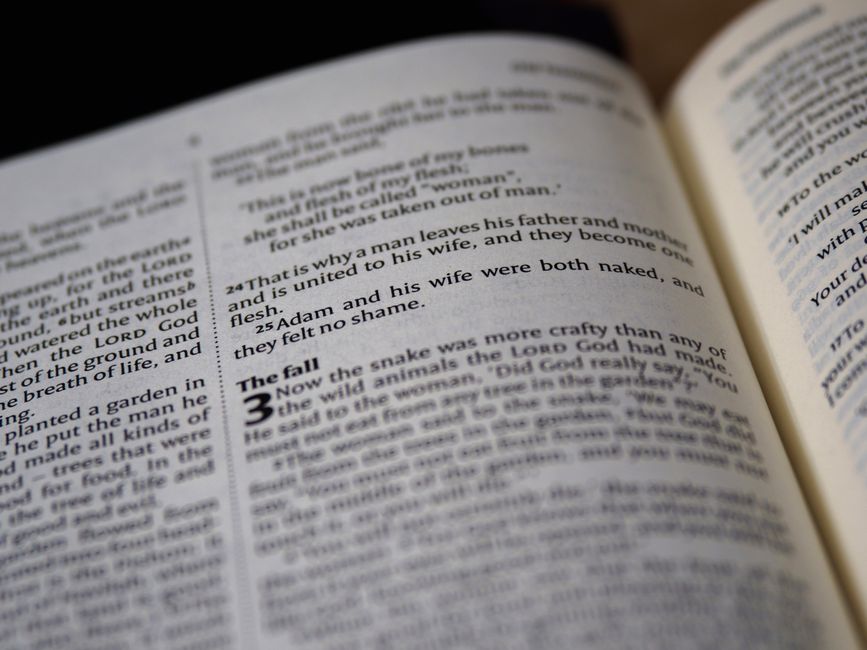
Welcome to this deep dive into the heart of the Gospel of Mark. In this study of Mark chapter 5, we will explore the transformative power of Jesus as He moves across the Sea of Galilee to restore the broken, heal the incurable, and conquer the powers of darkness.
Mark 5 — Historical and Spiritual Context
Mark 5 serves as a profound demonstration of Christ’s authority over the spiritual and physical realms during His earthly ministry. Written by John Mark, likely under the guidance of the Apostle Peter, this Gospel was composed for a Roman audience, emphasizing Jesus as the suffering Servant and the powerful Son of God. The narrative unfolds in the region of the Gadarenes, a Gentile territory, highlighting that the mission of the Messiah was not limited to the house of Israel but extended to all humanity. You can read Mark 5 on Bible Gateway to ground yourself in the text before we begin our exegesis.
The overarching theological theme of Mark 5 is the absolute sovereignty of Jesus Christ over the forces of evil, disease, and death. For the modern believer, this chapter is a cornerstone of faith, reminding us that no condition—whether it be internal spiritual turmoil, chronic suffering, or the finality of death—is beyond the reach of the Master. As we traverse these verses, we see a Savior who stops for the one, who is never intimidated by the chaotic, and who possesses the authority to restore what the world has deemed lost.

Verse-by-Verse Commentary on Mark 5
Mark 5:9 — Meaning and Explanation
“And he asked him, What is thy name? And he answered, saying, My name is Legion: for we are many.”
In this chilling encounter, Jesus engages the demoniac of Gadara. The term “Legion” (Greek: legion, Strong’s G3003) refers to a Roman military unit consisting of approximately 6,000 soldiers. By using this title, the demonic entity reveals both the overwhelming number of spirits possessing the man and their intent to occupy him like an invading military force.
Theologically, this verse highlights the total helplessness of the human condition apart from Christ. The man was living among the tombs, cut off from society and his own identity. When Jesus asks for the name, He is not gaining information for Himself, but rather forcing the darkness to acknowledge His authority. It is a powerful reminder that while the enemy may present himself as a vast, organized force, he is ultimately subject to the command of the Son of God.
Mark 5:28 — Meaning and Explanation
“For she said, If I may touch but his clothes, I shall be whole.”
The woman with the issue of blood had suffered for twelve years, spending all her resources on physicians only to grow worse. Her declaration of faith, using the Greek word sozo (Strong’s G4982), signifies not just physical healing, but a complete rescue or preservation of her life.
This verse illustrates the intersection of desperate faith and divine grace. The woman’s faith was imperfect—perhaps bordering on superstitious—yet Jesus honors it. He does not heal her because her method was perfect, but because her heart was fixed on Him as the only source of restoration. It teaches us that even a “touch” of faith, reaching out in the midst of our shame and exhaustion, is enough to draw the power of God into our lives.

Mark 5:36 — Meaning and Explanation
“As soon as Jesus heard the word that was spoken, he saith unto the ruler of the synagogue, Be not afraid, only believe.”
Jairus, a ruler of the synagogue, faced the ultimate crisis: the death of his daughter. The Greek word for “believe” here is pisteue (Strong’s G4100), which implies a continuous, active trust rather than a one-time intellectual assent.
Jesus interrupts the report of death with a command to choose faith over fear. This is a critical pastoral moment. Jesus does not dismiss the reality of the tragedy, but He places it within the context of His own authority. For the believer, this is the ultimate antidote to anxiety. When we are faced with “dead” situations—broken relationships, failed careers, or impossible circumstances—we are called to stop listening to the report of the world and continue trusting in the character of Christ.
Mark 5:41 — Meaning and Explanation
“And he took the Mark 5:41 the damsel by the hand, and said unto her, Talitha cumi; which is, being, interpretation, Damsel, I say unto thee, arise.”
Jesus enters the room of death, ignoring the ridicule of the mourners. He uses the Aramaic phrase “Talitha cumi,” which is tender and intimate. By taking her by the hand, Jesus bridges the gap between the living and the dead, demonstrating that He is the Lord of Life.
The spiritual lesson here is that Jesus is never defiled by our uncleanness; instead, His holiness purifies us. In Jewish law, touching a corpse made one ceremonially unclean. Yet, when Jesus touches the dead girl, He does not become unclean; rather, His life flows into her and makes her clean and alive. This is the essence of the Gospel: Jesus enters our “room of death,” takes our hand, and commands us to rise.

How to Apply Mark 5 in Your Daily Life
Applying Mark 5 today requires us to identify our own “Legions” and “issues of blood.” Perhaps your Legion is a cycle of negative thoughts, an addiction, or a persistent habit that makes you feel isolated and “living among the tombs.” Just as Jesus addressed the man in the tombs, He wants to restore your sanity and your place in the community. Spend time in silence this week, inviting the Lord to name the things in your life that are keeping you from wholeness, and trust that His authority is greater than the force of those habits.
In your professional or family life, practice the “Jairus principle” of choosing faith over fear. When you receive bad news at work or face a family crisis, pause before you react. Remember Mark 5:36: “Be not afraid, only believe.” This does not mean ignoring the problem; it means bringing the problem into the presence of Jesus before you let panic take root. By intentionally choosing to trust His sovereignty, you create space for Him to move in ways that defy human logic.
A Prayer Based on Mark 5
Guided Scriptural Prayer
Lord Jesus, thank You for Your absolute authority over the storms and shadows of my life. Just as You spoke to the man in the tombs, please speak peace into the chaotic areas of my heart today. I reach out in faith, asking for Your healing touch upon my deepest wounds and heaviest burdens. When I am tempted to fear the reports of this world, help me to remember Your words: “Be not afraid, only believe.” I trust You to bring life where there has been death and restoration where there has been loss. Amen.
Frequently Asked Questions About Mark 5
What is the main message of Mark 5?
The main message of Mark 5 is the supreme authority of Jesus Christ over every aspect of human suffering. Through the healing of the demoniac, the woman with the issue of blood, and the raising of Jairus’s daughter, Mark demonstrates that Jesus is the Son of God who holds power over spiritual darkness (verses 1-20), chronic physical infirmity (verses 25-34), and even the finality of death (verses 35-43). The chapter invites readers to move from fear to faith, showing that Jesus is the compassionate Savior who restores the marginalized and brings life to the hopeless.
What does it mean to “touch the hem of his garment” in Mark 5?
In Mark 5:27-28, the woman’s act of touching Jesus’ garment represents a desperate, singular focus on Christ’s power. In the cultural context, her condition rendered her ceremonially unclean, meaning she was breaking social and religious taboos by being in the crowd. Her action symbolizes the “leap of faith” required to approach God despite our shame or unworthiness. It teaches that God’s grace is accessed not through our own perfection or religious status, but through a humble, persistent reliance on the power residing in Jesus.
Why did Jesus tell them not to tell anyone about the miracle in Mark 5:43?
This is known as the “Messianic Secret.” In Mark 5:43, Jesus charges those present not to spread the news of the girl’s resurrection. This was likely to prevent the crowds from misunderstanding His mission. Many in first-century Israel expected a political Messiah who would overthrow Rome by force. If Jesus were perceived merely as a miracle-worker or a political revolutionary, the people might have attempted to force Him into a role that contradicted His true purpose: to suffer and die for the sins of the world.
May the peace of the Lord, who commands the wind and the waves, rest upon your heart as you walk in the light of His truth.