
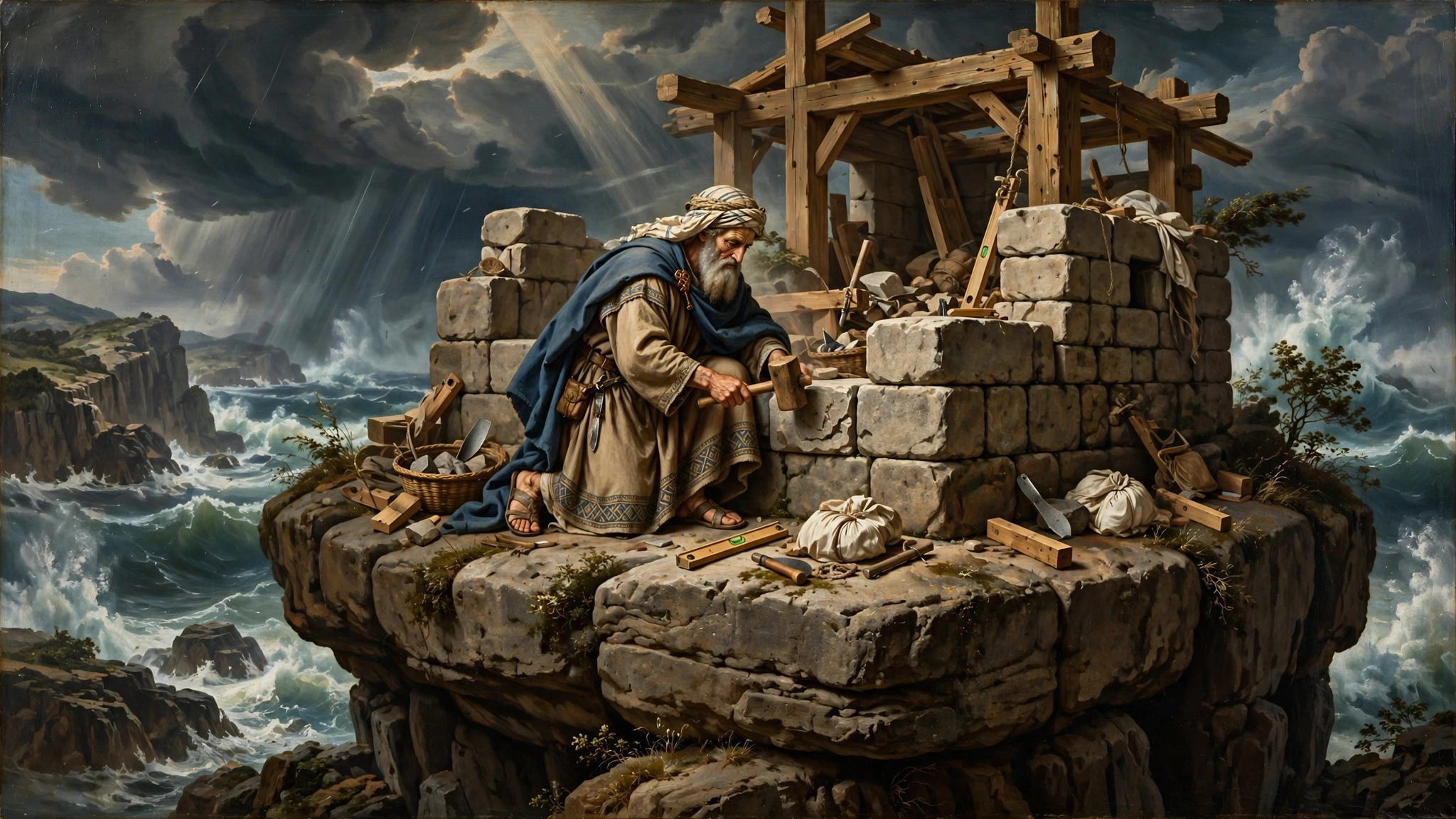
Matthew 7 – Historical and Spiritual Context
Matthew 7 serves as the climactic conclusion to the Sermon on the Mount, the foundational manifesto of the Kingdom of Heaven delivered by Jesus. Having established the character of a believer in the Beatitudes and the necessity of righteousness in the previous chapters, Jesus now turns his attention to the practical outworking of this faith in the lives of his followers. The historical context is one of intense religious tension; the Jewish people were under the heavy yolk of Roman occupation and the legalistic, often hypocritical, interpretations of the Torah by the Pharisees. Jesus speaks with a divine authority that cuts through human tradition, challenging his listeners to move beyond external ritual and into an authentic, heart-centered relationship with God.
The overarching spiritual theme of this chapter is “the test of true discipleship.” Jesus systematically dismantles the illusions of shallow belief, warning that the path of the Kingdom is not found in intellectual assent or public posturing, but in radical obedience and constant reliance on the Father. Whether he is speaking about the dangers of judgmentalism, the persistence of prayer, or the necessity of building one’s life upon the bedrock of his teachings, the core message remains consistent: the Kingdom of Heaven demands an undivided heart. Matthew 7 is ultimately a call to examine the foundation of our lives, ensuring that our spiritual house is built not on the shifting sands of cultural convenience, but on the enduring truth of Christ.
Detailed Verse-by-Verse Commentary
Study of Matthew 7:1
**”Judge not, that you be not judged.”**
Theological Explanation: This verse is perhaps the most misquoted command in the Bible. It is not a prohibition against discernment or accountability, but a stern warning against a critical, censorious spirit. The Greek word for “judge” here is *krino*, which implies a condemning, hypocritical judgment that assumes the role of God. Jesus is addressing the human tendency to focus on the “speck” in another’s eye while ignoring the “log” in our own. True biblical discernment is rooted in humility and love, whereas the judgment Jesus forbids is rooted in pride and self-righteousness. To “not judge” means we must refuse to pass final, condemning judgment on the motives or eternal standing of others, leaving the seat of the Judge to God alone.
Study of Matthew 7:7
**”Ask, and it will be given to you; seek, and you will find; knock, and it will be opened to you.”**
Theological Explanation: In the original Greek, the verbs *aiteite* (ask), *zeteite* (seek), and *krouete* (knock) are in the present imperative tense, indicating a continuous, ongoing action. This is not a “magic formula” for getting what we want, but an invitation into persistent, relational intimacy with the Father. To ask is to acknowledge our need; to seek is to align our lives with God’s presence; to knock is to press forward in faith until the door of his will is revealed. The promise is not that we will receive whatever our selfish desires crave, but that those who persist in seeking God’s Kingdom will find the Father ready and willing to provide exactly what is needed for their spiritual growth.
Study of Matthew 7:13
**”Enter by the narrow gate; for wide is the gate and broad is the way that leads to destruction, and there are many who go in by it.”**
Theological Explanation: The “narrow gate” represents the exclusive and transformative nature of the Gospel. In the ancient world, city gates were often narrow to allow for security and control; Jesus uses this imagery to illustrate that the way to life is not found by following the “broad” path of worldly popularity, convenience, or human consensus. The “broad way” is the path of least resistance—a life lived according to the flesh and the shifting values of society. Choosing the narrow gate is a deliberate, often difficult decision to submit to the Lordship of Christ, acknowledging that his way is the only way that leads to eternal life.
Study of Matthew 7:24
**”Therefore whoever hears these sayings of Mine, and does them, I will liken him to a wise man who built his house on the rock.”**
Theological Explanation: This is the definitive test of discipleship: the integration of hearing and doing. The Greek word for “wise,” *phronimos*, implies a person of prudent, practical intelligence. Jesus draws a stark contrast between the man who merely listens to his teachings and the man who acts upon them. The “rock” is the solid foundation of Christ’s words. When the storms of life—tribulation, temptation, and judgment—come, the house built on the shifting sand of mere intellectual knowledge will collapse. Only the life anchored in active, daily obedience to Jesus possesses the structural integrity to withstand the pressures of this world and the scrutiny of the next.
Practical Application for Your Daily Life
Applying Matthew 7 begins with a daily audit of our own hearts before we ever look at the lives of those around us. In your family and workplace, practice “constructive grace”—when you feel the urge to judge a colleague’s mistake or a family member’s behavior, pause and ask, “What log in my own heart am I ignoring?” By choosing to extend the same mercy you have received from Christ, you foster an environment of reconciliation rather than resentment. Make it a habit to seek God’s perspective in your prayers before you offer your opinion to others; this shift from “critic” to “intercessor” will transform your relationships and your witness.
Furthermore, build your life upon the “rock” of daily obedience by intentionally choosing the narrow path in small, unseen ways. In a world that prizes the “broad way” of shortcuts, moral compromise, and self-promotion, commit to the narrow way of integrity, honesty, and sacrificial service. Start each morning by asking, “Lord, what is one thing I can do today that aligns with your teachings?” Whether it is speaking the truth when it is uncomfortable or choosing to forgive when you feel slighted, these small acts of obedience are the bricks that build your spiritual house, ensuring that when the storms of life inevitably arise, your foundation remains immovable in Christ.
Daily Prayer and Reflection
Guided Scriptural Prayer
Heavenly Father, I come before You today acknowledging that my own heart is prone to judgment and my own life is often built on shifting sands. Please grant me the grace to focus on the beam in my own eye, that I might see my neighbor through the lens of Your perfect love rather than my own pride. I choose today to walk through the narrow gate, seeking Your will with persistence and building my life upon the bedrock of Your Word. Help me to be a doer of Your truth, not just a hearer, so that my life may stand firm in the storms and bring glory to Your name. Amen.
<hr />
<p style=”text-align: center; color: #64748b; font-size: 14px; font-style: italic;”>We hope this study guide on Matthew 7 blessed your day.</p>