
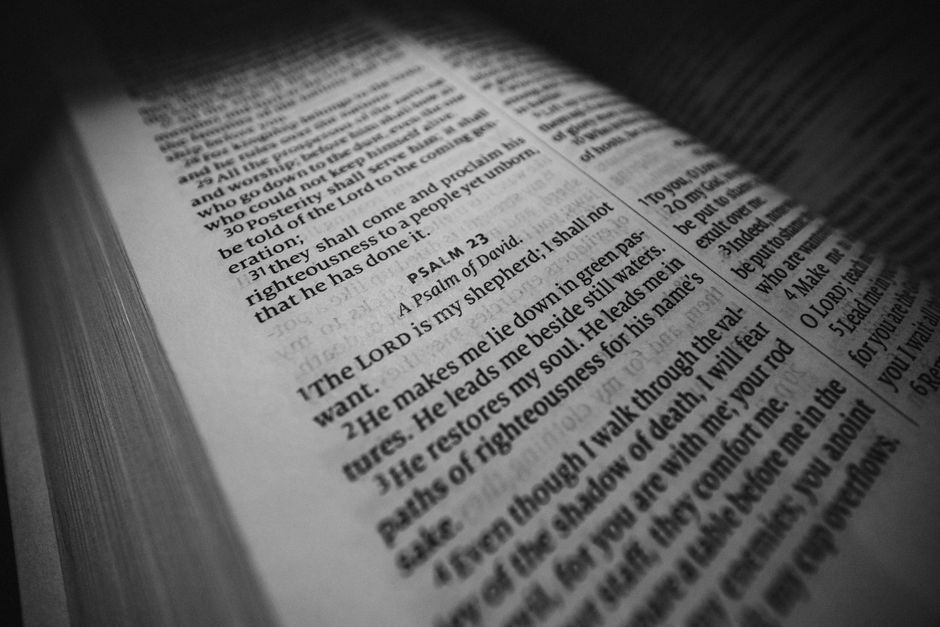
Welcome to this deep dive into the final crescendo of the Psalter, a passage that serves as the doxological summit of the entire Hebrew hymnbook. As we explore Psalm 150, we will uncover how every breath, every instrument, and every circumstance of life is designed to culminate in the glorious praise of the Almighty.
Psalm 150 — Historical and Spiritual Context
Psalm 150 serves as the triumphant conclusion to the Book of Psalms, likely composed after the return from the Babylonian exile during the post-exilic period of the Second Temple. While tradition often ascribes the Psalms to David, this final chapter is widely viewed by scholars as a liturgical composition intended for the congregation of Israel to celebrate the completion of the entire Psalter. You can read Psalm 150 on Bible Gateway to see how the poet gathers all the themes of the previous 149 chapters into one final, explosive act of worship.
The overarching theological theme of this chapter is the universality and intensity of praise directed toward the Creator. It matters deeply for the modern believer because it transforms worship from a mere religious ritual into a lifestyle of total surrender. By declaring that “everything that hath breath” should praise the Lord, the Psalmist reminds us that our very existence is a divine gift that finds its ultimate purpose in magnifying the majesty of God, regardless of our earthly circumstances.
Verse-by-Verse Commentary on Psalm 150
Psalm 150:1 — Meaning and Explanation
“Praise ye the LORD. Praise God in his sanctuary: praise him in the firmament of his power.”
The opening verse calls for a dual-location praise: the earthly sanctuary and the heavenly expanse. This establishes that God is worthy of worship both within the formal gatherings of His people and throughout the vast reaches of the universe. It invites the believer to recognize God’s presence in both the intimate and the infinite.
The Hebrew word for praise here is *halal* (Strong’s H1984), which implies a boastful, clamorous, and celebratory adoration. When the Psalmist speaks of the “sanctuary” (*qodesh*), he refers to the holy place where God dwells among His people. Yet, he immediately expands this to the “firmament” (*raqia*), the expanse of the sky. Theologically, this teaches us that God’s glory is not contained by stone walls; He is the sovereign King of the heavens and the intimate guest of our hearts.
Psalm 150:2 — Meaning and Explanation
“Praise him for his mighty acts: praise him according to his excellent greatness.”
This verse provides the dual foundation for our worship: what God has done and who God is. We are instructed to praise Him for His “mighty acts,” which refers to His interventions in history, and for His “excellent greatness,” which refers to His inherent, unchanging character.
The phrase “mighty acts” uses the Hebrew *geburah* (Strong’s H1369), denoting strength, valor, and victory. Matthew Henry notes that we must never praise God solely for what He gives us, but for the sheer majesty of His being. When we reflect on His “excellent greatness” (*rob godel*), we are acknowledging that even if God never performed another act in our lives, He would still be worthy of our highest praise simply because of His holiness, love, and sovereignty.

Psalm 150:4 — Meaning and Explanation
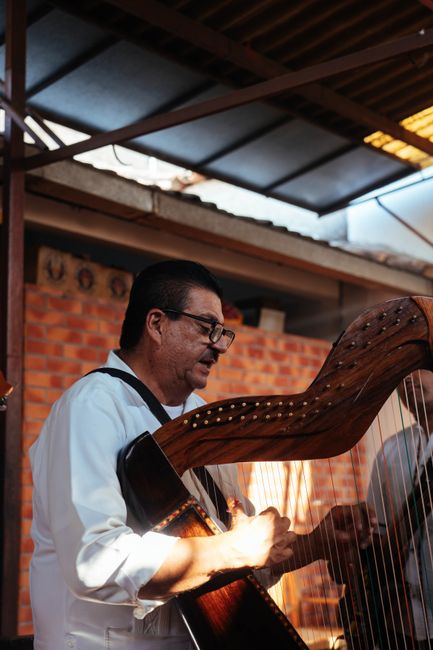
“Praise him with the timbrel and dance: praise him with stringed instruments and organs.”
Verse 4 emphasizes that worship should involve the whole person—body and soul—using every creative gift available. The mention of the “timbrel” (*toph*, Strong’s H8596) and “dance” (*machowl*, Strong’s H4234) highlights the physical, expressive nature of ancient Hebrew worship, which was far from static or somber.
Historically, this verse serves to sanctify the arts for the glory of God. By listing various musical instruments, the Psalmist is stating that there is no aspect of human culture or creative expression that cannot be redeemed and offered back to the Creator. The “organ” here refers to the *ugab*, an ancient flute or pipe instrument. The spiritual lesson is clear: God delights in the diversity of our expressions of joy, whether through rhythmic movement or the melodic beauty of music.
Psalm 150:6 — Meaning and Explanation
“Let every thing that hath breath praise the LORD. Praise ye the LORD.”
The final verse of the entire Psalter is a universal command that encompasses all of creation. It brings the focus back to the fundamental requirement for worship: the breath of life, which is the literal gift of God to humanity.
The Hebrew word for breath is *neshamah* (Strong’s H5397), the same word used in Genesis 2:7 when God breathed the breath of life into Adam. By ending the book with this phrase, the Psalmist closes the circle of life. We exist because He breathed into us; therefore, our lives are intended to be a constant, exhaled offering of praise. It is a reminder that as long as we are drawing breath, our primary occupation and highest privilege is to acknowledge the LORD (*Yahweh*).
How to Apply Psalm 150 in Your Daily Life
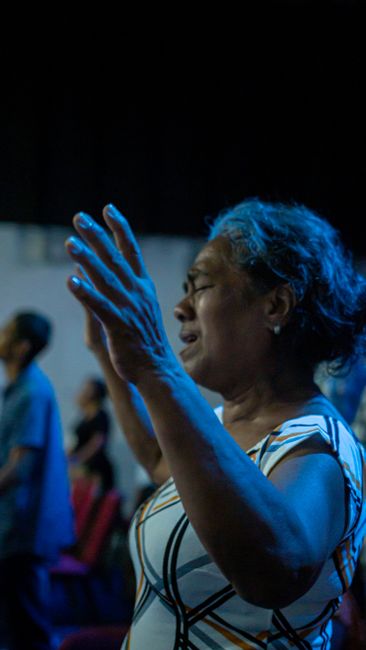
Applying Psalm 150 in the modern age requires us to move beyond Sunday morning performances and into a lifestyle of “everyday doxology.” In your family life, consider starting your mornings by acknowledging God’s “mighty acts” during breakfast. Instead of rushing to work or school, take thirty seconds to thank God for specific things—a healing, a provision, or a moment of peace—effectively turning your kitchen into a “sanctuary” as described in verse 1.
In your professional life, you can apply this by practicing “excellence as worship.” If you are a developer, a teacher, or a laborer, do your work with such integrity and joy that it becomes a silent instrument of praise. When you face a stressful meeting or a difficult project, pause to remember the “excellent greatness” of God. This shifts your perspective from the immediate pressure of the task to the eternal sovereignty of the One who holds your future, allowing you to work with a spirit of peace rather than anxiety.
A Prayer Based on Psalm 150
Guided Scriptural Prayer
Heavenly Father, I come before You today with a heart full of adoration, seeking to align my life with the final command of Your Word. As the Psalmist wrote, “Let every thing that hath breath praise the LORD,” and I offer my very life as a sacrifice of praise to You. I thank You for Your mighty acts in my past and for the unchanging, excellent greatness of Your character. May my work, my family, and my private thoughts be instruments that play a melody of worship to Your name. Help me to praise You in the sanctuary of Your presence and in the expanse of my daily life, for You alone are worthy. Amen.
Frequently Asked Questions About Psalm 150
What is the main message of Psalm 150?
The main message of Psalm 150 is the universal call to praise God for His inherent greatness and His mighty works in creation and history. It serves as the grand finale of the Book of Psalms, emphasizing that praise is not merely a suggestion but the ultimate purpose of human existence. By calling upon “everything that hath breath” to praise the Lord (v. 6), the Psalmist declares that worship should be all-encompassing, involving every person, every instrument, and every possible expression of joy, recognizing that God is the sovereign King over both the sanctuary and the entire universe.
What do the musical instruments in Psalm 150 signify?
The list of instruments in Psalm 150—including the trumpet, psaltery, harp, timbrel, stringed instruments, organs, and cymbals—signifies that worship should be expressive, diverse, and passionate. These instruments represent the dedication of all human creativity and culture to the service of God. Historically, they demonstrate that the Israelites used their best resources and arts to honor the Creator. Theologically, this teaches that our worship should engage the whole person—body, mind, and spirit—using every tool and talent at our disposal to make a “joyful noise” (v. 5) that reflects the greatness of the One we serve.
Why is Psalm 150 considered the “Doxology” of the Bible?
Psalm 150 is often called the “Doxology” because it summarizes the entire emotional and spiritual trajectory of the Book of Psalms. A doxology is a short hymn of praise to God, and Psalm 150 functions as a climactic, liturgical conclusion that gathers the themes of lament, thanksgiving, and royal praise found throughout the previous 149 chapters. It brings the reader to a place of total surrender, where the only logical response to understanding who God is (His greatness) and what He has done (His mighty acts) is to offer a life of unending, exuberant, and universal praise.
May your heart be continually lifted as you meditate on the glorious truths found in this final, triumphant song of scripture.