
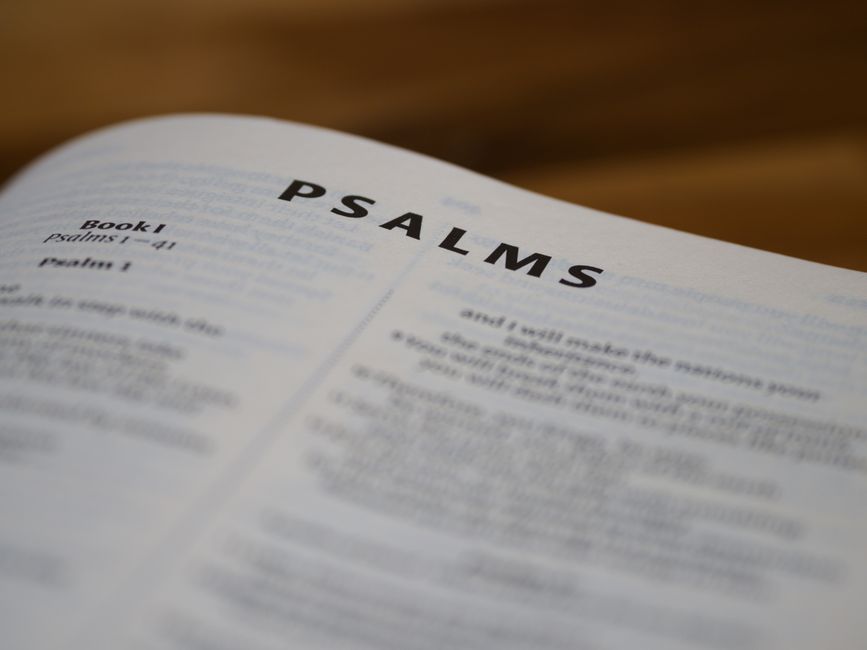
Welcome to this deep dive into one of the most honest and transformative passages in the entire Psalter. As we explore Psalm 73, we will journey from the depths of human envy and spiritual confusion to the heights of divine perspective and eternal assurance.
Psalm 73 — Historical and Spiritual Context
Psalm 73 is the opening psalm of Book III of the Psalter and is attributed to Asaph, the chief musician under King David. Writing during a time when the prosperity of the wicked seemed to mock the righteousness of God’s people, Asaph captures the internal struggle of a believer grappling with the apparent injustice of a world where the godless often thrive while the faithful suffer. You can read Psalm 73 on Bible Gateway to ground yourself in the text before we begin.
Theologically, this psalm serves as a mirror for the modern believer’s soul, addressing the universal temptation of envy and the danger of judging God’s character by temporal circumstances. It is a vital study because it provides a roadmap for moving from “the slippery places” of doubt and resentment into the sanctuary of God’s presence, where the mystery of providence is resolved through the lens of eternity.

Verse-by-Verse Commentary on Psalm 73
Psalm 73:1 — Meaning and Explanation
“Truly God is good to Israel, even to such as are of a clean heart.”
Asaph begins with a foundational declaration of faith that serves as the anchor for the entire psalm. Despite the turmoil he is about to describe, he starts with the “bottom line” of his theology. The Hebrew word for “good” is *towb* (Strong’s H2896), implying not just moral excellence, but a benevolence that is beneficial and pleasant toward His people.
This verse clarifies that God’s goodness is constant, even when our circumstances contradict it. The “clean heart” refers to those who are sincere in their devotion—not perfect, but transparent before the Lord. As Matthew Henry notes, the psalmist is fighting to hold onto this truth even when his eyes see evidence to the contrary. It is the victory of divine revelation over human observation.

Psalm 73:2 — Meaning and Explanation
“But as for me, my feet were almost gone; my steps had well nigh slipped.”
Here, the psalmist admits his vulnerability. The Hebrew word for “slipped” is *shaphak* (Strong’s H8210), which carries the imagery of water being poured out or feet losing their purchase on a slick surface. Asaph’s faith was not destroyed, but it was shaken; his confidence in God’s justice was nearly extinguished by the sight of the wicked’s success.
This is a poignant reminder that even the most godly leaders experience seasons of doubt. Asaph’s “slipping” was a result of his focus shifting from God’s character to the temporal prosperity of the ungodly. It teaches us that our spiritual stability is directly tied to where we place our focus—the world or the Word.
Psalm 73:17 — Meaning and Explanation
“Until I went into the sanctuary of God; then understood I their end.”
This is the turning point of the entire psalm. The “sanctuary” (*miqdash*, Strong’s H4720) represents the place of divine presence and worship. When Asaph stopped looking at the “prosperity of the wicked” (v. 3) and began looking at God, his perspective shifted from the temporal to the eternal.
The word “understood” suggests a sudden enlightenment or a “coming to one’s senses.” In the sanctuary, the noise of the world is muffled, and the clarity of God’s Word takes precedence. Asaph realizes that the wicked are not being rewarded; they are standing on “slippery places” (v. 18), and their destruction is imminent. The sanctuary is not just a building; it is the posture of bringing our questions directly to the Father.

Psalm 73:26 — Meaning and Explanation
“My flesh and my heart faileth: but God is the strength of my heart, and my portion for ever.”
In this climactic conclusion, Asaph acknowledges the frailty of human existence. The Hebrew word for “strength” is *tsuwr* (Strong’s H6697), which literally means a “rock” or “cliff.” He recognizes that while his own internal and physical resources will eventually fail him, God remains his immutable, immovable Rock.
The term “portion” (*cheleq*, Strong’s H2506) is a beautiful inheritance metaphor. In the Old Testament, the priests were told that God was their portion—they had no land because they had Him. Asaph realizes that having God is superior to having all the worldly success he previously envied. This is the ultimate satisfaction of the believer.
How to Apply Psalm 73 in Your Daily Life
Applying Psalm 73 in the modern world requires a deliberate shift in our “information diet.” If you find yourself scrolling through social media, seeing the apparent ease of those who ignore God, and feeling a sense of resentment or bitterness, stop and recognize that you are in the same position as Asaph in verse 2. You must intentionally enter your “sanctuary”—whether that is a dedicated time of prayer, opening your Bible, or worshiping in a local congregation—to recalibrate your view of what is truly valuable.
In the workplace, when you see unethical behavior being rewarded with promotions or wealth, remember the “end” of the wicked as described in verses 18-20. Instead of letting envy erode your integrity, anchor yourself in the truth that God is your “portion.” When your “flesh and heart fail” under the pressure of deadlines or unfair treatment, speak verse 26 over yourself as a prayer. Remind your soul that your true inheritance is not found in a paycheck or a title, but in the enduring presence of the One who holds your future.
A Prayer Based on Psalm 73
Guided Scriptural Prayer
Heavenly Father, I confess that like Asaph, I have often looked at the world with envy and let my heart grow bitter when I see the wicked prosper. Forgive me for taking my eyes off Your sovereignty and focusing on the fleeting gains of this earth. I choose today to enter Your sanctuary, to sit in Your presence, and to let Your Word define my reality. You are my Rock and my eternal portion, and in You alone do I find true satisfaction. Help me to trust that You are working all things together for my good, even when I cannot see it. Amen.
Frequently Asked Questions About Psalm 73
What is the main message of Psalm 73?
The main message of Psalm 73 is that God is consistently good, even when it appears that the wicked are thriving and the righteous are suffering. Asaph addresses the crisis of faith caused by envy (v. 3) and finds the solution in shifting his focus from the temporal world to the eternal perspective found in God’s presence (v. 17). The psalm teaches that worldly prosperity is temporary and dangerous, whereas the presence of God is the believer’s only true, lasting “portion” (v. 26). It serves as a reminder to prioritize eternal values over worldly success.
Who wrote Psalm 73 and why?
Psalm 73 was written by Asaph, a Levite and master musician appointed by David to lead the worship in the tabernacle (1 Chronicles 16:5). Asaph wrote this psalm to document his own spiritual struggle with envy and doubt. He wrote it not as an indictment of God, but as a testimony to his own restoration. By sharing his “slippery” walk toward bitterness, he provides a model for other believers on how to bring their honest questions and frustrations before God and find peace through worship and divine revelation.
What does “slippery places” mean in Psalm 73?
In Psalm 73:18, the phrase “slippery places” refers to the precarious and unstable nature of the wicked’s prosperity. While the ungodly may appear to be standing on firm ground, their lack of a foundation in God makes their position inherently dangerous. Just as one might lose their footing on ice, the wicked will suddenly fall because their success is not built on the righteousness of God. Asaph uses this metaphor to explain that what he once envied is actually a trap, leading to sudden destruction rather than genuine security.
May the peace of God, which surpasses all understanding, guard your heart and mind as you walk in the truth of His goodness today.