
Welcome to this deep-dive study into the book of Ruth, a narrative of profound redemption and sovereign grace. In Ruth chapter 2, we transition from the bitterness of bereavement to the blossoming of hope, exploring how God’s invisible hand orchestrates the details of our lives to provide for His own.
Ruth 2 — Historical and Spiritual Context
The historical context of Ruth 2 finds the protagonists in the period of the Judges, a time defined by moral anarchy and spiritual decay. Set in Bethlehem-judah, the narrative follows Naomi and her Moabite daughter-in-law, Ruth, as they return as destitute widows. The chapter serves as a bridge between the hopelessness of chapter 1 and the eventual restoration of Naomi’s lineage through the kinsman-redeemer, Boaz. You can read Ruth 2 on Bible Gateway to ground yourself in the text.
The overarching theological theme of Ruth 2 is the concept of “providence”—the belief that God is working behind the scenes of ordinary human activity. For the modern believer, this chapter is a powerful reminder that our “coincidences” are often God’s appointments. Whether we are facing financial hardship, loneliness, or uncertainty, Ruth 2 teaches us that when we step out in faithful obedience, the Lord of the harvest will guide our feet to the fields where His provision awaits.
Verse-by-Verse Commentary on Ruth 2
Ruth 2:2 — Meaning and Explanation
**And Ruth the Moabitess said unto Naomi, Let me now go to the field, and glean ears of corn after him in whose sight I shall find grace. And she said unto her, Go, my daughter.**
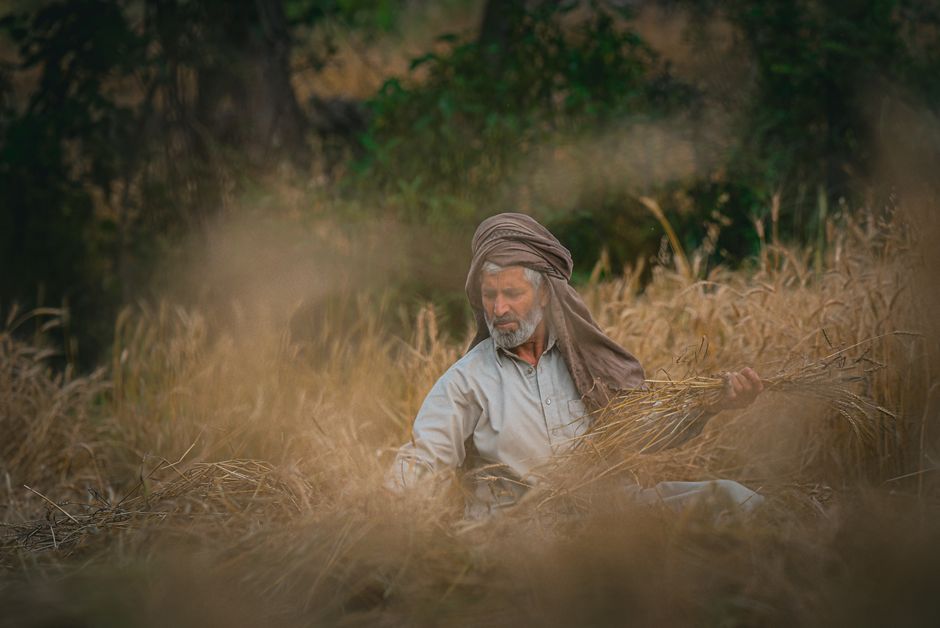
The historical context of this verse is rooted in the Mosaic Law found in Leviticus 19:9-10, which commanded farmers to leave the corners of their fields unharvested for the poor and the stranger. Ruth, a foreigner, demonstrates incredible humility and industriousness. The Hebrew word for “glean” is *laqat* (Strong’s H3950), which implies a deliberate gathering of fallen stalks.
Spiritually, this verse highlights the intersection of divine provision and human initiative. Ruth does not wait for a handout; she goes to work. Her desire to “find grace” (*chen*, Strong’s H2580) speaks to her understanding that she is at the mercy of others. For the believer, this illustrates that while God provides the harvest, we are called to be diligent in the work He sets before us, trusting Him to grant us favor in the eyes of those around us.

Ruth 2:3 — Meaning and Explanation
**And she went, and came, and gleaned in the field after the reapers: and her hap was to light on a part of the field belonging unto Boaz, who was of the kindred of Elimelech.**
This verse is one of the most famous examples of providence in the Bible. The Hebrew phrase translated as “her hap was to light on” (*miqreh*, Strong’s H4745) implies an occurrence or chance. To the human eye, it was a coincidence; to the eyes of faith, it was the sovereign orchestration of God. Ruth happened to land in the exact field of the one man who had the legal right and the character to redeem her.
The lesson here is profound: God is the architect of our circumstances. We often worry about the “what ifs” of life, but this verse encourages us to trust that our steps are ordered by the Lord. Boaz, a man of “mighty wealth” (*chayil*, Strong’s H2428), represents a type of Christ—the one who possesses the resources to redeem the impoverished and the foreigner.
Ruth 2:10 — Meaning and Explanation
**Then she fell on her face, and bowed herself to the ground, and said unto him, Why have I found grace in thine eyes, that thou shouldest take knowledge of me, seeing I am a stranger?**
Ruth’s reaction to Boaz’s kindness is one of overwhelming astonishment. As a Moabite, she was historically excluded from the assembly of the Lord (Deuteronomy 23:3), yet here she experiences the radical, unmerited favor of an Israelite leader. She asks, “Why?”—a question that echoes the heart of every believer who has experienced the grace of God despite their own unworthiness.
The Hebrew word for “take knowledge” is *nakar* (Strong’s H5234), which in this context implies to notice, regard, or acknowledge. Ruth is stunned that she, an outsider, is seen. This is a beautiful picture of the Gospel: God notices the stranger, the outcast, and the broken, and He chooses to redeem them not because of who they are, but because of His own character of loving-kindness (*chesed*).

Ruth 2:12 — Meaning and Explanation
**The Lord recompense thy work, and a full reward be given thee of the Lord God of Israel, under whose wings thou art come to trust.**
Boaz offers a blessing that identifies the core of Ruth’s spiritual transformation: she has shifted her trust from the gods of Moab to the God of Israel. The imagery of “wings” (*kanaph*, Strong’s H3671) is deeply theological, evoking the wings of the Cherubim over the Ark of the Covenant, representing the protective presence of the Almighty.
This verse teaches that our faith is not merely a private feeling but a refuge. By “trusting” (*chacah*, Strong’s H2620) in the Lord, Ruth finds a security that transcends her earthly circumstances. For the believer, this is a reminder that no matter how vulnerable we feel in a “foreign” or hostile world, we are covered by the wings of the Almighty, and He is the ultimate Rewarder of those who diligently seek Him.
How to Apply Ruth 2 in Your Daily Life
Applying Ruth 2 in your daily life begins with the recognition that your workplace and your neighborhood are your “fields.” Just as Ruth went to the field to glean, you are called to show up with diligence in your career, even when the work feels menial or difficult. When you perform your duties with a spirit of excellence and integrity, you reflect the character of God, and you open doors for Him to show you favor in ways you cannot predict.
Furthermore, consider the role of Boaz in your life. Are you in a position to be a “Boaz” to someone else? Perhaps there is a coworker struggling, a neighbor who is a “stranger,” or a family member in need of grace. True biblical application involves looking for those who are gleaning in the corners of life and offering them kindness, protection, and provision. By extending *chesed* (covenantal kindness) to others, you become an instrument of God’s providence in their story.
A Prayer Based on Ruth 2
Guided Scriptural Prayer
Heavenly Father, I thank You that You are the sovereign orchestrator of my life, even when I feel like a stranger in a foreign land. Like Ruth, I ask that You guide my steps to the fields where You have prepared a harvest for me, and help me to work with diligence and a heart of gratitude. May I always remember that I am covered under the shadow of Your wings, finding my true security in Your grace alone. Teach me to be a person of kindness and integrity, looking for ways to bless others as Boaz blessed Ruth. I trust that You are working all things together for my good and Your glory. Amen.
Frequently Asked Questions About Ruth 2
What is the main message of Ruth 2?
The main message of Ruth 2 is the quiet, sovereign providence of God. It demonstrates how God works through the ordinary, daily choices of faithful people to accomplish His redemptive purposes. While Ruth and Naomi felt abandoned by circumstances, God was working behind the scenes to bring Ruth into the field of Boaz. It teaches that God is actively involved in the lives of His children, providing for their needs and turning their “hap” (chance) into His holy plan.
Who is Boaz in Ruth 2 and what does he represent?
In Ruth 2, Boaz is a wealthy, influential landowner in Bethlehem and a close relative of Naomi’s deceased husband. He represents a “kinsman-redeemer” (*goel*), one who has the duty and the means to rescue his relatives from poverty. Theologically, Boaz is a powerful type of Jesus Christ. Just as Boaz provides for Ruth, protects her, and eventually marries her to restore her legacy, Christ redeems His people from the poverty of sin, covers them with His righteousness, and brings them into His eternal family.
What does “gleaning” mean in the Bible?
In the context of Ruth 2:2, “gleaning” refers to the practice of following behind the reapers during harvest time to gather the stalks of grain left behind or missed by the harvesters. It was a social welfare system established by God in the Law of Moses (Leviticus 19:9-10) to provide for the poor, the widow, and the immigrant. For Ruth, it was a practical way to provide food for herself and Naomi, symbolizing her humility, hard work, and reliance on God’s law for her daily bread.
May the grace found in the fields of Boaz dwell richly in your heart as you walk in His light today.