
Welcome to this deep dive into the sixth chapter of Paul’s first letter to the Corinthians. In this study, we will explore the themes of sanctification, the sanctity of the body, and the believer’s call to reflect God’s holiness in a world of moral confusion.
1 Corinthians 6 — Historical and Spiritual Context
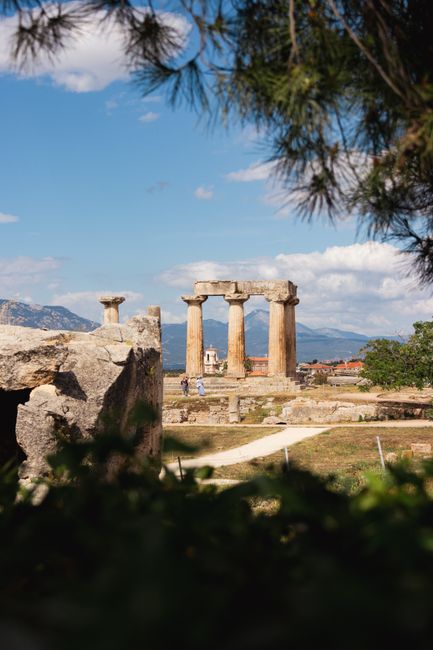
1 Corinthians 6 was written by the Apostle Paul around 55 A.D. to address specific crises within the church at Corinth, a bustling, cosmopolitan trade center known for its rampant immorality and legal disputes. Paul writes to a young, fractured congregation, correcting their worldly behavior and reminding them of their new identity in Christ. You can read 1 Corinthians 6 on Bible Gateway to familiarize yourself with the full text before we proceed.
The overarching theological theme of this chapter is the radical transformation of the believer’s life through the indwelling Holy Spirit. Paul argues that because Christians have been “washed, sanctified, and justified,” their behavior must reflect a kingdom reality rather than the self-serving, litigious nature of the pagan world. This chapter remains vital today because it challenges the modern tendency to compartmentalize faith, insisting instead that the body is a temple and our daily conduct is an act of worship.
Verse-by-Verse Commentary on 1 Corinthians 6
1 Corinthians 6:2 — Meaning and Explanation
“Do ye not know that the saints shall judge the world? and if the world shall be judged by you, are ye unworthy to judge the smallest matters?”
Paul uses this rhetorical question to shame the Corinthians for taking their internal disputes to pagan courts. The Greek word for “judge” here is *krino* (Strong’s G2919), which implies not just legal arbitration, but the act of discerning or passing judgment. Paul is pointing to the future eschatological role of the believer; if we are destined to reign with Christ and judge the world, why are we incapable of settling simple, trivial disagreements among brothers?
The spiritual lesson here is one of perspective. When we focus on our eternal inheritance, the petty grievances and lawsuits that plague our earthly relationships lose their significance. Paul reminds the church that they possess a wisdom from God that renders the secular legal system inferior to the spiritual discernment already present within the body of Christ.
1 Corinthians 6:9 — Meaning and Explanation
“Know ye not that the unrighteous shall not inherit the kingdom of God? Be not deceived: neither fornicators, nor idolaters, nor adulterers, nor effeminate, nor abusers of themselves with mankind,”
In this verse, Paul lists various sins that characterized the culture of Corinth, emphasizing that these behaviors are fundamentally incompatible with the kingdom of God. The term “fornicators” comes from the Greek *pornos* (Strong’s G4205), from which we derive “pornography.” It refers to any illicit sexual activity outside the covenant of marriage. Paul warns that those who persist in these lifestyles without repentance demonstrate that they have not experienced the transforming grace of the Gospel.
This is not a list intended to exclude those who struggle, but a sobering warning against the “deception” of thinking one can remain in active, unrepentant rebellion against God while claiming a place in His kingdom. It highlights the necessity of the “washing” mentioned later in verse 11; the Gospel doesn’t just forgive sin, it breaks the power of the sinful lifestyle.
1 Corinthians 6:12 — Meaning and Explanation
“All things are lawful unto me, but all things are not expedient: all things are lawful for me, but I will not be brought under the power of any.”
The Corinthians were using the slogan “all things are lawful” to justify their moral laxity, claiming their Christian liberty allowed them to do as they pleased. Paul counters this by introducing the concept of “expediency” or “profitability.” The Greek word *sumphero* (Strong’s G4851) means “to bring together” or “to be advantageous.” He teaches that just because an action is not strictly forbidden, it does not mean it is beneficial for one’s spiritual health or the witness of the church.
The core principle here is mastery. Paul refuses to let any habit or desire “bring him under its power” (*exousiazo*). If an activity, even one that is not inherently sinful, begins to control the believer instead of the believer controlling the activity, it has become a modern-day idol. True liberty in Christ is the freedom to say “no” to our fleshly impulses.
1 Corinthians 6:19 — Meaning and Explanation
“What? know ye not that your body is the temple of the Holy Ghost which is in you, which ye have of God, and ye are not your own?”
This is perhaps the most profound theological statement in the chapter regarding the believer’s identity. The word “temple” refers to the *naos* (Strong’s G3485), the inner sanctuary where God’s presence dwelt. In the Old Testament, the glory of God filled the physical temple in Jerusalem; now, by the power of the Holy Spirit, the individual Christian—and the church collectively—serves as that sacred space.
The logical conclusion is total surrender. If we were “bought with a price” (verse 20), we no longer have ownership over our own lives. Our bodies are not tools for self-gratification but vessels for the Holy Spirit. This verse serves as the ultimate barrier against immorality, as it reminds us that every action taken with our bodies is an action taken within the dwelling place of the living God.
How to Apply 1 Corinthians 6 in Your Daily Life
Applying 1 Corinthians 6 in the modern era requires a shift from a “rights-based” mentality to a “stewardship” mentality. In your workplace, when you feel slighted or cheated by a colleague, resist the urge to immediately seek retribution or escalate conflict. Instead, seek biblical reconciliation or, if necessary, lean on the wisdom of mature believers to arbitrate the matter, keeping the testimony of the Gospel at the forefront of your professional conduct.
In your personal life, evaluate your habits through the lens of “expediency.” Ask yourself: “Does this habit—whether it be screen time, entertainment, or a specific relationship—bring me closer to Christ, or is it beginning to master me?” Because your body is the temple of the Holy Spirit, treat your physical health, your thought life, and your digital consumption as sacred offerings. By actively choosing to honor God with your body, you demonstrate that you truly belong to Him, not to the passing trends of this world.
A Prayer Based on 1 Corinthians 6
Guided Scriptural Prayer
Heavenly Father, I humble myself before You, acknowledging that I have been bought with a price and am no longer my own. Please forgive me for the times I have treated my body as my own possession rather than Your holy temple. Help me to walk in the freedom of the Spirit, ensuring that no desire or habit brings me under its power. Grant me the discernment to resolve conflicts with grace and the strength to live a life that honors You in all things. May my life be a clear reflection of the sanctification You have worked in me. In the name of Jesus Christ, I pray, Amen.
Frequently Asked Questions About 1 Corinthians 6
What is the main message of 1 Corinthians 6?
The main message of 1 Corinthians 6 is that the believer’s life has been fundamentally changed by Christ, and this change must be reflected in how we handle legal disputes and our sexual morality. Paul emphasizes that because we are united with Christ and indwelt by the Holy Spirit, we are to live in a way that is distinct from the world. The chapter serves as a call to holiness, urging believers to stop acting like the unrighteous and to honor God with their bodies, which are now His sacred property.
Why does Paul forbid believers from suing one another in 1 Corinthians 6?
Paul forbids Christians from taking disputes to secular courts because doing so brings shame upon the body of Christ and demonstrates a lack of spiritual maturity. In 1 Corinthians 6:5-7, he argues that there should be at least one person among the brethren wise enough to arbitrate matters. By going to pagan courts, believers suggest that the church is incapable of resolving internal conflict, thereby undermining the witness of the Gospel and prioritizing legal victory over the love and unity commanded by Christ.
What does “your body is the temple of the Holy Ghost” mean in 1 Corinthians 6:19?
This statement means that the Holy Spirit resides within every believer, making the human body a sacred dwelling place for God. In the context of 1 Corinthians 6, Paul uses this truth to argue against sexual immorality. If our bodies are the “naos” (sanctuary) of the Holy Spirit, then using them for immoral purposes is an act of desecration. It shifts the motivation for purity from merely following a rule to acknowledging that our physical actions directly impact our relationship and proximity to the living God who dwells within us.
May this study deepen your walk with the Lord and empower you to live as a true temple of His grace.