

Welcome to this deep dive into the profound wisdom of the Apostle Paul. In 1 Corinthians 3, we explore the vital necessity of spiritual maturity, the danger of human divisiveness, and the eternal significance of building our lives upon the foundation of Jesus Christ.
1 Corinthians 3 — Historical and Spiritual Context
1 Corinthians 3 was written by the Apostle Paul around 55 A.D. to a fractured church in Corinth. The city was a bustling, cosmopolitan hub of commerce and immorality, and the believers there were struggling with pride, factionalism, and worldly wisdom. Paul writes to correct their carnal perspective, reminding them that they are merely stewards of God’s grace. To study the full text, read 1 Corinthians 3 on Bible Gateway.
The overarching theme of this chapter is the transition from spiritual infancy to maturity in Christ. Paul challenges the believers to stop viewing their leaders as celebrities and to start viewing themselves as God’s field and building. It remains essential for today’s believer because it cuts through the noise of modern “personality-driven” Christianity, calling us back to the singular, unshakeable foundation of Jesus Christ alone, while urging us to build lives that will stand the test of fire at the Judgment Seat of Christ.
Verse-by-Verse Commentary on 1 Corinthians 3
1 Corinthians 3:1 — Meaning and Explanation
“And I, brethren, could not speak unto you as unto spiritual, but as unto carnal, even as unto babes in Christ.”
Paul uses the Greek term *sarkinos* (Strong’s G4559), which denotes fleshly or “made of flesh.” Here, it describes a believer whose conduct is dictated by natural, human impulses rather than the Holy Spirit. Even though they are “babes in Christ” (newly born, yet immature), their failure to grow is a spiritual tragedy.
The historical context reveals a church divided by human loyalties—some followed Paul, others Apollos. Paul argues that such divisiveness is not a sign of deep theological insight, but rather a symptom of spiritual immaturity. The lesson for us is clear: growth is not optional. We are expected to mature beyond the “milk” of the gospel and move into the “meat” of living out the kingdom life.
1 Corinthians 3:6 — Meaning and Explanation
“I have planted, Apollos watered; but God gave the increase.”
This verse highlights the cooperative, yet subordinate, nature of ministry. Paul uses agricultural imagery to explain that human leaders are merely instruments. The word for “increase” is the Greek *auxanō* (Strong’s G837), implying a divine, organic growth that only the Creator can facilitate.
In a culture that emphasizes personal branding and “growth hacking,” this verse serves as a humbling reminder. Whether we are parents, pastors, or colleagues, we can sow truth and offer the water of encouragement, but the transformation of the heart is entirely the work of the Holy Spirit. We must labor faithfully, but we must also rest in the sovereignty of God to bring about the ultimate result.

1 Corinthians 3:11 — Meaning and Explanation
“For other foundation can no man lay than that is laid, which is Jesus Christ.”
The “foundation” (*themelios*, Strong’s G2310) is the singular, non-negotiable basis of the Christian life. Paul is correcting the Corinthian tendency to build their identities upon men. He asserts that any structure—whether it be a church, a ministry, or a personal life—that does not rest solely on the finished work of Christ is destined to collapse.
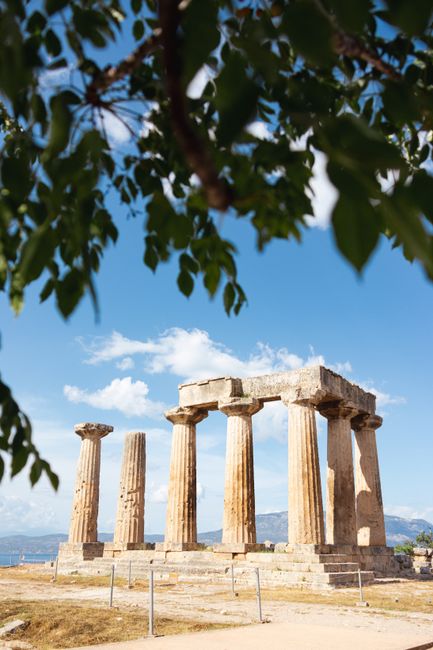
Historically, Corinth was a city of impressive architecture, but Paul reminds them that the only building that matters to God is the one built on the person and work of the Savior. If we build on human wisdom, tradition, or personality, our “building” will fail the test of eternity. The lesson is a call to total Christ-centrism in every endeavor we undertake.
1 Corinthians 3:16 — Meaning and Explanation
“Know ye not that ye are the temple of God, and that the Spirit of God dwelleth in you?”
Paul uses the word *naos* (Strong’s G3485) to refer to the inner sanctuary of the temple. By calling the church the *naos*, he is stating that the local assembly is the dwelling place of God’s glory. This is a profound shift from the Old Testament, where the glory resided in a physical building in Jerusalem.
For the modern believer, this is a call to holiness and unity. If we are the temple, our divisions, backbiting, and envy are acts of desecration. We are challenged to live in a way that respects the presence of the Holy Spirit within us, both individually and collectively. We must guard the “temple” of our community with the same reverence the priests of old guarded the Holy of Holies.
How to Apply 1 Corinthians 3 in Your Daily Life
Applying 1 Corinthians 3 begins with a radical shift in how you view your contributions at work and home. In the workplace, instead of seeking credit for a project, adopt the “planter and waterer” mindset. When you see a colleague succeeding, rejoice in the “increase” God is giving through them, rather than feeling threatened. This frees you from the bondage of comparison and allows you to work with excellence for an audience of One.
In your family life, prioritize the “foundation” of Christ above all else. When conflicts arise—whether with a spouse or child—ask yourself: “Am I building on the foundation of Christ, or on my own pride and need to be right?” By modeling repentance and grace, you are building with gold, silver, and precious stones (v. 12) rather than wood, hay, and stubble. This ensures your home is a sanctuary where the Spirit of God truly dwells.
A Prayer Based on 1 Corinthians 3
Guided Scriptural Prayer
Heavenly Father, I confess that I have often acted like a babe in Christ, driven by my own fleshly desires rather than Your Spirit. Please forgive me for the times I have placed my trust in human wisdom rather than the solid foundation of Jesus Christ. Help me to be a faithful servant, knowing that it is You who gives the increase in my life and ministry. I surrender my desire for earthly recognition, choosing instead to build my life with materials that will endure the fire of Your judgment. May my life be a holy temple where Your Spirit is honored in all that I do. Amen.
Frequently Asked Questions About 1 Corinthians 3
What is the main message of 1 Corinthians 3?
The main message of 1 Corinthians 3 is that the church must move beyond spiritual immaturity and stop aligning itself with human leaders. Paul emphasizes that all human servants are merely instruments in God’s hands, and that the only valid foundation for any believer is Jesus Christ. He warns that because the church is the temple of God, believers must prioritize unity and purity, as their works will eventually be tested by fire at the Judgment Seat of Christ to determine their eternal value.
What does “wood, hay, and stubble” mean in 1 Corinthians 3:12?
In 1 Corinthians 3:12, these materials represent works done for the wrong motives—such as pride, self-promotion, or human wisdom—that lack the quality of divine inspiration. Paul contrasts these with “gold, silver, and precious stones,” which represent works done in the power of the Spirit and for the glory of God. The “fire” mentioned in verse 13 will test the quality of every believer’s work; while the believer’s soul is saved, the “wood, hay, and stubble” will be burned away, resulting in a loss of reward.
Why does Paul call the Corinthians “carnal” in 1 Corinthians 3:1-3?
Paul calls the Corinthians “carnal” because they were behaving like non-believers despite being part of the church. Their behavior—specifically their envy, strife, and division over which leader they followed (Paul vs. Apollos)—proved they were being led by their natural human impulses (*sarx*) rather than by the Holy Spirit. By focusing on human personalities rather than the growth God gives, they remained “babes in Christ,” unable to handle the deeper truths of the gospel because they were still obsessed with their own status and pride.
May the grace of our Lord Jesus Christ be with your spirit as you grow in the knowledge of His Word.