
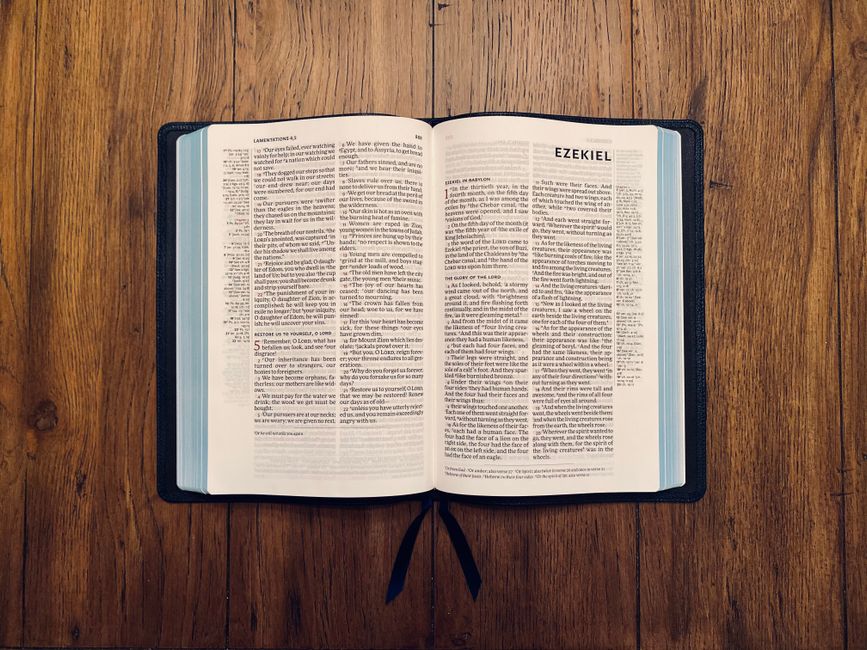
Welcome to this deep dive into one of the most dramatic chapters in the Old Testament. In 2 Kings 19, we witness a collision between the arrogance of human empire and the absolute sovereignty of the Living God, offering us a timeless blueprint for how to handle overwhelming life crises through prayer and faith.
2 Kings 19 — Historical and Spiritual Context
2 Kings 19 records the climax of the Assyrian invasion of Judah under the reign of King Hezekiah, around 701 B.C. The author, traditionally thought to be the prophet Jeremiah, writes to a people in exile to demonstrate that God remains the ultimate authority over all earthly kingdoms, regardless of how intimidating they may appear. You can read 2 Kings 19 on Bible Gateway to ground yourself in the narrative.
The overarching theological theme of 2 Kings 19 is the contrast between the blasphemous pride of the world and the humble reliance of the believer upon the God of Israel. For the modern reader, this chapter serves as a profound reminder that when we face “Assyrian” threats—whether financial ruin, health crises, or spiritual warfare—our primary weapon is not strategic negotiation or panic, but taking our burdens directly to the throne of God.

Verse-by-Verse Commentary on 2 Kings 19
2 Kings 19:1 — Meaning and Explanation
**And it came to pass, when king Hezekiah heard it, that he rent his clothes, and covered himself with sackcloth, and went into the house of the LORD.**
When Hezekiah heard the blasphemous threats of the Rabshakeh, he immediately responded with outward signs of inward distress. Renting clothes and wearing sackcloth were standard Hebrew expressions of deep mourning and humility, signaling to God that the king recognized his own helplessness and the gravity of the national crisis.
The word for “rent” in the Hebrew is *qara* (Strong’s H7167), which literally means to tear away. This was not a performance; it was an admission that his heart was torn by the dishonor brought upon God’s name. By going to the “house of the LORD,” Hezekiah demonstrated a crucial spiritual principle: when the world insults your faith or threatens your security, do not run to the palace of human reasoning, but to the sanctuary of God’s presence.
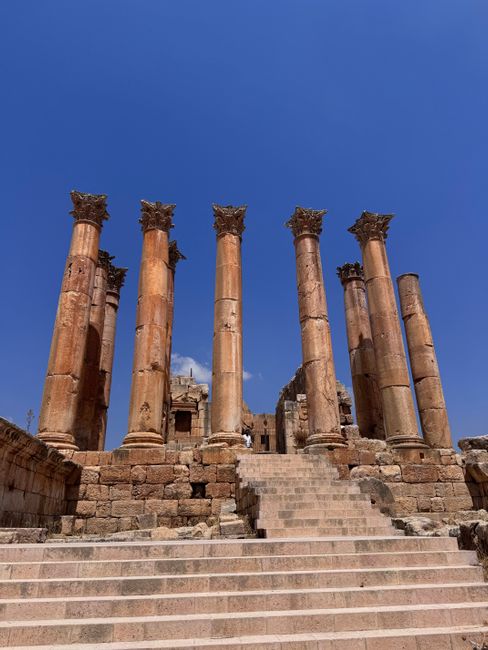
2 Kings 19:15 — Meaning and Explanation
**And Hezekiah prayed before the LORD, and said, O LORD God of Israel, which dwellest between the cherubims, thou art the God, even thou alone, of all the kingdoms of the earth; thou hast made heaven and earth.**
Hezekiah’s prayer is a masterclass in theology, beginning not with his own needs, but with the exaltation of God’s character. He addresses the Lord as the one who “dwellest between the cherubims,” acknowledging the mercy seat of the Ark of the Covenant, the place where God’s glory meets human need.
The Hebrew word for “dwellest” is *yashab* (Strong’s H3427), implying a settled, enthroned presence. Hezekiah reminds himself that the God who created the heavens and the earth is far greater than the Assyrian king Sennacherib. When we pray, we often start with our anxiety, but Hezekiah shows us that starting with God’s sovereignty puts our problems in their proper, tiny perspective.
2 Kings 19:19 — Meaning and Explanation
**Now therefore, O LORD our God, I beseech thee, save thou us out of his hand, that all the kingdoms of the earth may know that thou art the LORD God, even thou only.**
This verse reveals the true motivation behind Hezekiah’s request for deliverance: the glory of God. He is not merely asking for his own safety; he is asking for the vindication of God’s reputation against a pagan king who dared to claim that the Lord was no better than the idols of other nations.
The name “LORD” here is the Tetragrammaton, *YHWH* (Strong’s H3068), the covenant-keeping God. Hezekiah appeals to the covenant, essentially saying, “If you do not save us, the world will think you are weak.” This teaches us that the most powerful prayers are those that align our personal desires with the glory of God’s name, ensuring that our deliverance serves as a testimony to those around us.
2 Kings 19:35 — Meaning and Explanation
**And it came to pass that night, that the angel of the LORD went out, and smote in the camp of the Assyrians an hundred fourscore and five thousand: and when they arose early in the morning, behold, they were all dead corpses.**
The culmination of the chapter is a miraculous act of divine intervention, proving that God fights for those who trust Him. The “angel of the LORD” is often interpreted in the Old Testament as a pre-incarnate appearance of Christ, the commander of the heavenly hosts, who executes justice against the enemies of God’s people.
The sheer scale of this victory—185,000 soldiers destroyed in a single night—serves to emphasize the futility of fighting against God. The word “smote” (*nakah*, Strong’s H5221) denotes a decisive, fatal blow. For the reader, this is the ultimate promise: no matter how vast or intimidating the opposition, the battle belongs to the Lord, and His power is never exhausted by the size of the challenge.

How to Apply 2 Kings 19 in Your Daily Life
Applying 2 Kings 19 today requires a shift in how we process “bad news.” When you receive a negative medical diagnosis or face a sudden job loss, follow Hezekiah’s lead: do not let the news drive you to panic; let it drive you to the “house of the LORD.” In a family setting, this looks like gathering your spouse or children to pray openly when a crisis hits, rather than hiding your anxiety. It teaches your family that God is a present help, not a distant concept.
In the workplace, when you face unfair treatment or the threat of a reputation-damaging situation, practice the “Hezekiah pause.” Instead of responding with an angry email or a defensive outburst, take the situation to God in prayer first. Ask, “Lord, how can you be glorified in this conflict?” By seeking His honor rather than your own vindication, you will find a supernatural peace that guards your heart, allowing you to act with a wisdom that is clearly not your own.
A Prayer Based on 2 Kings 19
Guided Scriptural Prayer
Heavenly Father, I come before You today, acknowledging that You alone are God over all the kingdoms of the earth. Like Hezekiah, I bring the “threatening letters” of my life—my fears, my debts, and my conflicts—and I lay them at Your feet, knowing that You are the Creator of heaven and earth. Please save me not just for my own comfort, but so that those around me may know that You are the Lord God, and You alone. Give me the grace to trust in Your power when I feel surrounded by obstacles, and remind me that the battle is Yours. In the name of Jesus, Amen.
Frequently Asked Questions About 2 Kings 19
What is the main message of 2 Kings 19?
The main message of 2 Kings 19 is that God is sovereign over all earthly powers and that He hears the cries of His people in times of extreme distress. When King Hezekiah faced the overwhelming threat of the Assyrian army, he did not rely on military might or political alliances. Instead, he took the challenge to the Temple and prayed. The chapter teaches that humility and total dependence on God, rather than pride or self-sufficiency, are the keys to experiencing divine deliverance.
Who was the Assyrian king in 2 Kings 19?
The Assyrian king mentioned in 2 Kings 19 is Sennacherib. He was the son of Sargon II and a powerful ruler who sought to expand the Assyrian Empire by crushing neighboring states, including Judah. In this chapter, he sends his commander, the Rabshakeh, to taunt Jerusalem and mock the God of Israel. Sennacherib’s arrogance and his eventual defeat—as recorded in 2 Kings 19:35-37—serve as a historical and theological warning against the folly of defying the Lord.
What does 2 Kings 19:35 mean regarding the angel of the LORD?
2 Kings 19:35 describes the miraculous destruction of 185,000 Assyrian soldiers by the “angel of the LORD.” This event confirms that God is the ultimate protector of His covenant people. In biblical exegesis, the “angel of the LORD” is frequently viewed as a manifestation of the presence of God Himself. This verse demonstrates that God does not require human strength to win a battle; He can intervene directly and decisively to protect those who trust Him, turning a hopeless situation into a total victory overnight.
May the peace of the Lord, which surpasses all understanding, guard your heart and mind as you walk in the truth of His sovereign power.