
Welcome to this deep dive into the scriptures, where we seek to uncover the profound intersections of human frailty and divine sovereignty. In this study of 2 Kings 20, we will explore the themes of miraculous healing, the temptation of pride, and the sobering reality of stewardship over the time God grants us.
2 Kings 20 — Historical and Spiritual Context
2 Kings 20 finds King Hezekiah of Judah at a pivotal crossroads during the mid-eighth century B.C., a period marked by the looming threat of the Neo-Assyrian Empire. As the author of Kings—traditionally attributed to the prophet Jeremiah—records, Hezekiah faces a terminal illness during the same era he is navigating the political fallout of Sennacherib’s siege of Jerusalem. You can read 2 Kings 20 on Bible Gateway to ground yourself in the narrative flow.
The overarching theological theme of 2 Kings 20 is the fragile nature of human life when juxtaposed with the absolute authority of God. For the modern believer, this chapter serves as a mirror, reflecting our own tendencies toward self-reliance after experiencing divine mercy. It challenges us to examine whether our hearts remain humble when we are given “extra time” and whether our testimony points others toward our own achievements or toward the glory of the Almighty.
Verse-by-Verse Commentary on 2 Kings 20
2 Kings 20:1 — Meaning and Explanation
**”In those days was Hezekiah sick unto death. And the prophet Isaiah the son of Amoz came to him, and said unto him, Thus saith the Lord, Set thine house in order; for thou shalt die, and not live.”**
This verse captures the gravity of Hezekiah’s situation, as the Hebrew phrase for “sick unto death” (*chalah* H2470) implies a condition that is medically irreversible. The divine command to “set thine house in order” (*tsavah* H6680) is a sobering reminder that every person must eventually face the transition from time to eternity. It is an urgent call for spiritual and practical stewardship.
Theologically, this passage demonstrates that God often uses the “end of our rope” to bring us to the beginning of true prayer. Hezekiah had been a faithful king, yet he was not exempt from the physical decay inherent in a fallen world. The lesson here is that our “house”—our spiritual legacy, our relationships, and our conscience—should always be in a state of readiness, for we do not know the day nor the hour of our departure.
2 Kings 20:5 — Meaning and Explanation
**”Turn again, and tell Hezekiah the captain of my people, Thus saith the Lord, the God of David thy father, I have heard thy prayer, I have seen thy tears: behold, I will heal thee: on the third day thou shalt go up unto the house of the Lord.”**
In this verse, God responds to Hezekiah’s weeping with profound intimacy, affirming that He is the God of his covenantal history. The word “tears” (*dim’ah* H1831) signifies the depth of Hezekiah’s contrition and desperation. God’s response is not merely a clinical intervention but a compassionate act of grace toward a broken-hearted servant.
The spiritual truth here is that God is never indifferent to our petitions. As Matthew Henry notes, God does not just hear the words of our lips; He sees the emotions of our hearts. The promise that Hezekiah would “go up unto the house of the Lord” serves as a reminder that the purpose of our healing is to facilitate our worship and service, not merely to prolong our own comfort.
2 Kings 20:11 — Meaning and Explanation
**”And Isaiah the prophet cried unto the Lord: and he brought the shadow ten degrees backward, by which it had gone down in the dial of Ahaz.”**
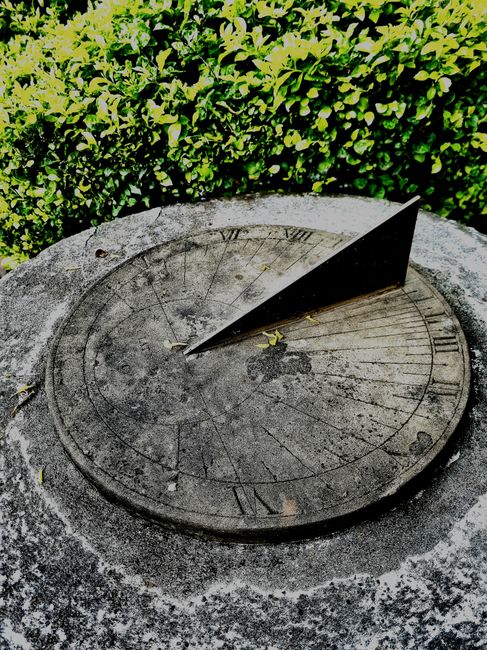
This extraordinary miracle, where the sun’s shadow retreats, demonstrates God’s total dominion over the laws of nature. The Hebrew word for “dial” or “steps” (*ma’alah* H4609) refers to a specialized sundial. Moving the shadow backward was a sign (*’owth* H226) that God was the author of both the miracle of healing and the celestial mechanics of the universe.
For the believer, this event highlights that nothing is impossible for the Creator. When God grants a sign, it is to bolster faith and confirm His word. However, we must be careful not to become so enamored with the “sign” that we lose sight of the “Sign-giver.” Faith should be rooted in God’s character rather than our demand for supernatural proof.
2 Kings 20:19 — Meaning and Explanation
**”Then said Hezekiah unto Isaiah, Good is the word of the Lord which thou hast spoken. And he said, Is it not good, if peace and truth be in my days?”**
This response from Hezekiah has been debated for centuries, as it reveals a complex mix of resignation and perhaps a degree of self-centeredness. When told that his descendants would face the Babylonian captivity, Hezekiah finds comfort in the fact that it would not happen in his lifetime. The word “peace” (*shalom* H7965) here is used to describe the tranquility of his own reign.
The spiritual lesson is a warning against the “short-sightedness of peace.” While we should be grateful for the blessings we enjoy, we must also be concerned for the generations that follow. True spiritual maturity involves praying for the welfare of those who will walk in our footsteps long after our own “days” have passed.
How to Apply 2 Kings 20 in Your Daily Life
Applying 2 Kings 20 begins with the practice of “setting your house in order.” In your family life, this means being intentional about the legacy you are leaving. Do not wait for a health crisis to reconcile with a family member or to communicate your values to your children. Have the difficult conversations today, settle your financial stewardship, and ensure that your spiritual life is not hidden behind a mask of busyness.
In your professional life, learn from Hezekiah’s mistake in verse 13, where he showed off his treasures to the Babylonians. Modern Christians often fall into the trap of “showing off” their success, influence, or status to the world, which can open doors to temptation and compromise. Instead, practice the discipline of humility, recognizing that every talent, promotion, or resource you possess is a gift from God, meant for His glory rather than your own vanity.
A Prayer Based on 2 Kings 20
Guided Scriptural Prayer
Heavenly Father, I come before You acknowledging that my life is in Your hands, just as the days of King Hezekiah were. Thank You for hearing my prayers and seeing the tears I have shed in moments of weakness. Help me to live with an eternal perspective, not seeking my own comfort at the expense of future generations, but striving for Your truth. May I use the time You grant me to build Your kingdom rather than my own. Give me a heart that remains humble in prosperity and faithful in trial. In Jesus’ name, Amen.
Frequently Asked Questions About 2 Kings 20
What is the main message of 2 Kings 20?
The central message of 2 Kings 20 is the sovereignty of God over life, death, and history. Through the healing of Hezekiah, we see that God hears the prayers of the contrite, but through the subsequent account of his pride and the prophecy of Babylonian exile, we learn that even the most godly individuals are susceptible to the snares of vanity. The chapter serves as a profound meditation on the responsibility of stewardship—both of our health and our resources—and the importance of leaving a godly legacy for those who come after us.
Why did God move the sun backward in 2 Kings 20?
God moved the sun backward as a miraculous sign to confirm the promise He gave to Hezekiah through the prophet Isaiah. In 2 Kings 20:8-11, Hezekiah asks for a sign to verify that he would indeed recover and go to the temple. By altering the shadow on the sundial of Ahaz, God demonstrated His absolute authority over the physical universe. This act served to bolster Hezekiah’s faith and provided an undeniable witness to the divine origin of his healing, showing that the God who created time can also, in His mercy, interrupt it.
What does the visit from the Babylonians in 2 Kings 20 signify?
The visit from the Babylonian envoys in 2 Kings 20:12-15 is a critical turning point. Hezekiah, in a moment of pride, displays all his wealth and the resources of his kingdom to these foreigners. This act of vanity serves as a catalyst for the prophet Isaiah’s prophecy that all these treasures would eventually be carried away to Babylon (2 Kings 20:17). It signifies that when we use God’s blessings to inflate our own ego rather than to honor Him, we invite spiritual and earthly ruin. It is a cautionary tale about the dangers of worldly alliances and the pride that often follows a great victory.
May the grace of our Lord Jesus Christ be with you as you continue to meditate on His holy Word.