
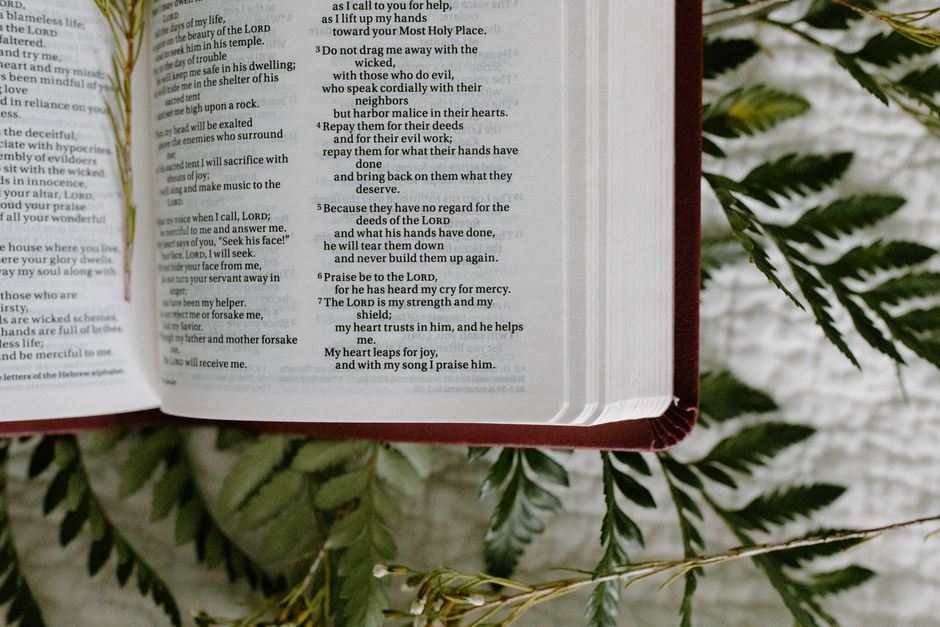
Welcome to this deep-dive study into Psalm 8, a masterpiece of Hebrew poetry that invites us to contemplate the majesty of God and the profound dignity He has bestowed upon humanity. In this exploration, we will unpack the original language, historical context, and practical applications of this hymn, discovering how it grounds our identity in the Creator rather than the chaos of the world.
Psalm 8 — Historical and Spiritual Context
Psalm 8 is traditionally attributed to King David, composed likely during his youth while tending his father’s flocks under the vast, unpolluted night skies of the Judean wilderness. As a “Psalm of Ascent” or a hymn of praise, it is classified as a “nature psalm,” written to be performed with musical accompaniment—specifically upon the “Gittith,” a stringed instrument often associated with the wine presses of Gath. The setting is one of solitude and reflection, where the shepherd-king gazes upward and realizes the stark contrast between the infinite power of God and the frailty of man. You can read Psalm 8 on Bible Gateway to ground yourself in the text before we proceed.
Theological significance in this chapter centers on the concept of “Imago Dei”—the image of God. It serves as a bridge between the creation account in Genesis and the New Testament revelation of Christ’s humiliation and exaltation. For the modern believer, Psalm 8 acts as an anchor, reminding us that despite our insignificance in the vastness of the cosmos, we are crowned with glory and honor by the Almighty. It shifts our perspective from self-centered anxiety to God-centered worship, providing a firm foundation for our worth and our stewardship of the earth.

Verse-by-Verse Commentary on Psalm 8
Psalm 8:1 — Meaning and Explanation
“O Lord our Lord, how excellent is thy name in all the earth! who hast set thy glory above the heavens.”
The opening verse establishes the sovereign majesty of God. The Hebrew word for Lord is *Yahweh* (Jehovah), the self-existent, covenant-keeping God, while the second “Lord” is *Adonai*, signifying Master or Sovereign Ruler. David uses the word *mah* (what/how) to express an exclamation of wonder. The “name” of God represents His entire character, reputation, and authority. By stating His glory is “set above the heavens,” David uses the Hebrew word *thanah* (Strong’s H5414), which implies a deliberate act of placing or establishing His majesty as a canopy over all creation.
Spiritually, this verse teaches us that God’s excellence is not merely local to Israel or the temple, but universal. As we look at the complexity of the universe, we see the fingerprints of a Creator whose reputation precedes the stars. It is an invitation to stop and acknowledge that the very God who holds the galaxies is the same God who enters into covenant with us.

Psalm 8:2 — Meaning and Explanation
“Out of the mouth of babes and sucklings hast thou ordained strength because of thine enemies, that thou mightest still the enemy and the avenger.”
This verse highlights the paradox of divine power working through the weakest of vessels. The word “strength” here is *oz* (Strong’s H5797), which in some contexts denotes a stronghold or praise. David argues that God chooses the most vulnerable—babes and those nursing—to manifest His power, effectively silencing the “avenger” or the adversary. This speaks to the humility of God, who does not need the strength of armies to defeat His enemies.
In the New Testament, Jesus quotes this very verse in Matthew 21:16 when the children cry “Hosanna” in the temple. It serves as a powerful lesson: God’s kingdom is not advanced by worldly power, intellect, or status, but by the pure, unadulterated praise of those who realize their total dependence on Him.
Psalm 8:4 — Meaning and Explanation
“What is man, that thou art mindful of him? and the son of man, that thou visitest him?”
This is perhaps the most existential question in the Bible. The word “man” here is *enosh* (Strong’s H582), which refers to man in his frail, mortal, and transient state. “Mindful” comes from *zakar*, meaning to remember or to keep in one’s thoughts. “Visitest” is *paqad*, which carries the weight of a divine, caring intervention. David is struck by the reality that the Creator of the cosmos would take an interest in such a temporary, fragile creature.
Theological depth is found in the connection to Christ. While this verse speaks to humanity at large, the New Testament writer of Hebrews (Hebrews 2:6-9) applies “the son of man” specifically to Jesus. He is the ultimate “man” whom God visited through the Incarnation, becoming lower than the angels for a time so that He could redeem humanity and restore our lost dignity.

Psalm 8:5 — Meaning and Explanation
“For thou hast made him a little lower than the angels, and hast crowned him with glory and honour.”
The phrase “a little lower than the angels” is a fascinating translation. The Hebrew word for angels is *elohim* (Strong’s H430), which most commonly refers to God Himself. Many scholars, including those at Blue Letter Bible, suggest this implies man was made a little lower than the divine realm. Being “crowned” with “glory” (*kabod*) and “honour” (*hadar*) signifies that humanity was granted a royal status as God’s vice-regents on earth, designed to reflect His character in the physical world.
This verse restores our sense of purpose. We are not cosmic accidents; we are crowned beings. While sin has tarnished this crown, the Gospel restores it. We are called to live as royalty—not in pride, but in the responsibility of stewarding the gifts and the creation God has entrusted to us.
How to Apply Psalm 8 in Your Daily Life
Applying Psalm 8 begins with a shift in your daily perspective. In your family life, teach your children to look at the stars and recognize that the God who made them also made the vast expanse above. When life feels overwhelming or you feel insignificant in the face of career pressure or personal failure, return to verse 4. Remind yourself that the Creator of the universe is “mindful” of you—He has not forgotten your name or your struggles.
In your work, view your labor as an act of stewardship. If God has “crowned” you with honor and given you dominion over the works of His hands, your job—whether it is accounting, construction, or parenting—is a way to serve the Creator. Approach your tasks with excellence, knowing that you are performing them as a representative of the King of Kings. Let this Psalm be your antidote to the “imposter syndrome” of the modern age; your worth is not defined by your productivity, but by the fact that you are visited and remembered by God.
A Prayer Based on Psalm 8
Guided Scriptural Prayer
O Lord our Lord, how excellent is Your name in all the earth! I stand in awe of Your majesty, realizing that the same fingers that set the stars in their courses are the same hands that hold my life today. Thank You for being mindful of me, despite my frailty and my failures. I humble myself before Your glory and ask that You help me to walk in the dignity You have bestowed upon me. May my life be a reflection of Your honor, and may my words and actions bring praise to You. Amen.
Frequently Asked Questions About Psalm 8
What is the main message of Psalm 8?
The main message of Psalm 8 is the majesty of God and the dignity He has graciously bestowed upon humanity. It begins and ends by praising God’s excellent name. The central theme explores the contrast between the infinite, powerful Creator and the seemingly small, frail human being. Despite this disparity, David argues that God has chosen to “visit” and “mindful” of man, crowning him with glory and giving him authority over creation. It is a foundational text for understanding our identity as created, loved, and commissioned beings who exist to reflect God’s glory on earth.
Who wrote Psalm 8 and why?
Psalm 8 is attributed to King David. It is a “nature psalm” that he likely composed during his time as a shepherd. David wrote this as a hymn of worship, intended to be sung to the accompaniment of the Gittith. He wrote it to process his own feelings of smallness while observing the night sky, ultimately finding comfort and purpose in the realization that the Creator of such vastness cares deeply for the human soul. It serves as a meditation on the Creator-creature relationship and the unique position humanity occupies in the hierarchy of God’s design.
What does “made a little lower than the angels” mean in Psalm 8:5?
In Psalm 8:5, the phrase “made a little lower than the angels” uses the Hebrew word *elohim*, which is often translated as “God” or “divine beings.” This suggests that humanity was created in a state just below the heavenly realm, possessing a unique capacity for moral agency and communion with the Creator. It emphasizes that humanity is not just another animal, but a being designed for a higher purpose. The Apostle Paul, in Hebrews 2:7, applies this specifically to Jesus Christ, noting that He became “a little lower than the angels” by taking on human flesh so that He could suffer and die for our salvation.
May the truths of Psalm 8 dwell richly in your heart, reminding you always of your great value in the eyes of the King of Kings.