
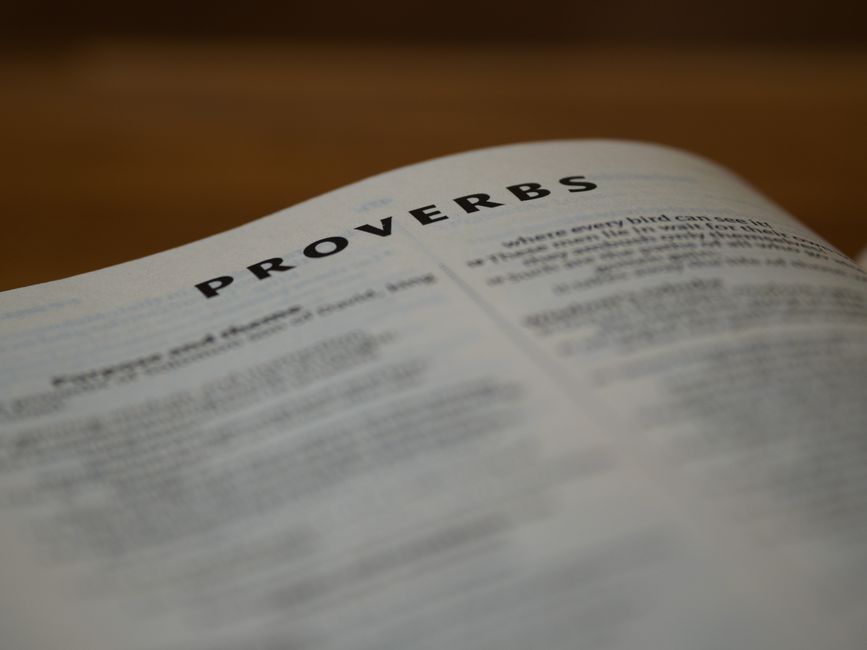
Welcome to this deep dive into the wisdom of Proverbs 17. In this study, we will uncover timeless truths regarding the value of a quiet spirit, the sanctity of friendship, and the profound weight of our words, all designed to sharpen your walk with the Lord.
Proverbs 17 — Historical and Spiritual Context
Proverbs 17 is part of the collection of “The Proverbs of Solomon,” likely compiled during the reign of King Hezekiah. This section, often dated between 970 and 700 B.C., was written to provide the royal court and the people of Israel with a manual for godly living, emphasizing that true wisdom originates in the fear of the Lord rather than mere human intellect. You can read Proverbs 17 on Bible Gateway to familiarize yourself with the full text.
The overarching theological theme of Proverbs 17 is the contrast between the “fool” and the “wise” in the context of interpersonal relationships and internal character. It serves as a mirror for the believer today, challenging us to evaluate our integrity, our control over our tongues, and our commitment to peace within the family unit. By examining these verses, we learn that spiritual maturity is measured not by outward success, but by the quality of our hearts and the consistency of our character under pressure.
Verse-by-Verse Commentary on Proverbs 17
Proverbs 17:1 — Meaning and Explanation
“Better is a dry morsel, and quietness therewith, than an house full of sacrifices with strife.”
This verse provides a fundamental principle for domestic peace: contentment with little is far superior to abundance laced with conflict. Solomon contrasts the “dry morsel”—a simple, humble meal—with a “house full of sacrifices,” which implies a home filled with the remnants of religious offerings and, by extension, material wealth and luxury.
The Hebrew word for “quietness” is shaqat (Strong’s H8252), suggesting tranquility, stillness, and a state of being undisturbed. In contrast, the word “strife” (riyb, Strong’s H7379) denotes a legal or personal quarrel. The spiritual lesson is profound: God values the condition of the heart and the atmosphere of the home more than the outward display of piety or the accumulation of worldly possessions. A wealthy home without peace is a prison, while a humble home with God’s peace is a sanctuary.
Proverbs 17:3 — Meaning and Explanation
“The fining pot is for silver, and the furnace for gold: but the LORD trieth the hearts.”
This verse illustrates the sovereignty of God in the process of sanctification. Just as a refiner uses heat to separate precious metals from their dross, the Lord uses life’s trials to purge the impurities from the human heart, revealing the authentic faith of the believer.
The Hebrew term for “trieth” is bachan (Strong’s H974), which means to test, examine, or prove by trial. In ancient metallurgy, the refiner would look into the “fining pot” until he could see his own reflection in the molten silver. Similarly, God allows the “furnace” of affliction not to destroy us, but to refine us until the character of Christ is clearly visible in our lives. We are reminded that our struggles are not random; they are purposeful tools in the hands of a Master Refiner.

Proverbs 17:17 — Meaning and Explanation
“A friend loveth at all times, and a brother is born for adversity.”
This verse defines the nature of covenantal love and the purpose of kinship. It suggests that true friendship is not a fair-weather arrangement but a steadfast commitment, and that family bonds are specifically designed to provide support when the storms of life arise.
The Hebrew word for “friend” is rea` (Strong’s H7453), implying a companion or associate. The text asserts that this love persists “at all times,” regardless of circumstance. The “brother” is described as being “born for adversity,” suggesting that the very purpose of familial bonds is to provide a safety net during times of distress. For the Christian, this points toward the ultimate Friend, Jesus Christ, who sticks closer than a brother and whose love for His people is never contingent upon our performance or prosperity.
Proverbs 17:22 — Meaning and Explanation
“A merry heart doeth good like a medicine: but a broken spirit drieth the bones.”
Solomon here connects physical health to emotional and spiritual well-being, noting that a joyful disposition acts as a restorative agent for the body. Conversely, a spirit crushed by despair has a degenerative effect on one’s physical constitution.
The Hebrew word for “merry” is sameach (Strong’s H8056), which denotes joy, gladness, or a cheerful state of mind. The “broken spirit” (ruwach nekeh, Strong’s H5218) refers to a crushed or smitten spirit. The “bones” in Hebrew thought represented the very foundation of the human frame. When our spirit is broken by bitterness or anxiety, it literally drains our vitality. This teaches us that cultivating a heart of gratitude and joy is not just a psychological preference—it is a spiritual discipline that preserves our health and testimony.

How to Apply Proverbs 17 in Your Daily Life
Applying Proverbs 17 requires a shift from reactive living to intentional, Spirit-led behavior. In the context of your family, consider the wisdom of verse 1: if your home is filled with “strife,” prioritize the restoration of peace over the desire to “win” an argument. Ask yourself if you are valuing the “dry morsel” of quality time and quiet conversation over the distractions of modern life. When conflicts arise, practice the pause—take a moment to pray before responding, ensuring your words reflect the peace of Christ rather than the heat of the moment.
In the workplace, apply the lesson of the “refiner’s fire” (verse 3) when you face difficult coworkers or challenging deadlines. Instead of viewing these trials as obstacles, view them as opportunities for God to refine your patience and integrity. When colleagues are under pressure, be the person who exemplifies the “brother born for adversity” (verse 17). Offer support, listen with empathy, and remain a steady, reliable presence. By choosing to be a source of encouragement, you become a living testament to the wisdom found in this chapter.
A Prayer Based on Proverbs 17
Guided Scriptural Prayer
Heavenly Father, I thank You for the timeless wisdom of Your Word, which guides my steps and guards my heart. Lord, help me to cultivate a “merry heart” that brings healing to those around me, and grant me the grace to remain steadfast in friendship, especially when others are walking through the fire of adversity. Purify my motives as You would refine silver, removing the dross of pride and selfishness from my life. May my home be a place of quietness and peace, free from the strife that hinders my witness for You. I trust You to be my constant Companion, and I ask that You teach me to love others as You have loved me, according to Your truth in Proverbs 17. Amen.
Frequently Asked Questions About Proverbs 17
What is the main message of Proverbs 17?
The main message of Proverbs 17 is the necessity of godly character in social and personal life. It emphasizes that true wisdom is evidenced by our words, our ability to keep the peace, our loyalty in friendship, and our response to trials. The chapter contrasts the “fool” who stirs up conflict and lacks self-control with the “wise” person who seeks understanding, values quietness over abundance, and allows God to refine their heart through life’s experiences.
Who wrote Proverbs and why?
Proverbs is primarily attributed to King Solomon, the son of David, though chapters 25–31 include contributions from other sources like Agur and King Lemuel. It was written to impart “wisdom and instruction” (Proverbs 1:2), aiming to help the reader navigate the complexities of life with moral integrity and spiritual discernment. Its purpose is to transition the reader from simple-mindedness to a life defined by the “fear of the LORD,” which the book identifies as the beginning of all true knowledge.
What does Proverbs 17:17 mean in a Christian context?
In a Christian context, Proverbs 17:17 is a beautiful reflection of the nature of Christ’s love for the Church. While it speaks to the importance of human loyalty and supporting our friends and family in their darkest hours, it also points to the ultimate “Brother” who was born for our adversity—Jesus. He walked into the ultimate trial of the cross to save us. Therefore, believers are called to mirror this sacrificial, unwavering love in their own relationships, standing by others when they are at their lowest point.
May the truths of Proverbs 17 take deep root in your heart today, bringing you peace, wisdom, and a renewed focus on the things that truly matter in the sight of God.