
Welcome to this deep-dive study of Isaiah 26, a chapter of profound comfort and prophetic hope. As we journey through these verses, we will explore the themes of divine protection, the necessity of trust in the midst of turmoil, and the ultimate victory of God’s righteousness over the pride of man.
Isaiah 26 — Historical and Spiritual Context
Isaiah 26 is situated within what scholars often call the “Isaiah Apocalypse” (chapters 24–27), written by the prophet Isaiah around the 8th century B.C. during a period of geopolitical instability. Addressing a nation facing the looming threat of Assyrian dominance and eventual Babylonian exile, the prophet shifts his focus from historical judgment to the eternal sovereignty of Yahweh, offering a vision of a future kingdom where God’s people dwell in security.
Theologically, this chapter serves as a timeless anthem for the believer, emphasizing that true peace (*Shalom*) is not the absence of external conflict but the presence of a steadfast mind anchored in God. It reminds us that while earthly empires rise and fall, the Lord remains our eternal Rock, making this text essential for anyone navigating personal crisis or societal decay. You can follow along with the text here: read Isaiah 26 on Bible Gateway.
Verse-by-Verse Commentary on Isaiah 26
Isaiah 26:3 — Meaning and Explanation
“Thou wilt keep him in perfect peace, whose mind is stayed on thee: because he trusteth in thee.”
This verse is the theological heartbeat of the chapter, promising a supernatural stability that transcends circumstances. The Hebrew word for “mind” is yetzer (Strong’s H3336), which refers to the imagination, purpose, or framing of one’s thoughts. To have a “stayed” mind means to be propped up or supported by God, much like a wall is reinforced to prevent it from crumbling under pressure.
The phrase “perfect peace” is a literal translation of the Hebrew shalom shalom, a doubling of the word that emphasizes completeness, wholeness, and an abundance of tranquility. In the original language, this suggests that the peace is not merely a feeling, but a state of being firmly established. When the believer chooses to focus their cognitive and emotional faculties upon the character of God, the result is a fortress-like security that the world’s chaos cannot penetrate.
Isaiah 26:4 — Meaning and Explanation
“Trust ye in the Lord for ever: for in the Lord Jehovah is everlasting strength:”
This verse serves as a command and a theological rationale for the peace promised in the previous verse. The Hebrew word for “Lord Jehovah” is Yah Yahweh, a poetic and emphatic reference to the covenant-keeping God. The term for “everlasting strength” is tzur olamim (Strong’s H6697 and H5769), which translates literally to “the Rock of Ages.”
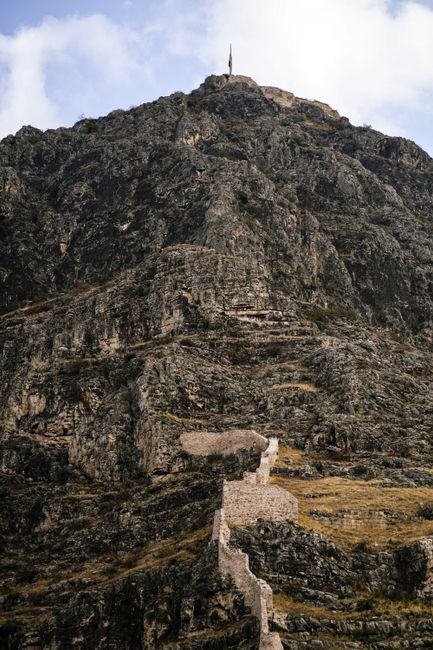
By identifying God as a “Rock,” Isaiah uses imagery that would have been incredibly resonant for an ancient audience living in a rugged, mountainous terrain. A rock is immovable, unchangeable, and provides shelter from the elements. By calling Him the “Rock of Ages,” the prophet assures us that God’s ability to save and sustain is not limited to a single generation or a specific crisis, but is a permanent, eternal attribute of His divine nature.

Isaiah 26:9 — Meaning and Explanation
“With my soul have I desired thee in the night; yea, with my spirit within me will I seek thee early: for when thy judgments are in the earth, the inhabitants of the world will learn righteousness.”
This verse captures the intimacy of the prophet’s personal devotion even while the world is under divine judgment. The word for “desired” is avah (Strong’s H183), implying a deep, longing craving. Isaiah contrasts the darkness of the “night”—a metaphor for times of trial, ignorance, or sorrow—with the proactive pursuit of God’s light.
The spiritual lesson here is that divine judgment is not merely punitive; it is pedagogical. The prophet recognizes that when God’s justice is manifest, it forces a recalibration of the human heart. When the “inhabitants of the world” see God’s hand at work, the pride of man is stripped away, and the capacity to learn righteousness is opened. It is a reminder that even in our darkest nights, God is working to draw us toward a posture of holiness.
Isaiah 26:20 — Meaning and Explanation
“Come, my people, enter thou into thy chambers, and shut thy doors about thee: hide thyself as it were for a little moment, until the indignation be overpast.”
This verse offers a pastoral invitation to divine protection during times of collective distress. The “chambers” (cheder, Strong’s H2315) refer to inner, private rooms—a place of sanctuary. The instruction to “shut thy doors” suggests a deliberate withdrawal from the noise and panic of the world to commune with the Father.
This is a beautiful picture of the “secret place” described in Psalm 91. The “indignation” refers to the wrath of God being poured out upon an unrepentant world. For the believer, the lesson is one of trust and patience. We are encouraged to remain in the presence of God, knowing that the trials we face are but for a “little moment” when compared to the vastness of eternity. We do not need to fight the world’s battles; we only need to remain in the shelter of the Most High.

How to Apply Isaiah 26 in Your Daily Life
Applying Isaiah 26 in the modern workplace begins with the discipline of the “stayed mind.” When you face a high-pressure meeting or an uncertain career trajectory, practice the habit of pausing before you react. Instead of ruminating on the worst-case scenario, recite Isaiah 26:3 to yourself, intentionally shifting your focus from the problem to the “Rock of Ages.” This mental shift prevents anxiety from taking root and allows you to lead with a calm, godly authority.
In your family life, use verse 20 as a blueprint for spiritual retreats. In our hyper-connected age, we are constantly bombarded by the “indignation” of social media outrage and global crises. Teach your family the importance of “shutting the door”—creating moments of quiet, offline, screen-free prayer and scripture reading. By modeling this withdrawal into God’s presence, you provide your children with a model of stability that says, “We do not fear the world, because we are hidden in Him.”
A Prayer Based on Isaiah 26
Guided Scriptural Prayer
Heavenly Father, I thank You that You are the Rock of Ages, the immovable foundation upon which I build my life. When the storms of this world rise around me, I ask that You keep my heart and mind stayed upon You, so that I may walk in Your perfect peace. Help me to seek You in the night seasons, trusting that even in the midst of judgment and trial, You are teaching me righteousness. I choose to enter into the secret place of Your presence, hiding myself under the shadow of Your wings until the waves of trouble pass. May my life be a testament to Your eternal strength and unchanging love. Amen.
Frequently Asked Questions About Isaiah 26
What is the main message of Isaiah 26?
The main message of Isaiah 26 is the promise of divine security for those who place their total trust in God. It contrasts the instability and ultimate destruction of the proud and the wicked with the lasting peace granted to the righteous who remain “stayed” on the Lord. The chapter functions as a song of victory and a call to faith, assuring believers that even when the world is in chaos or under divine judgment, God remains a firm, eternal refuge for His people.
What does “perfect peace” mean in Isaiah 26:3?
In the original Hebrew, “perfect peace” is written as shalom shalom. In Hebrew syntax, repeating a word acts as a superlative, indicating a peace that is total, complete, and profound. It is not merely the absence of war, but a state of spiritual wholeness, welfare, and prosperity of the soul. It implies that when a believer’s thoughts are anchored in the character of God, the resulting internal stability is unshakable, regardless of external circumstances.
How does Isaiah 26 relate to the New Testament?
Isaiah 26 points toward the ultimate fulfillment of God’s kingdom in Christ. The “Rock of Ages” mentioned in verse 4 is a prophetic title for the Messiah, the foundation of the church (1 Corinthians 10:4). Furthermore, the promise of resurrection in Isaiah 26:19 (“Thy dead men shall live”) provides a clear Old Testament foreshadowing of the bodily resurrection of the saints through the power of Jesus Christ. The chapter invites the reader to look beyond earthly temporary relief toward the eternal salvation found only in God.
May the peace of the Lord, which passes all understanding, guard your heart and mind as you walk in the truth of His Word today.