
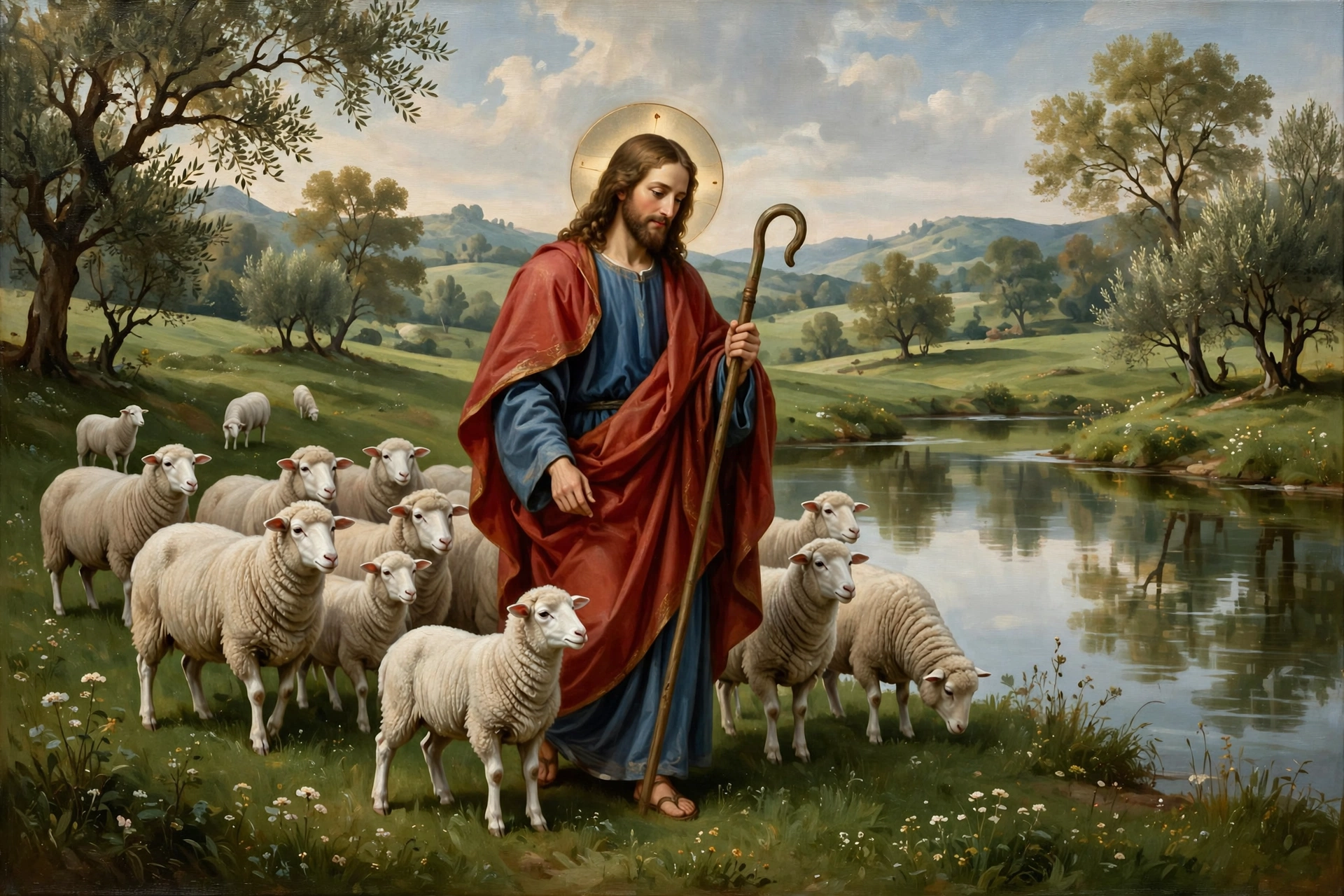
Psalm 23 – Historical and Spiritual Context
Psalm 23 is widely attributed to King David, reflecting his transition from a humble shepherd boy on the hills of Bethlehem to the anointed King of Israel. The historical context is deeply rooted in David’s intimate knowledge of shepherding; he understood that a shepherd’s life was defined by constant vigilance, sacrificial care, and an unbreakable bond with his flock. By framing God as his Shepherd, David wasn’t merely using a metaphor; he was declaring a radical shift in his identity. He moved from being the one who provided for the sheep to being the one who is completely dependent upon the Great Shepherd, Yahweh. This psalm serves as a timeless testimony of trust, written either in the quiet solitude of his youth or perhaps during the turbulent seasons of his later reign when he needed the reminder that his security rested in God alone.
The overarching spiritual theme of Psalm 23 is the sufficiency of God’s presence in every season of life. It traverses the full spectrum of human experience—from the abundance of “green pastures” to the suffocating darkness of the “valley of the shadow of death.” The psalm teaches that the believer’s peace is not derived from the absence of trouble, but from the presence of the Shepherd. Whether resting in the quiet provision of the Lord or walking through the terror of the unknown, the soul finds its ultimate comfort in knowing that the Shepherd is near. It is a masterpiece of faith that invites the reader to stop striving and start resting in the sovereign, loving care of the One who knows them by name.
Detailed Verse-by-Verse Commentary
Study of Psalm 23:1
“The Lord is my shepherd; I shall not want.”
In the Hebrew original, the word for Lord is Yahweh, the covenant-keeping name of God. By identifying Him as “my” shepherd, David makes a personal claim of ownership and relationship. The Hebrew word for “want,” chacer, implies lacking or being in need. This is a profound theological declaration: when we truly grasp the character of our Shepherd, our restless pursuit of worldly things ceases because our deepest needs are already met in Him. The Shepherd provides not just for our physical survival, but for our spiritual flourishing.
Study of Psalm 23:2
“He makes me lie down in green pastures; He leads me beside still waters.”
Sheep are notoriously anxious creatures; they will not lie down unless they are free from fear, hunger, and friction with other sheep. The imagery of “green pastures” (deshe in Hebrew, implying tender, young grass) speaks to God’s deliberate provision of rest and nourishment. The “still waters” (literally “waters of rest”) are essential because sheep are terrified of rushing water. This verse highlights the Shepherd’s intentionality; He knows exactly what kind of environment we need to thrive. He does not just provide; He actively orchestrates our peace.
Study of Psalm 23:4
“Yea, though I walk through the valley of the shadow of death, I will fear no evil; for You are with me; Your rod and Your staff, they comfort me.”
This is the spiritual pivot of the psalm. The “valley of the shadow of death” (tsalmaveth) refers to deep, impenetrable darkness—a place where a shepherd would lead his flock to reach higher grazing lands. Note the phrase “I walk through”; we are not meant to stay in the valley. The “rod” (a weapon for defense against predators) and the “staff” (a crook for guiding and rescuing) represent God’s protection and authority. The comfort is not found in the removal of the valley, but in the tangible reality of the Shepherd’s presence walking alongside us in the dark.
Practical Application for Your Daily Life
Applying Psalm 23 in your daily life begins with a shift in your morning posture. Before you check your phone or dive into the pressures of work, take five minutes to acknowledge that the Lord is your Shepherd for that specific day. This means surrendering your “to-do” list and your anxieties to Him. In the workplace, when you feel the pressure to perform or the fear of failure, remind yourself that you are not the one in charge of your ultimate sustenance—He is. This practice transforms your work from a frantic scramble for security into a partnership where you follow His leading, trusting that He provides the “green pastures” of clarity and rest even in the middle of a busy office.
In your family life and spiritual walk, use the “valley” imagery to reframe your trials. When you face conflict at home or an unexpected crisis, stop viewing the situation as a sign that the Shepherd has abandoned you. Instead, recognize it as a “valley” you are walking through. Actively look for His rod and staff—where is He defending you? Where is He gently guiding you back on track? By intentionally seeking His presence in the shadows, you move from a state of panic to a state of profound peace, knowing that the One who leads you through the dark is the same One who prepared the table before you.
Daily Prayer and Reflection
Guided Scriptural Prayer
Heavenly Shepherd, I thank You that I am never left to wander alone, for You are the guardian of my soul. I choose to lay down my anxieties in Your green pastures today, trusting that You know exactly what I need before I even ask. When the shadows of life grow long and the path becomes uncertain, help me to fix my eyes on You rather than the darkness. I rest in the confidence that Your rod and staff are protecting me, guiding me, and leading me home. Amen.
<hr />
<p style=”text-align: center; color: #64748b; font-size: 14px; font-style: italic;”>We hope this study guide on Psalm 23 blessed your day.</p>