

What Does the Bible Say About Faith in God?
The Bible teaches that faith in God is the foundational prerequisite for a relationship with Him, defined as the substance of things hoped for and the evidence of things not seen. It is not merely an intellectual assent to facts, but a total, trusting reliance upon God’s character and promises.
Scripture emphasizes that faith is a divine gift, not a human achievement. In the Old Testament, faith is often synonymous with “trust” or “leaning upon” God, as seen in the life of Abraham, who counted God’s promise as more certain than his own physical reality. In the New Testament, the Greek word pistis (G4102) is central to the apostolic message. You can explore a deep-dive analysis of this term at the Blue Letter Bible. Pistis implies a firm persuasion and a conviction based on hearing the Word of God.
For modern Christians, understanding faith is critical because we live in an era of skepticism and sensory dominance. True faith requires us to look beyond the ephemeral nature of the world and anchor our souls in the immutable nature of the Creator. As Hebrews 11:6 reminds us, without faith, it is impossible to please Him, making this the most essential pursuit for the believer’s spiritual growth.
Most Powerful Bible Verses About Faith in God (KJV)
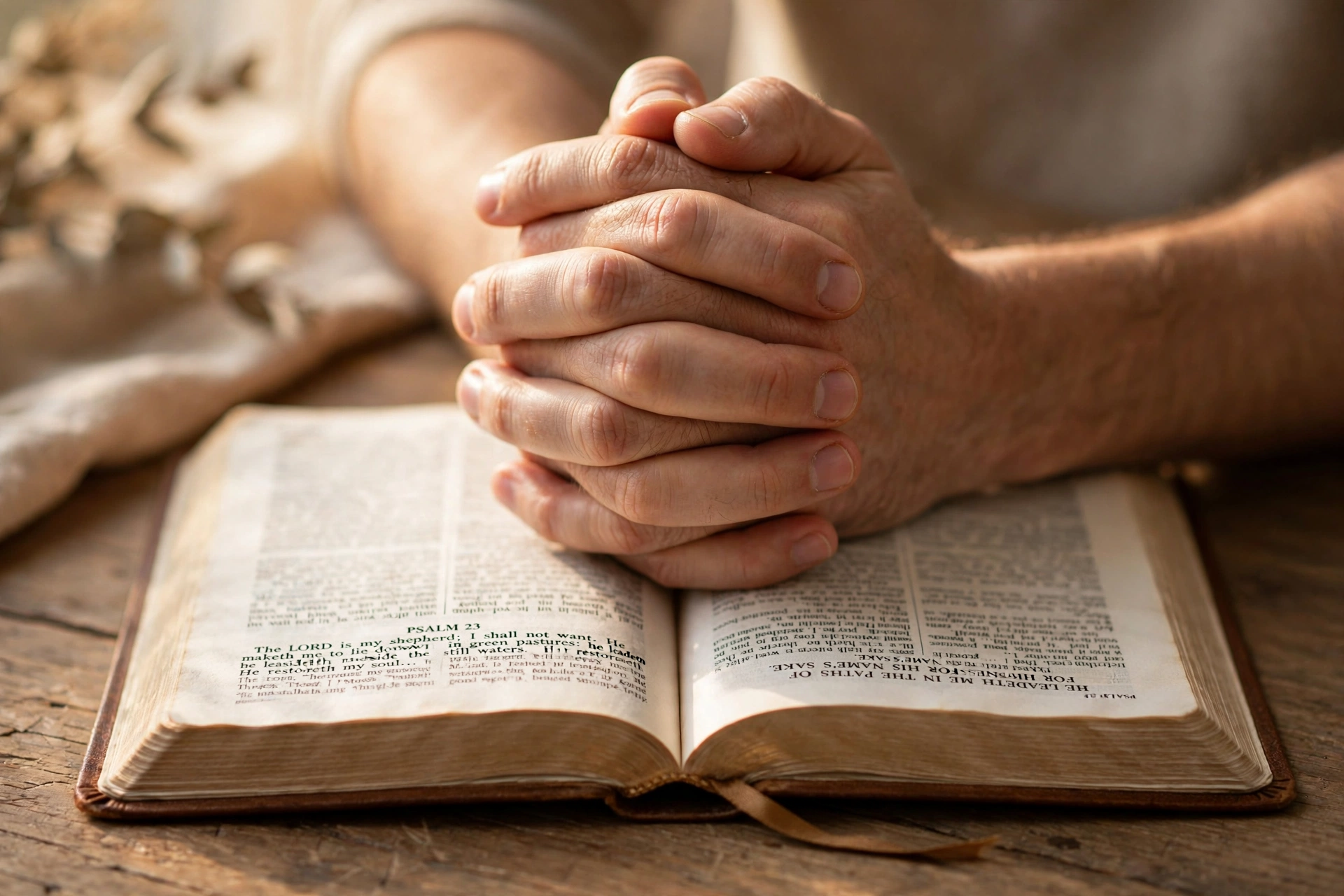
Now faith is the substance of things hoped for, the evidence of things not seen. Hebrews 11:1 (KJV)
The Apostle Paul (or the inspired author of Hebrews) wrote this to Jewish Christians facing intense persecution. They were tempted to return to the visible rituals of the Levitical system to escape the social and physical costs of following Christ. This definition serves as a theological anchor for the entire “Hall of Faith” chapter that follows.
The Greek word for “substance” is hypostasis (Strong’s G5287), which can also mean “assurance” or “title deed.” It suggests that faith provides the legal and spiritual reality of our future hope in the present moment. The “evidence” (elenchos) implies a conviction so strong that it serves as proof of spiritual realities that are invisible to the natural eye.
The lesson here is that our faith is not a blind leap into the dark; it is a confident step into the light of God’s revealed truth. In your daily life, this means you can stand firm in your decisions even when the outcome is not yet visible, because the “title deed” of God’s promise is already held in your heart.
For by grace are ye saved through faith; and that not of yourselves: it is the gift of God. Ephesians 2:8 (KJV)
Paul writes this to the church at Ephesus to clarify the mechanics of salvation. The Ephesians, surrounded by a culture of pagan works-based religion, needed to understand that their standing with God was entirely dependent on what Christ had done, not on their own moral performance or religious heritage.
The word “faith” here is pistis, but the context of “gift” (doron) is vital. It reminds us that even the ability to believe is a work of the Holy Spirit within us. By emphasizing that it is “not of yourselves,” Paul effectively strips away any room for human boasting, ensuring that all glory remains with the Giver of grace.
This verse is a profound comfort to the struggling believer. When your faith feels weak or wavering, remember that it is not your grip on God that saves you, but His grip on you. Faith is the vessel through which His grace flows, and He is the one who provides the vessel itself.
For we walk by faith, not by sight. 2 Corinthians 5:7 (KJV)
Paul writes this to a conflicted church in Corinth. Having dealt with the “outward man” perishing in the previous verse, he encourages believers to focus on the “inward man.” They were being distracted by worldly appearances and the criticisms of false teachers, and Paul calls them back to a higher perspective.
To “walk” (peripateo) is a continuous, habitual action. It is not an occasional sprint but a daily journey. The contrast is between “sight” (eidos), which refers to the external, sensory data of the world, and “faith.” The original language emphasizes that these two modes of navigation are mutually exclusive in their ultimate authority over our lives.
Applying this means making decisions based on God’s revealed Word rather than the shifting circumstances of your life. When your bank account is low, or a relationship is failing, “walking by sight” screams at you to panic. “Walking by faith” whispers that God is your provider and your shepherd, and His presence is the only reality that truly matters.
Key Takeaways: Bible Verses About Faith in God
| Verse Reference (KJV) | Core Spiritual Message | How to Apply Today |
|---|---|---|
| Hebrews 11:1 | Faith is the reality of our hope. | Trust in God’s promises even when you see no progress. |
| Ephesians 2:8 | Faith is a gift, not a work. | Stop striving for approval; rest in His grace. |
| 2 Corinthians 5:7 | Living by eternal, not sensory, truth. | Consult Scripture before reacting to life’s crises. |
How Can I Apply Bible Verses About Faith in God in My Daily Life?
When You Feel Overwhelmed at Work
In moments of high pressure, stop for a “breath of faith.” Close your eyes and confess, “Lord, you are my boss, not this project.” Practically, write down a promise of God on a sticky note—such as Philippians 4:13—and place it where you can see it. Before responding to an urgent email or meeting, pause and ask the Holy Spirit for wisdom, acknowledging that your value is rooted in Christ, not your professional output.
When a Relationship Hurts
When someone disappoints you, it is natural to walk by sight, seeing only their flaws and your pain. Instead, choose to walk by faith by viewing them through the lens of the Gospel. Pray for them specifically, asking God to reveal His love to them. Remind yourself that God is sovereign over this relationship and that your ultimate security is found in His unchanging love, not in the fluctuating affections of others.
During Financial Hardship
Financial anxiety often forces us to walk by sight, looking at numbers instead of God’s character. Create a “Faith Journal” where you list every time God has provided in the past. When you feel fear, read these entries aloud to remind your soul of His faithfulness. Commit to a practice of tithing or sacrificial giving, even when it seems illogical, as an act of defiance against the spirit of fear, trusting that God is the owner of all things.
A Prayer for Faith in God
Guided Scriptural Prayer
Heavenly Father, I come before You acknowledging that my faith is a gift that I often fail to cherish. Please forgive me for the times I have allowed my eyes to be fixed on the storm rather than on the Savior. I ask that You would increase my faith, not by removing all obstacles, but by deepening my conviction that You are who You say You are. Let Your Word be the substance of my life, the reality I lean upon when the world feels like shifting sand.
Lord, help me to walk by faith today. When I am tempted to rely on my own understanding or the evidence of my circumstances, remind me that I am saved by Your grace and sustained by Your power. Let my life be a testimony of Your faithfulness, so that even in the darkest valleys, others might see the light of Christ in me. I place my future, my fears, and my heart into Your hands. In the name of Jesus Christ, my Lord and Savior, Amen.
Frequently Asked Questions About Faith in God in the Bible
Does the Bible say that faith is enough to move mountains?
Yes, Jesus explicitly states in Matthew 17:20 that if you have faith as a grain of mustard seed, you shall say unto a mountain, “Remove hence to yonder place; and it shall remove.” This is not an endorsement of “name-it-and-claim-it” theology, but a powerful illustration of the authority God grants to those who align their will with His. The “mountain” represents the insurmountable obstacles that hinder the kingdom of God. When our faith is placed in the omnipotence of God rather than our own ability, impossible situations become opportunities for His glory to be revealed.
Is it a sin to have doubts while trying to have faith?
The Bible treats doubt as a struggle to be overcome rather than an unforgivable sin. In Mark 9:24, a desperate father cries out to Jesus, “Lord, I believe; help thou mine unbelief.” This honest confession was met with compassion, not condemnation. Doubt is often the shadow cast by a desire to believe. When you find yourself doubting, do not run from God; run to Him with your questions. A faith that has been tested by doubt and emerged on the other side is often stronger and more resilient than a faith that has never been challenged.
How does God reward our faith in Him?
The primary reward of faith is the relationship itself. Hebrews 11:6 states that God “is a rewarder of them that diligently seek him.” While the world looks for material prosperity, the Bible speaks of rewards such as peace that passes understanding, the fruit of the Spirit, and the assurance of eternal life. God rewards our faith by conforming us to the image of His Son, which is the highest good a human can experience. Every trial we endure through faith produces a weight of glory that far outweighs any temporary sacrifice we make here on earth.
What is the difference between “believing in God” and “saving faith”?
James 2:19 clarifies that “the devils also believe, and tremble,” yet they are not saved. Intellectual assent—agreeing that God exists—is not the same as the “saving faith” described in the New Testament. Saving faith involves a total surrender of the self to the Lordship of Jesus Christ. It is a transformative trust that results in a changed life and a desire for holiness. While mere belief acknowledges a fact, saving faith embraces a Person, resulting in a radical shift in one’s identity, priorities, and eternal destiny.