

What Does the Bible Say About Faith in God?
The Bible teaches that faith in God is the foundational prerequisite for a relationship with Him, serving as the substance of things hoped for and the evidence of things not seen. It is not merely an intellectual assent to facts, but a total, life-altering trust in the character and promises of the Creator.
Scripture emphasizes that faith is both a gift from God and a necessary response from humanity. In the Old Testament, the Hebrew word ’emunah (Strong’s H530), often translated as “faithfulness” or “steadfastness,” denotes a firm, reliable trust in God’s covenantal promises. In the New Testament, the Greek word pistis (Strong’s G4102) carries the meaning of conviction, reliance, and loyalty. You can explore a deeper word study on these terms at the Blue Letter Bible.
In our modern era, where secularism often demands empirical proof for every reality, the biblical call to “walk by faith, not by sight” (2 Corinthians 5:7, KJV) remains counter-cultural. Faith in God is not a blind leap into the dark; it is a step into the light of God’s revealed Word. It is the anchor for the soul when circumstances seem chaotic, providing the spiritual fortitude to endure trials while holding fast to the hope of the resurrection.
Most Powerful Bible Verses About Faith in God (KJV)
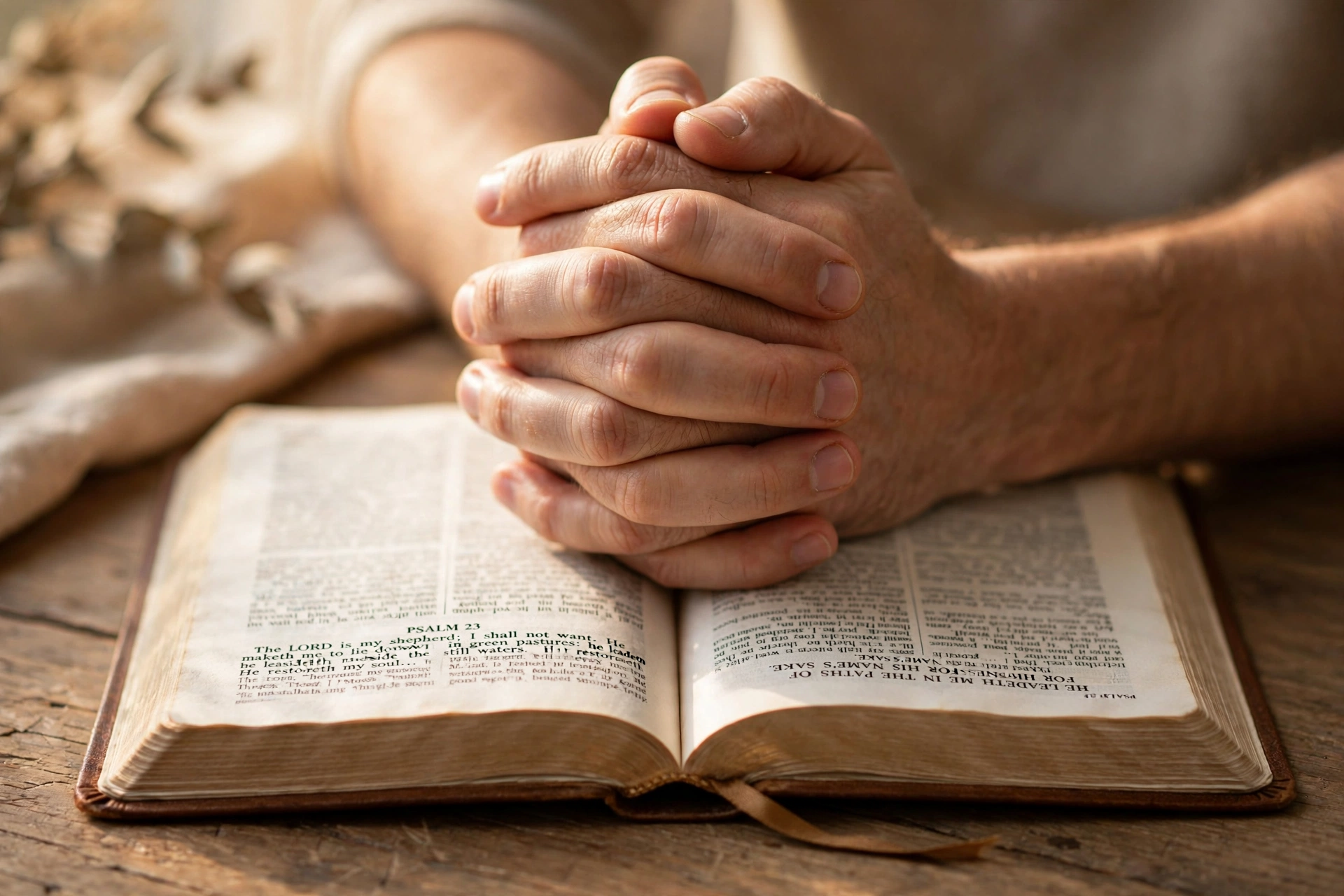
Now faith is the substance of things hoped for, the evidence of things not seen. Hebrews 11:1 (KJV)
The author of Hebrews writes to Jewish Christians who were facing severe persecution and the temptation to revert to the rituals of the Mosaic Law. By defining faith, the author provides a theological framework to help these believers endure suffering by focusing on the unseen eternal reality rather than their temporary trials.
The Greek word for “substance” is hupostasis (Strong’s G5287), which can be researched at Strong’s Concordance. It refers to a “foundation” or “assurance.” It implies that faith provides the solid ground beneath our feet. “Evidence” is translated from elegchos (Strong’s G1650), meaning a proof or conviction. Faith acts as the internal evidence that confirms the reality of God’s promises even before they manifest.
The lesson here is that our faith is not wishful thinking; it is a firm assurance. In modern life, when you face situations where the outcome is uncertain, this verse reminds you that your hope is grounded in the unchanging nature of God. Your faith is the “proof” that God is at work, even when your physical senses cannot perceive Him.
For by grace are ye saved through faith; and that not of yourselves: it is the gift of God. Ephesians 2:8 (KJV)
The Apostle Paul wrote this letter to the church at Ephesus to emphasize the supremacy of Christ and the nature of salvation. He clarifies that salvation is not a reward for human merit or “works” of the law, but a divine intervention initiated by God’s unmerited favor, which we access through faith.
The term “faith” here is pistis, reflecting a trust that relies entirely on Christ’s finished work. Paul highlights that even the ability to believe is a “gift of God” (doron, G1435). We do not manufacture our own salvation; rather, God provides the grace and the capacity to receive it. This reinforces the humility required in the Christian walk.
The application is profound: you are not responsible for “earning” your standing with God. Instead, your daily walk should be an expression of gratitude for a gift already given. This takes the pressure off of performance-based living and allows you to rest in the assurance of your identity in Christ.
But without faith it is impossible to please him: for he that cometh to God must believe that he is, and that he is a rewarder of them that diligently seek him. Hebrews 11:6 (KJV)
Within the “Hall of Faith” chapter, this verse serves as a crucial condition for any approach to God. It addresses the fundamental requirement for relationship: acknowledgment of God’s existence and His character as a benevolent Giver to those who pursue Him.
The Greek word for “diligently seek” is ekzeteo (Strong’s G1567), which implies an intense, persistent search or inquiry. It is not a casual glance toward heaven; it is a life consumed by the pursuit of knowing God. The requirement to “believe that he is” (pisteuo, G4100) suggests an unwavering trust in His reality and His active involvement in the lives of His people.
In practice, this calls for a daily discipline of seeking God. When life feels distant or silent, you must persist in prayer and scripture study, trusting that God is present and that He notices your earnest efforts to draw near to Him. Your persistence is the highest form of faith.
Key Takeaways: Bible Verses About Faith in God
| Verse Reference (KJV) | Core Spiritual Message | How to Apply Today |
|---|---|---|
| Hebrews 11:1 | Faith is the foundation of our hope. | Anchor your emotions in God’s promises rather than current circumstances. |
| Ephesians 2:8 | Salvation is a gift, not a wage. | Stop striving for perfection and start resting in God’s grace. |
| Hebrews 11:6 | God rewards those who pursue Him. | Commit to a consistent, daily time of seeking God in prayer. |
How Can I Apply Bible Verses About Faith in God in My Daily Life?
When You Feel Overwhelmed by Uncertainty
When the future seems foggy, stop trying to solve the entire path on your own. Instead, treat faith as a “step-by-step” practice. Use the “Lamp unto my feet” principle from Psalm 119:105. Write down one small, tangible step of obedience you can take today—such as forgiving someone or reading a chapter of the Gospels—and trust that God will illuminate the next step only after you have taken this one.
When You Are Struggling with Doubt
Doubt is not the opposite of faith; it is often the precursor to a deeper understanding. When doubts arise, follow the example of the father in Mark 9:24 who cried out, “Lord, I believe; help thou mine unbelief.” Be honest with God about your struggles. Bring your questions to Him in your prayer journal, and then intentionally read the accounts of the Apostles who also struggled until they saw the resurrected Christ.
When Facing Financial or Material Hardship
In times of lack, it is easy to shift your trust from God to your bank account. Practice “Active Reliance” by tithing or giving, even when it feels illogical, as a way of breaking the power of mammon over your heart. Read Matthew 6:33 daily and pray it back to God: “Lord, I am seeking Your kingdom first today; please provide the bread I need for this day.”
A Prayer for Faith in God
Guided Scriptural Prayer
Heavenly Father, I come before You acknowledging that You are the author and finisher of my faith. In moments when the world feels overwhelming and my own strength fails, remind me that You are the substance of my hope. Help me to look beyond the temporary troubles of this life and fix my eyes upon the eternal reality of Your presence. I thank You that my salvation is a gift of Your grace, and I ask that You would deepen my trust in Your goodness.
Lord, please grant me the persistence to seek You diligently every day, even when I feel distant or discouraged. Help me to believe not just that You exist, but that You are actively working for my good as a rewarder of those who love You. May my life be a testimony to the power of walking by faith and not by sight. In the precious and holy name of Jesus Christ, I pray, Amen.
Frequently Asked Questions About Faith in God in the Bible
Does the Bible say that faith is enough to move mountains?
Yes, Jesus explicitly stated in Matthew 17:20 (KJV) that if you have faith as a grain of mustard seed, you shall say to a mountain, “Remove hence to yonder place; and it shall remove.” This is not a promise of magical power, but a metaphor for the authority believers have through God. It teaches that even a small, genuine faith, when directed toward the omnipotent power of God, can overcome the most insurmountable obstacles in life. The key is not the size of the faith, but the greatness of the God in whom that faith is placed.
Is it a sin to have doubts while believing in God?
The Bible does not categorize honest struggle or questions as sin. Many of the Psalmists, such as David in Psalm 13, openly questioned God’s timing and presence during their suffering. Furthermore, Thomas, one of the twelve disciples, doubted the resurrection until he saw Jesus personally (John 20:25). Jesus did not condemn Thomas; instead, He provided the evidence Thomas needed to move from doubt to worship. True faith is often refined through the fire of doubt; what matters is that you bring your doubts to God rather than turning away from Him.
How does God increase my faith?
According to Romans 10:17 (KJV), “faith cometh by hearing, and hearing by the word of God.” God increases your faith primarily through the consistent intake of Scripture. Additionally, God uses life’s trials—the “testing of your faith”—as described in James 1:3, to develop patience and spiritual maturity. Just as a muscle grows stronger through resistance, your faith is strengthened when you choose to trust God in difficult circumstances. By reading His promises and seeing His faithfulness in your past, your capacity to trust Him for your future grows significantly.
What is the difference between belief and faith?
In the biblical context, “belief” is often used to signify an intellectual acceptance of facts, whereas “faith” involves a total commitment of the heart and life. James 2:19 (KJV) notes that “the devils also believe, and tremble,” illustrating that mere mental agreement with theological truths is insufficient. Faith (pistis) requires an active, living response—a surrender of one’s will to God. While belief says, “I agree that God exists,” faith says, “I trust God with my life, my future, and my eternity.” True faith always results in a change of heart and action.