

What Does the Bible Say About Faith in God?
The Bible teaches that faith in God is the foundational response of the human heart to His revealed truth, characterized by a confident trust in His character and promises. It is not merely an intellectual assent to facts, but an active, life-altering reliance on the Creator that manifests in obedience and perseverance.
Scripture consistently portrays faith as the “substance of things hoped for, the evidence of things not seen” (Hebrews 11:1, KJV). Throughout the Old Testament, faith is synonymous with faithfulness and trust—a reliance on Yahweh despite overwhelming circumstances. In the New Testament, faith becomes inextricably linked to the person and work of Jesus Christ, marking the transition from living under the Law to living under the grace of the Gospel. Without this active faith, it is impossible to please God, as it is the very mechanism by which we receive the righteousness of Christ.
For a deeper understanding of the Greek term for faith, pistis (Strong’s G4102), one must recognize that it implies a firm persuasion and a conviction based upon hearing. You can explore the linguistic nuances of this term further at the Blue Letter Bible. In our modern era, where skepticism and self-reliance are often glorified, the biblical call to faith serves as a vital anchor. It invites the believer to relinquish the illusion of control and find security in the sovereignty of God, ensuring that our identity remains rooted in His unchanging nature rather than the shifting sands of culture.
Most Powerful Bible Verses About Faith in God (KJV)
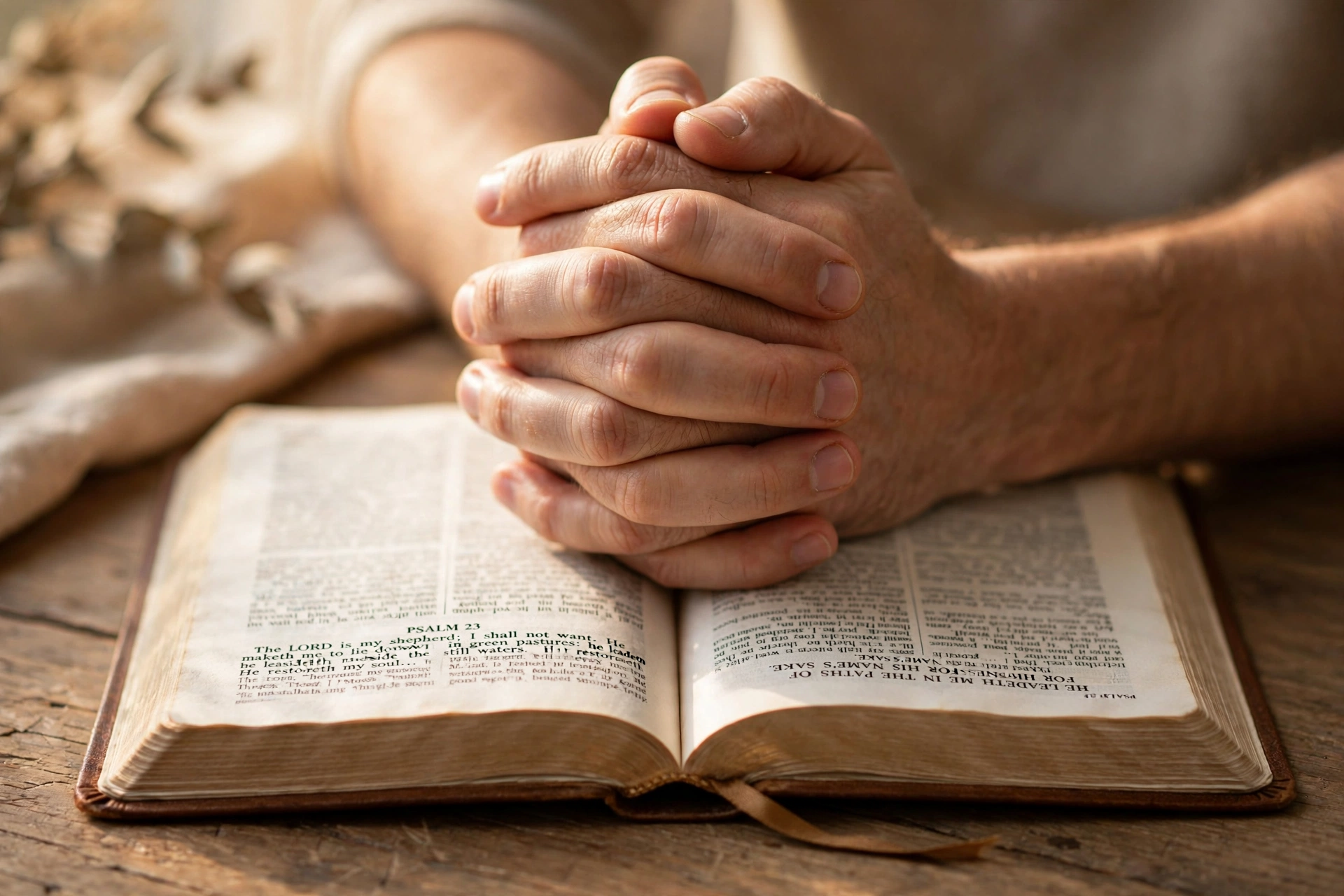
Now faith is the substance of things hoped for, the evidence of things not seen. Hebrews 11:1 (KJV)
The Apostle Paul (or the inspired author of Hebrews) wrote this to a group of Jewish Christians who were facing severe persecution and the temptation to revert to Judaism. By defining faith as “substance” and “evidence,” the author provides a theological framework to sustain these believers through their trials, shifting their focus from temporal suffering to eternal reality.
The Greek word for substance is hupostasis (Strong’s G5287), which literally means “that which stands under.” It refers to a foundation or a guarantee. Faith is not a blind leap; it is the solid ground upon which a believer stands. The word for evidence is elegchos (Strong’s G1650), meaning a conviction or proof. Thus, faith provides the internal “proof” of the spiritual realm, making the invisible God as real as the physical world.
The spiritual lesson here is that our faith is our spiritual reality. When the world tells us that God is absent or that our circumstances are hopeless, faith acts as the counter-evidence. We apply this today by choosing to measure our lives not by what we see in the headlines or our bank accounts, but by the promises documented in Scripture.
For by grace are ye saved through faith; and that not of yourselves: it is the gift of God. Ephesians 2:8 (KJV)
In this passage, Paul clarifies the mechanics of salvation for the church at Ephesus. He emphasizes that salvation is entirely a work of God’s grace, preventing any human pride in one’s own religious achievements or good works. It is a foundational text of the Reformation, emphasizing that faith is the instrument of salvation, not the cause of it.
The Greek word for grace is charis (Strong’s G5485), signifying an unmerited favor. The word for faith, pistis, is framed here as a gift. Even the ability to trust God is provided by the Holy Spirit. By looking at Bible Hub, we see how scholars note that “that” (referring to the salvation process) is a neuter pronoun, suggesting that the entire package of salvation is divine in origin.
The modern application is a release of performance-based anxiety. If you are struggling with the fear that you are not “good enough” for God, remember that your faith is a gift. You do not have to manufacture it; you simply need to receive it and rest in the finished work of Christ.
Trust in the LORD with all thine heart; and lean not unto thine own understanding. In all thy ways acknowledge him, and he shall direct thy paths. Proverbs 3:5-6 (KJV)
King Solomon, writing to his son, offers this wisdom as a guide for living a life that honors God. In the context of ancient wisdom literature, this is an exhortation to prioritize divine revelation over human logic. It is a call to surrender the autonomy of the human intellect to the sovereignty of the Almighty.
The Hebrew word for trust is batach (Strong’s H982), which means to lean upon or to be confident. It paints a picture of throwing one’s full weight onto something else. The phrase “lean not” uses sha’an (Strong’s H8172), which means to support oneself. We are commanded not to use our own limited human perspective as our primary support structure, but to rely entirely on the Lord.
In our daily lives, this means that when we face a decision—be it career, marriage, or finances—we must pause our internal calculations and seek God’s direction. Acknowledging Him in “all thy ways” implies a constant, moment-by-moment communion where we invite Him into the minutiae of our schedules and desires.
Key Takeaways: Bible Verses About Faith in God
| Verse Reference (KJV) | Core Spiritual Message | How to Apply Today |
|---|---|---|
| Hebrews 11:1 | Faith is the solid foundation of our hope. | When doubting, write down God’s past promises and read them aloud. |
| Ephesians 2:8 | Salvation is a gift, not earned by works. | Stop striving to impress God and start thanking Him for His grace. |
| Proverbs 3:5-6 | Full reliance on God replaces human logic. | Pray before every major decision rather than relying on your own intellect. |
How Can I Apply Bible Verses About Faith in God in My Daily Life?
When You Feel Overwhelmed at Work
When the pressure mounts and deadlines seem impossible, stop and practice “The Breath of Faith.” Close your eyes and recite Proverbs 3:5. Visualize yourself physically letting go of the burden you are carrying and handing it to Christ. Then, perform one task at a time, asking the Holy Spirit to guide your hands and your mind, acknowledging that your productivity is secondary to your peace in Him.
When a Relationship Hurts
Relational strife often triggers a desire for vengeance or withdrawal. Instead, apply the principle of charis (grace). Recognize that your ability to forgive is not your own, but a gift from God. Pray specifically for the person who hurt you, not for their change, but for their blessing. This act of faith breaks the cycle of bitterness and shifts your focus from the injury to the sufficiency of God’s love for you.
During Financial Hardship
In times of scarcity, our natural instinct is to hoard and worry. Cultivate faith by practicing radical generosity, even if it is small. This acts as a tangible “evidence of things not seen,” proving to your own heart that you trust God as your Provider rather than your bank account. Keep a prayer journal where you record every small “provision” you see during this time, creating a history of God’s faithfulness to look back upon.
A Prayer for Faith in God
Guided Scriptural Prayer
Heavenly Father, I come before You acknowledging that my faith is a gift of Your grace. When the world feels unstable and my own understanding fails me, remind me that You are my hupostasis—the solid ground beneath my feet. Help me to trust You with all my heart, not just in the seasons of plenty, but in the valleys of uncertainty. I lay down my need to control the outcome of my life and instead choose to rest in Your sovereign plan.
Lord, increase my faith so that I may see the unseen realities of Your Kingdom. May my life be a testament to the fact that I do not walk by sight, but by reliance on Your unchanging Word. As I move through this day, let me acknowledge You in all my ways, trusting that You are directing my path toward Your glory. In the precious and holy name of Jesus Christ, I pray. Amen.
Frequently Asked Questions About Faith in God in the Bible
Does the Bible say that faith can move mountains?
Yes, Jesus explicitly states in Matthew 17:20 (KJV) that if you have faith as a grain of mustard seed, you shall say unto a mountain, “Remove hence to yonder place; and it shall remove.” This is not an endorsement of magical thinking, but a profound statement regarding the power of God available to the believer. The mustard seed represents a small but living, growing faith. The “mountain” symbolizes the impossible obstacles in our lives. The lesson is that the size of the faith is less important than the object of the faith—God Himself. When our faith is placed in an omnipotent God, no barrier is insurmountable.
Is it a sin to have doubts while trying to have faith?
The Bible does not treat honest doubt as an unforgivable sin, but rather as a struggle that invites deeper intimacy with God. Consider the father in Mark 9:24 (KJV) who cried out, “Lord, I believe; help thou mine unbelief.” His honesty was met with compassion, not condemnation. Doubt becomes a problem only when it hardens into rebellion or a refusal to seek the truth. If you are struggling with doubt, do not hide it; bring it to God in prayer. He is strong enough to handle your questions, and often, the process of wrestling with doubt leads to a more mature, refined faith.
How does God reward those who exercise faith?
Hebrews 11:6 (KJV) states that God “is a rewarder of them that diligently seek him.” While the world often defines rewards as material prosperity, the biblical reward for faith is primarily spiritual: peace, intimacy with the Father, and the assurance of eternal life. God rewards our faith by conforming us to the image of His Son (Romans 8:29). This is the greatest reward possible—to become more like Christ. While God does provide for our earthly needs, the “reward” of faith is the presence of God Himself, which is infinitely more valuable than any temporal gain.
What is the difference between faith and hope in the Bible?
While often used together, faith and hope serve distinct functions. As established in Hebrews 11:1, faith is the present “substance” or the active reliance on God right now. Hope, on the other hand, is the confident expectation of future promises that have not yet been realized. You can find more detailed theological distinctions at Got Questions. Faith is the engine that drives the Christian life in the present, while hope is the anchor that secures the soul for the future. We have faith in what God has done and is doing, and we have hope for what He will do when Christ returns.