

What Does the Bible Say About Faith in God?
The Bible presents faith in God as the foundational substance of a believer’s life, defining it as the confident assurance in things hoped for and the conviction of realities not yet seen. It is not merely an intellectual assent to facts, but a total, transformative reliance upon the character and promises of the Creator.
Scripture consistently teaches that faith is the primary mechanism through which humans relate to the divine, beginning with the patriarchs in the Old Testament and reaching its zenith in the New Testament through the person of Jesus Christ. In the Old Testament, the Hebrew word emunah (Strong’s H530), which can be found and studied further at Blue Letter Bible, denotes firmness, steadfastness, and fidelity. It describes a person whose life is anchored in the reliability of God. This concept moves beyond “belief” to “trustworthiness”—it is the posture of a soul that has decided that God is true, regardless of external circumstances.
In the New Testament, the Greek word pistis (Strong’s G4102) captures this essence, emphasizing a faith that acts. For the modern Christian, navigating a world of skepticism and shifting values, this biblical definition of faith serves as a vital anchor. It suggests that faith is not a feeling to be summoned, but a discipline of the heart—a daily, intentional movement toward God, acknowledging that He is the architect of history and the sustainer of our individual lives.
Most Powerful Bible Verses About Faith in God (KJV)
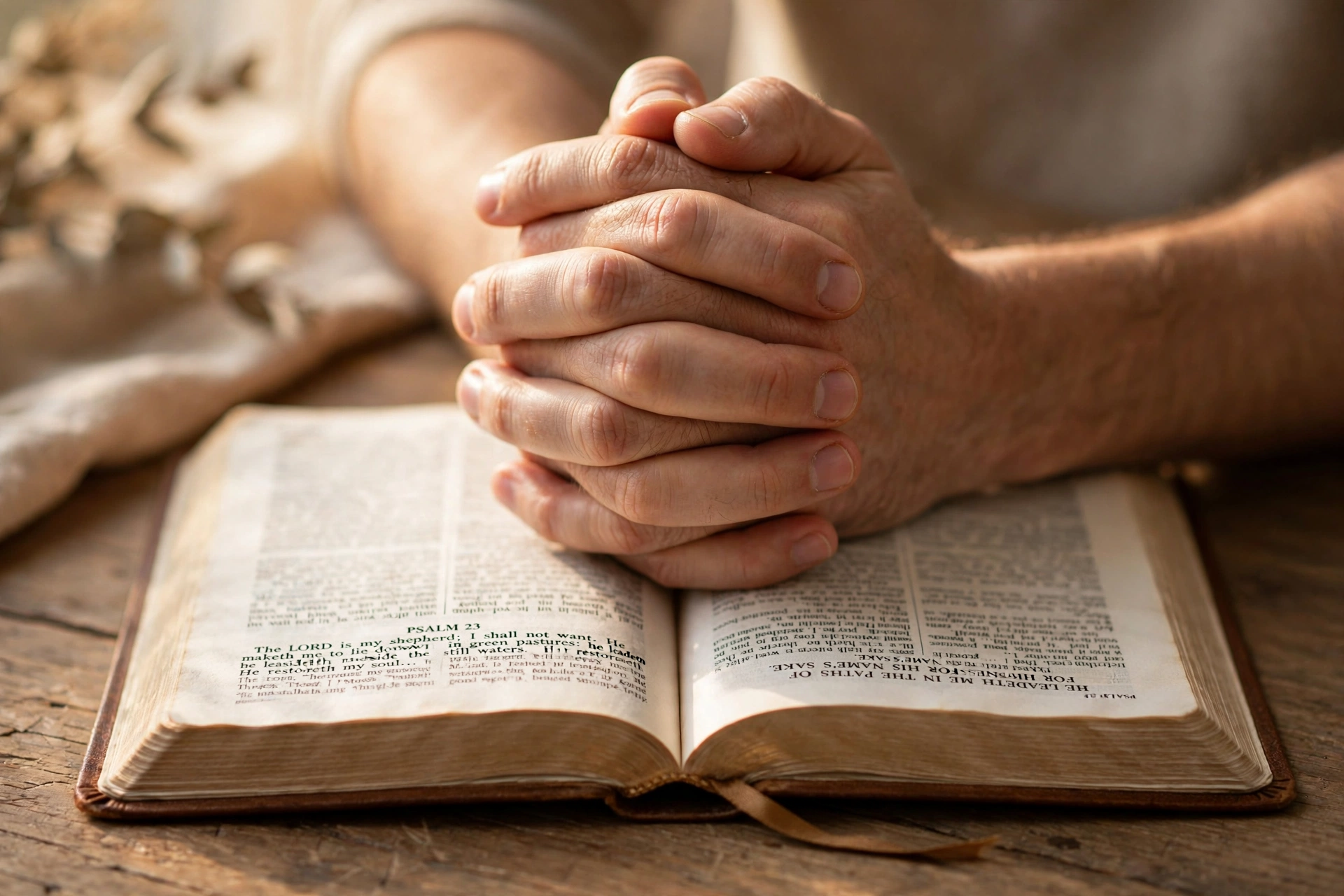
Now faith is the substance of things hoped for, the evidence of things not seen. Hebrews 11:1 (KJV)
The Apostle Paul (or the inspired author of Hebrews) wrote this epistle to Jewish Christians who were facing severe persecution and the temptation to revert to the rituals of Judaism. By defining faith, the author provides a theological framework for endurance, reminding the early church that their hope in the invisible Kingdom of God was more solid than the visible reality of their suffering.
The Greek word for “substance” is hupostasis (Strong’s G5287), which Strong’s Concordance defines as a “setting under,” or a foundation. It implies that faith is the literal bedrock upon which our hopes are built. Without this “foundation,” our hopes are merely wishes; with it, they become spiritual certainties.
The lesson here is that faith is not an escape from reality, but a deeper engagement with it. It allows the believer to see past the immediate, temporal chaos of life and rest in the eternal, unchanging nature of God. Applying this today means choosing to stand on the promises of Scripture when your eyes see only problems.
For we walk by faith, not by sight. 2 Corinthians 5:7 (KJV)
In this passage, Paul contrasts the current state of our existence—living in “earthly tabernacles”—with the future glory of our heavenly home. He encourages the Corinthian believers to prioritize spiritual perception over sensory input, recognizing that the temporary nature of our physical world often contradicts the eternal truths of God’s Word.
The Greek verb for “walk” here is peripateo (Strong’s G4043), which implies a lifestyle or a manner of living. It is a continuous, day-to-day journey. By stating we do not walk by “sight” (eidos, G1491), Paul warns against being governed by what we see, feel, or experience in the natural realm, which is subject to decay and change.
Applying this means that when the circumstances of life—such as loss, confusion, or lack—scream that God is absent, our “walk” remains steady because we are not being led by those circumstances. We are being led by the light of His Word, which remains constant even when the path ahead is obscured by darkness.
Trust in the Lord with all thine heart; and lean not unto thine own understanding. In all thy ways acknowledge him, and he shall direct thy paths. Proverbs 3:5-6 (KJV)
This wisdom from Solomon serves as the quintessential Old Testament call to faith. Writing to his son, Solomon emphasizes that the human intellect, while a gift from God, is finite and prone to error. The “heart” in Hebrew culture (leb, Strong’s H3820) represents the center of the intellect, will, and emotions.
To “lean” (sha’an, H8172) implies placing one’s full weight upon something for support. If you lean on your own understanding, you are leaning on a broken reed. But when you lean on the Lord, you are placing your weight upon the only Foundation that cannot fail. The promise of direction is conditional: it requires us to “acknowledge” (yada’, H3045) Him in “all” our ways, meaning a total surrender of every decision.
Applying this today requires a humble confession that you do not have all the answers. It means pausing before major life decisions to seek God’s direction through prayer and Scripture, trusting that He is capable of ordering your steps better than your own logical planning ever could.
Key Takeaways: Bible Verses About Faith in God
| Verse Reference (KJV) | Core Spiritual Message | How to Apply Today |
|---|---|---|
| Hebrews 11:1 | Faith is the foundation of hope. | Anchor your expectations in God’s promises, not temporary results. |
| 2 Corinthians 5:7 | Spirit over sense-perception. | Choose to obey God even when it makes no logical sense. |
| Proverbs 3:5-6 | Total reliance on God’s wisdom. | Pray before acting; surrender your pride of intellect. |
How Can I Apply Bible Verses About Faith in God in My Daily Life?
When You Feel Overwhelmed at Work
When professional pressures mount, practice the “Pause and Pivot” method. Stop what you are doing, take a breath, and silently recite Proverbs 3:5. Acknowledge that your career is ultimately in God’s hands, not your boss’s or your own. By mentally shifting your reliance from your performance to His providence, you reduce the anxiety of perfectionism and regain a sense of peace that transcends the office environment.
When a Relationship Hurts
In the pain of betrayal or misunderstanding, lean on the truth of 2 Corinthians 5:7. Do not let your “sight”—the actions of the other person—dictate your identity or your response. Instead, seek God’s perspective on the situation. Pray specifically for the grace to see the other person through the lens of the Gospel, which may involve setting healthy boundaries while maintaining a heart of forgiveness that rests in God’s justice rather than your own retribution.
During Financial Hardship
Financial stress often tests the limits of our faith. Apply Hebrews 11:1 by creating a “Promise Journal.” Write down specific biblical promises regarding God’s provision (e.g., Philippians 4:19) and read them daily. When you are tempted to panic over a bank statement, remind yourself that the “substance” of your security is not your savings account, but the character of the God who owns the cattle on a thousand hills.
A Prayer for Faith in God
Guided Scriptural Prayer
Heavenly Father, I come before You acknowledging that my heart is often prone to worry and my eyes are quick to focus on the storms around me. I ask that You would strengthen my faith, anchoring my soul in the firm foundation of Your promises. Grant me the grace to walk by faith and not by sight, trusting that even when I cannot see the path forward, You are the light that guides my feet. Help me to lean entirely on Your wisdom, releasing the need to control every outcome of my life.
Lord, let my life be a testament to the fact that You are faithful. When my own understanding fails and my strength is exhausted, remind me of Your presence. May my daily decisions reflect a deep, unshakable trust in Your sovereignty. Keep me steadfast in my devotion, and let my hope remain in the unseen realities of Your Kingdom, knowing that You are working all things together for my good and Your glory. In the name of Jesus Christ, I pray, Amen.
Frequently Asked Questions About Faith in God in the Bible
Does the Bible say that faith is enough to save me?
The Bible teaches that salvation is a gift from God received through faith, not by our own works. Ephesians 2:8-9 (KJV) states, “For by grace are ye saved through faith; and that not of yourselves: it is the gift of God: Not of works, lest any man should boast.” While works do not save us, the Bible also explains in the book of James that genuine faith will inevitably produce fruit; it is a living, active relationship with God that transforms a person’s behavior. Therefore, while faith is the sole means of justification, it is never a stagnant, inactive belief.
Is it a sin to have doubts about my faith in God?
Doubt is not inherently a sin, but rather a common part of the human struggle in a fallen world. We see in the Bible that even the disciples struggled with doubt, such as when Thomas asked to see the wounds of Jesus in John 20:25 (KJV). Jesus did not condemn Thomas; instead, He provided the evidence he needed to believe. When you experience doubt, it is an invitation to be honest with God, to study His Word, and to seek counsel from mature believers. Doubt becomes a problem only when it leads to a hardened heart that refuses to seek the truth.
How does God reward those who exercise faith?
The Bible speaks of rewards for faith in both the present life and the life to come. In Hebrews 11:6 (KJV), we are told that God “is a rewarder of them that diligently seek him.” This reward is not always material wealth or comfort; often, the reward of faith is the presence of God Himself, the peace that passes understanding, and the development of a Christ-like character. God promises that those who trust Him will never be put to shame, and He provides the spiritual strength necessary to endure every trial with hope and joy.
What is the difference between “believing” and “having faith” in the Bible?
In the biblical sense, “believing” can sometimes be limited to an intellectual acknowledgement of facts, even demons “believe” that God exists (James 2:19). “Having faith” in the Bible, however, implies a relational commitment and a total surrender of one’s life to God. It is the difference between knowing about a chair and actually sitting in it. True faith involves trust, reliance, and obedience. You can intellectually agree that God is real, but to have saving faith is to entrust your eternal soul and your daily path to His authority, living in alignment with His revealed will.