

What Does the Bible Say About Faith in God?
The Bible presents faith in God as the foundational substance of a believer’s life, defining it as the confident assurance in things hoped for and the conviction of realities not yet seen. It is not merely a mental ascent to facts, but a total reliance on the character and promises of the Creator.
Throughout Scripture, faith is portrayed as the essential bridge between human frailty and divine omnipotence. From Abraham, who is called the “father of faith,” to the disciples who were exhorted to have faith that could move mountains, the message remains consistent: faith is the mechanism by which we receive grace. In the New Testament, the Greek word pistis (Strong’s G4102) is used to describe this living, active trust. Unlike a passive belief, pistis implies a fidelity—a commitment to follow and obey the One in whom we trust. You can explore the depths of this term through a comprehensive word study at Blue Letter Bible.
In our modern era, faith is often misunderstood as a “blind leap” or a mere feeling. However, biblical faith is anchored in historical revelation and the finished work of Jesus Christ. It is a response to God’s self-revelation. Without this active, relational trust, it is impossible to please God, as faith is the primary posture of a heart that acknowledges its total dependence on the Lord. As we navigate a world of uncertainty, the call to walk by faith rather than by sight remains the most vital mandate for the Christian life.
Most Powerful Bible Verses About Faith in God (KJV)
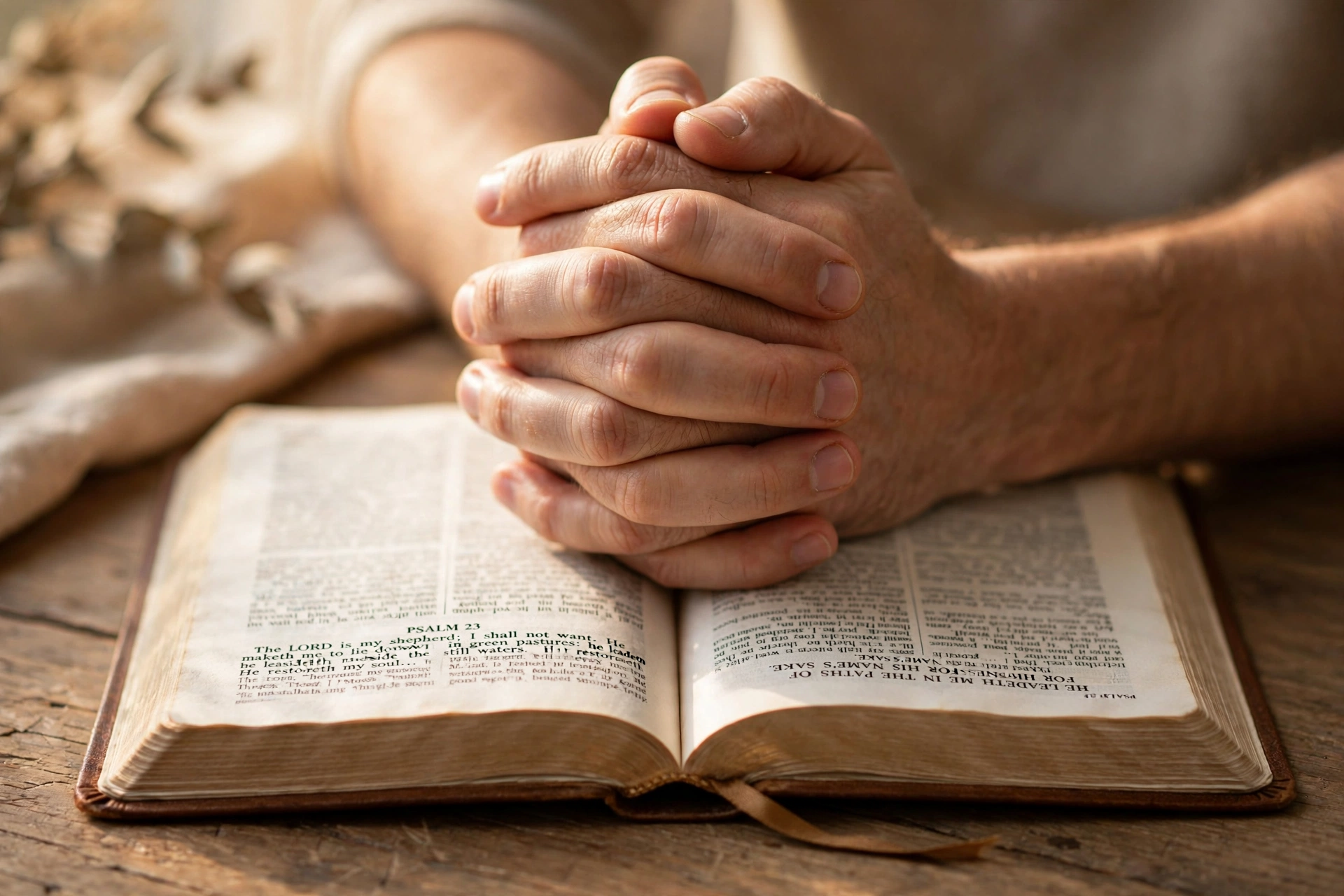
Now faith is the substance of things hoped for, the evidence of things not seen. Hebrews 11:1 (KJV)
The author of Hebrews writes to a group of Jewish Christians who were facing severe persecution and the temptation to revert to the old sacrificial system. By defining faith in this foundational verse, the writer provides a theological anchor, reminding the readers that their endurance is tethered to a reality that transcends their current, visible suffering.
The word “substance” here is the Greek hypostasis (Strong’s G5287), which can also be translated as “title deed” or “assurance.” It suggests that faith is not a vague hope, but a legal document that proves ownership of a future promise. To examine the nuances of this term, one may consult Strong’s Concordance. Faith acts as the present reality of a future inheritance.
For the modern believer, this means that when we pray or trust God for a breakthrough, we are not wishing upon a star; we are standing on the “title deed” of God’s Word. Faith is the evidence that the promise is already ours in the spiritual realm, even if the physical manifestation has not yet occurred.
For by grace are ye saved through faith; and that not of yourselves: it is the gift of God. Ephesians 2:8 (KJV)
Paul the Apostle, writing to the church in Ephesus, emphasizes the sovereignty of God in the process of salvation. He clarifies that human effort cannot attain righteousness; rather, salvation is an act of divine grace received through the conduit of faith.
The Greek word for faith here is again pistis, but it is coupled with charis (grace). The theological importance lies in the fact that faith itself is described as a “gift.” This prevents pride; we cannot boast in our faith as if it were a self-generated virtue. It is God who grants the capacity to believe, making salvation entirely His work.
This verse serves as a daily reminder that we live in a state of received grace. When we struggle to believe, we can ask God to increase our faith, recognizing that even the ability to trust Him is a gift provided by His Holy Spirit.
But without faith it is impossible to please him: for he that cometh to God must believe that he is, and that he is a rewarder of them that diligently seek him. Hebrews 11:6 (KJV)
This verse serves as the heartbeat of the “Hall of Faith” in Hebrews 11. It establishes the two-fold requirement for drawing near to God: acknowledging His existence and trusting in His character as a benevolent Provider to those who seek Him with persistence.
The phrase “diligently seek” comes from the Greek ekzeteo (Strong’s G1567), which implies an intense, persistent, and focused search. It is not a casual glance toward heaven, but a life characterized by intentional pursuit. As noted in Bible Gateway, this diligence is the hallmark of those who truly value their relationship with the Almighty.
Application is clear: our spiritual maturity is measured by our diligence in seeking God. When we are tempted to be passive, we must remember that God honors the heart that refuses to give up in its pursuit of Him.
Key Takeaways: Bible Verses About Faith in God
| Verse Reference (KJV) | Core Spiritual Message | How to Apply Today |
|---|---|---|
| Hebrews 11:1 | Faith is the title deed of hope. | Treat God’s promises as current facts. |
| Ephesians 2:8 | Faith is a gift, not a work. | Ask God to strengthen your trust. |
| Hebrews 11:6 | Diligence is required to please God. | Prioritize daily prayer and study. |
How Can I Apply Bible Verses About Faith in God in My Daily Life?
When You Feel Overwhelmed at Work
When professional pressures mount, practice “mental anchoring.” Stop what you are doing, close your eyes, and recite a promise from Scripture, such as Isaiah 41:10. Remind yourself that your career is not your ultimate source of security—God is. Treat this as a “title deed” moment: visualize your work stress being handed over to His sovereign control, trusting that His grace is sufficient for the tasks ahead.
When a Relationship Hurts
In the midst of relational pain, it is easy to lose faith in the goodness of God. Shift your focus from the person who caused the hurt to the nature of God as a “rewarder of those who diligently seek Him.” Spend ten minutes in prayer specifically asking for the grace to forgive, believing that God is working behind the scenes to heal your heart and restore peace, even if the outcome is not immediately visible.
During Financial Hardship
Financial anxiety often attacks our belief in God’s provision. Instead of spiraling, perform a “faith audit.” List three ways God has provided for you in the past. Use these as your “evidence” (Hebrews 11:1) that He remains the same today. Commit to a specific act of stewardship or generosity, no matter how small, as a radical act of trust that God is the owner of all things and will provide for your daily bread.
A Prayer for Faith in God
Guided Scriptural Prayer
Heavenly Father, I come before You acknowledging that my faith is often small and easily shaken by the storms of this life. Lord, please forgive me for looking at the waves of circumstance rather than keeping my eyes fixed upon Your unchanging character. I thank You that faith is a gift from Your hand, and I ask that You would increase my capacity to trust You more deeply, even when I cannot see the path forward.
Grant me the diligence to seek You every single day, knowing that You are a rewarder of those who pursue Your heart. May Your Word be the substance of my hope and the evidence of Your goodness in my life. I commit my fears, my future, and my family into Your mighty hands, resting in the assurance that You are faithful to Your promises. In the name of Jesus Christ, my Lord and Savior, Amen.
Frequently Asked Questions About Faith in God in the Bible
Does the Bible say that faith is the only thing required for salvation?
The Bible teaches that salvation is by grace through faith alone, as stated in Ephesians 2:8. However, true biblical faith is never stagnant. James 2:17 clarifies that “faith, if it hath not works, is dead, being alone.” This does not mean we are saved by our works, but rather that genuine faith will inevitably produce a life of obedience and transformation. Faith is the root, and works are the fruit; you cannot have a living, saving faith that does not manifest in a changed life and submission to God’s will.
Is it a sin to have doubts about God?
Doubt is a struggle common to the human condition, even among the faithful. In Mark 9:24, a father cries out to Jesus, “Lord, I believe; help thou mine unbelief.” This demonstrates that God is compassionate toward our struggles. Doubt becomes sin when it is nurtured into rebellion or when we refuse to bring our questions to God. Instead of hiding your doubts, bring them to Him in prayer. Faith is not the absence of doubt; it is the choice to trust God in spite of it.
How does God increase my faith?
God typically grows our faith through the “school of testing.” Romans 10:17 tells us that “faith cometh by hearing, and hearing by the word of God.” Therefore, consistent immersion in Scripture is the primary way to build faith. Furthermore, God allows us to walk through trials—much like the heroes in Hebrews 11—to prove that His grace is sufficient. When we step out in obedience despite our fear, our faith muscle is strengthened, and we see firsthand that God remains true to His promises.
What is the difference between belief and faith in the Bible?
In the original languages, “belief” can sometimes refer to a mere intellectual acknowledgment of facts—even the demons believe and tremble (James 2:19). Biblical faith, however, involves pistis (fidelity). It is a heart-level surrender and a commitment to the person of Jesus Christ. While belief says, “I accept that God exists,” faith says, “I trust God with my life and am willing to follow Him wherever He leads.” Faith is belief in action, characterized by a relational trust that governs our daily decisions and eternal perspective.