

What Does the Bible Say About Faith in God?
The Bible teaches that faith in God is the foundational response of the human heart to His revealed truth, characterized by an active, unwavering trust in His character and promises. It is defined as the substance of things hoped for and the evidence of things not seen (Hebrews 11:1, KJV).
Scripture consistently portrays faith not merely as an intellectual assent to theological propositions, but as a relational commitment that transforms the believer’s life. In the Old Testament, the Hebrew word emunah (Strong’s H530) signifies firmness, constancy, and reliability, describing a faith that remains steady even in the face of adversity. This can be explored further through the Blue Letter Bible. In the New Testament, the Greek term pistis (Strong’s G4102) carries the weight of “conviction” and “persuasion,” emphasizing that true faith is a gift from God that leads to obedience and sacrificial living.
Modern Christians often struggle with the distinction between “feeling” and “faith.” While our emotions fluctuate based on circumstances, biblical faith is anchored in the immutable nature of God. In an age of skepticism and relativism, grounding oneself in the objective truth of Scripture is essential for spiritual endurance. When we read the accounts of the heroes of the faith in Hebrews 11, we are reminded that faith is not the absence of struggle, but the presence of trust in the One who holds the future.
Most Powerful Bible Verses About Faith in God (KJV)
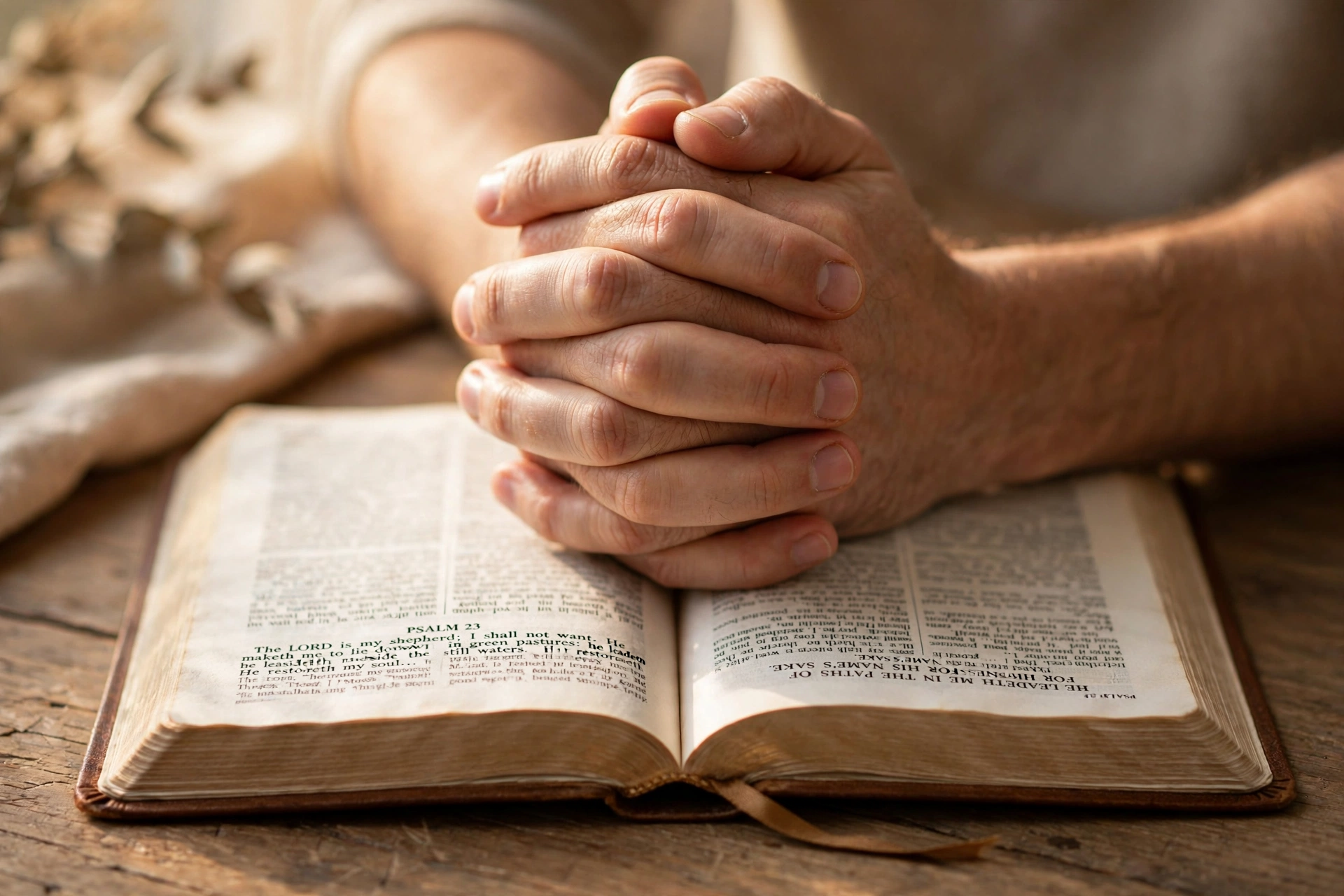
Now faith is the substance of things hoped for, the evidence of things not seen. Hebrews 11:1
The Apostle Paul (or the inspired author of Hebrews) wrote this to Jewish Christians who were facing intense persecution and the temptation to revert to the rituals of the Mosaic Law. By defining faith in this way, he establishes that the believer’s reality is not dictated by temporal circumstances but by the eternal promises of God.
The word “substance” comes from the Greek hupostasis (Strong’s G5287), which suggests a “foundation” or “assurance.” It is the title deed to our spiritual inheritance. The word “evidence” (elenchos) implies a conviction or proof that is so powerful it compels the mind to acknowledge truth even without physical sensory confirmation.
The modern application is profound: when you cannot see the path forward, your faith acts as the legal documentation of God’s provision. It is the spiritual internal GPS that directs our steps when the fog of life obscures our vision, allowing us to rest in the certainty of God’s sovereignty.
For by grace are ye saved through faith; and that not of yourselves: it is the gift of God. Ephesians 2:8
In this passage, Paul clarifies the mechanism of salvation to the church in Ephesus. He emphasizes that salvation is not a reward for human effort or moral achievement, but a divine intervention. It is the cornerstone of Reformed theology and the bedrock of the believer’s assurance.
The term “faith” here is pistis (Strong’s G4102). Grammatically, the text suggests that even the faith required to believe is a “gift” (doron) from God. This removes any room for human boasting, as our very ability to trust is empowered by the Holy Spirit.
This verse serves as a source of immense comfort for those struggling with feelings of inadequacy. You do not need to “work up” enough faith to earn God’s favor; you simply need to accept the faith He provides. It is a reminder that your standing with God is entirely dependent on His grace, not your fluctuating performance.
Trust in the Lord with all thine heart; and lean not unto thine own understanding. In all thy ways acknowledge him, and he shall direct thy paths. Proverbs 3:5-6
Solomon, writing to his son, provides a blueprint for wisdom that transcends generations. The context is the recognition that human wisdom is inherently flawed and limited, while God’s wisdom is infinite and perfectly aligned with His sovereign plan for our lives.
The Hebrew word for “trust” is batach (Strong’s H982), which carries the imagery of throwing oneself down in complete surrender. It implies a sense of safety and security. “Acknowledge” is yada, meaning to “know” or “intimately experience” God in every decision.
In a world of data-driven decisions, we are tempted to rely on our own analysis. However, this verse commands us to prioritize God’s perspective. When you face a major life choice, the spiritual practice is to stop, pray, and ask, “Lord, how does this align with Your character?” rather than just asking, “What makes the most sense to me?”
Key Takeaways: Bible Verses About Faith in God
| Verse Reference (KJV) | Core Spiritual Message | How to Apply Today |
|---|---|---|
| Hebrews 11:1 | Faith is the conviction of unseen realities. | Look past immediate problems to God’s promises. |
| Ephesians 2:8 | Salvation is a gift, not a wage. | Release guilt; rest in Christ’s finished work. |
| Proverbs 3:5-6 | Surrender your logic to God’s wisdom. | Pray before every major decision. |
How Can I Apply Bible Verses About Faith in God in My Daily Life?
When You Feel Overwhelmed by Uncertainty
When the future seems like a storm, practice the “Pause and Pivot” method. Stop the mental cycle of worry, open your Bible to Psalm 46:10, and read it aloud. Then, write down one specific thing you are afraid of and place it on a prayer list. By physically writing it down, you are practicing the batach (trust) mentioned in Proverbs 3:5, moving your anxiety from your heart to God’s hands.
When You Are Facing a Difficult Relationship
In relationships, we often rely on our own “understanding” (Proverbs 3:5) of the other person’s motives. Instead, shift your focus to how God sees them. Pray for their well-being and ask God to grant you His perspective. Faith in God allows you to forgive, not because the person deserves it, but because your security is found in God’s grace, not in the validation of others.
During Times of Financial Hardship
Financial stress is often a test of where our “substance” (Hebrews 11:1) lies. When money is tight, replace the impulse to panic with an act of intentional generosity or gratitude. By tithing or giving, even in small amounts, you demonstrate to your own heart that your faith is in the Provider, not the provision. This breaks the bondage of fear and reinforces your dependence on the Lord.
A Prayer for Faith in God
Guided Scriptural Prayer
Heavenly Father, I come before You acknowledging that my faith is a gift, nurtured by Your grace. When my heart is troubled and the path ahead is obscured by shadows, help me to hold fast to the substance of Your promises. Grant me the courage to lean not on my own understanding, but to surrender every detail of my life into Your sovereign, loving hands.
Lord, increase my faith so that I may see the unseen. Let Your Word be the anchor of my soul and the light unto my path. When I am tempted to rely on my own strength, remind me that I am saved by Your grace and sustained by Your power. May my life be a living testament to the trust I place in You, today and forevermore. Amen.
Frequently Asked Questions About Faith in God in the Bible
Does the Bible say that faith is enough to move mountains?
Yes, Jesus explicitly states in Matthew 17:20 (KJV) that if you have faith as a grain of mustard seed, you shall say to a mountain, “Remove hence to yonder place,” and it shall remove. This is not a call to magic, but a metaphor for the power of faith when it is placed in an omnipotent God. The “mountain” represents the insurmountable obstacles in our lives. The size of the faith is less important than the object of the faith; when our tiny, mustard-seed faith connects with the infinite power of God, nothing is impossible.
Is it a sin to have doubts while trying to have faith in God?
Doubt is not necessarily a sin, but a human reaction to our finite nature. In Mark 9:24, a father cries out to Jesus, “Lord, I believe; help thou mine unbelief” (KJV). Jesus did not rebuke him but healed his son. Faith is a journey, and even the disciples struggled with doubt. The key is not to hide your doubts, but to bring them to God in prayer. Honest struggle is often the precursor to a deeper, more refined faith that has been tested in the fires of reality.
How does God grow our faith?
God often grows our faith through the “testing” of our trust, as described in James 1:3: “the trying of your faith worketh patience” (KJV). Like a muscle that must face resistance to grow stronger, our faith is developed when we are placed in situations that require us to rely on God rather than our own resources. Through trials, we learn that God is faithful, and this experience builds a “hope that maketh not ashamed” (Romans 5:5). Every difficulty you face is an opportunity for your faith to transition from head knowledge to heart-deep conviction.
What is the difference between faith and hope in the Bible?
While often linked, faith and hope serve different roles. According to Hebrews 11:1, faith is the present “substance” or foundation of what we believe, whereas hope is the confident expectation of future fulfillment. Faith is the anchor in the present; hope is the gaze toward the future. We have faith in what God has done and is doing, and we have hope for the promises He has yet to fully realize, such as the return of Christ and our eternal glory. Both are essential for the Christian life, and both are rooted in the reliability of God’s character.