

What Does the Bible Say About Faith in God?
The Bible presents faith in God not merely as an intellectual acknowledgment of His existence, but as a total, transformative reliance upon His character, promises, and redemptive work. It is defined as the substance of things hoped for and the evidence of things not seen, serving as the essential foundation for a relationship with the Creator.
Scripture consistently emphasizes that faith is the primary mechanism through which humanity accesses God’s grace. In the Old Testament, faith is often synonymous with “trust” or “leaning upon” the Lord, while in the New Testament, the Greek word pistis (Strong’s G4102) carries the connotation of a firm persuasion, a conviction based upon hearing the Word of God. You can explore a deeper lexical analysis of this term at the Blue Letter Bible. Without this active, living faith, it is impossible to please God, as it requires moving beyond human sight and logic to embrace the eternal reality of His sovereignty.
For the modern Christian, understanding faith is critical because we live in an age of skepticism that prioritizes empirical evidence above spiritual truth. True biblical faith acts as an anchor for the soul, providing stability during life’s inevitable storms. It is a gift imparted by the Holy Spirit, cultivated through the regular intake of Scripture, and proven through the trials of life. By studying how the patriarchs, prophets, and apostles exercised faith, we learn how to navigate our own challenges with a perspective rooted in the eternal rather than the temporal.
Most Powerful Bible Verses About Faith in God (KJV)
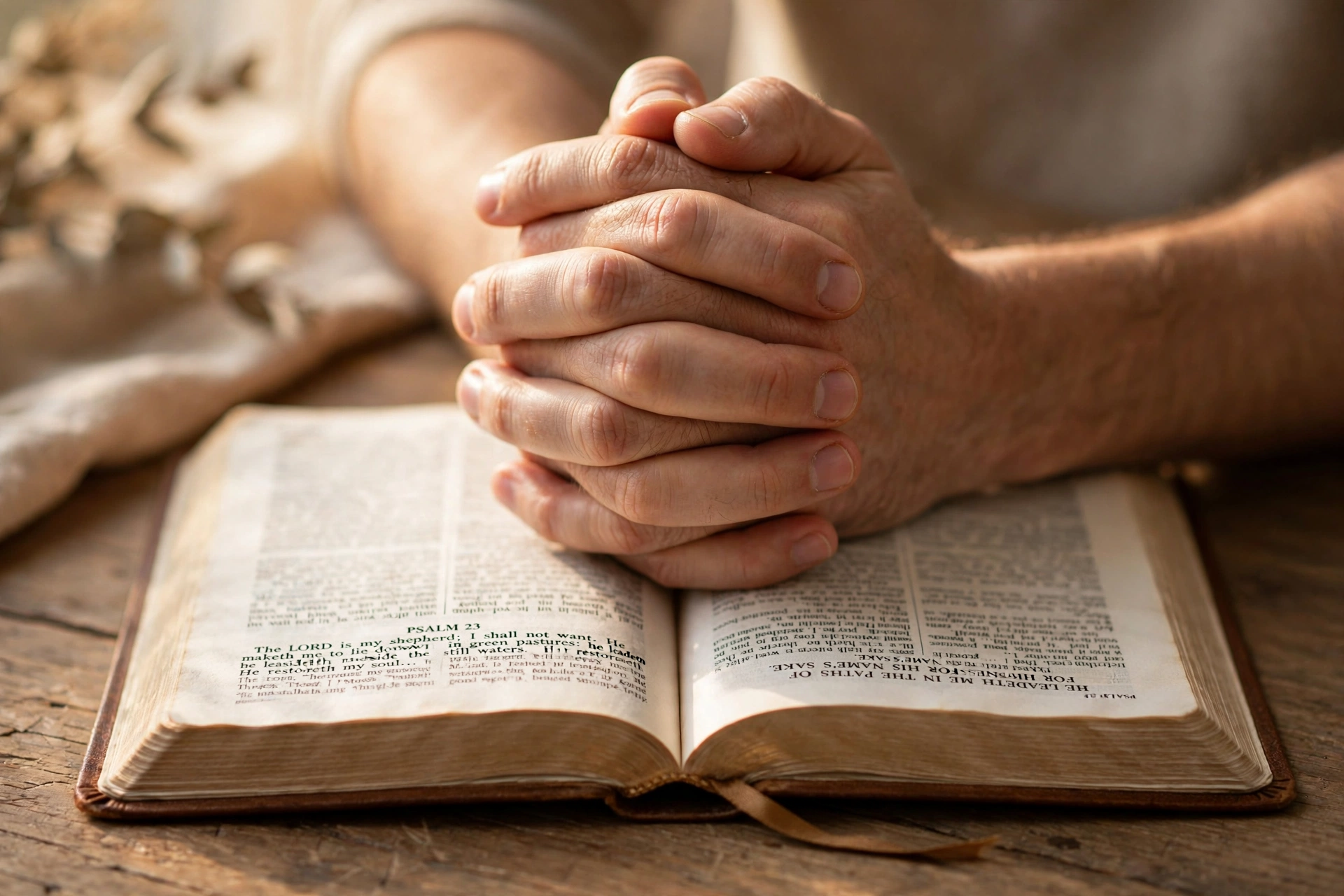
Now faith is the substance of things hoped for, the evidence of things not seen. Hebrews 11:1 (KJV)
The author of Hebrews wrote this letter to Jewish Christians who were tempted to revert to Judaism under the pressure of intense persecution. By establishing a definition of faith, the author provides a rallying cry for believers to endure suffering by keeping their eyes fixed on the spiritual realities that outweigh current physical hardships.
The Greek word for “substance” is hupostasis (Strong’s G5287), which literally means “that which stands under.” It implies a foundation or a title deed. In the context of faith, it means that our hope in God is not a “wish,” but a legal reality that we already possess in the spiritual realm. The “evidence” (elegchos) suggests a conviction so strong that it produces certainty even when the senses perceive nothing.
The spiritual lesson here is that our faith gives us a different vantage point. When we face financial lack, illness, or confusion, faith allows us to stand on the “substance” of God’s promises rather than the “evidence” of our circumstances. Applying this today means choosing to believe God’s Word is more reliable than our fluctuating emotions.
For by grace are ye saved through faith; and that not of yourselves: it is the gift of God: Ephesians 2:8 (KJV)
Paul the Apostle, writing to the church at Ephesus, sought to clarify the mechanics of salvation. The Ephesians, living in a culture of works-based pagan religion, needed to understand that their standing with God was not earned by moral performance but received through the finished work of Jesus Christ.
The Greek word for “faith” here, pistis, refers to the instrument of reception. Grace is the source, and faith is the channel. The phrase “not of yourselves” is crucial; even the ability to believe is a work of the Holy Spirit within us. By examining these terms via Strong’s Concordance, we see that salvation is a divine transaction where God provides both the payment and the capacity to accept it.
The modern application is a profound release from the burden of perfectionism. We do not need to “work up” enough faith to earn God’s love. Instead, we rest in the reality that God provides the faith we need. This leads to a life of gratitude rather than religious anxiety.
But without faith it is impossible to please him: for he that cometh to God must believe that he is, and that he is a rewarder of them that diligently seek him. Hebrews 11:6 (KJV)
In this continuation of the “Hall of Faith,” the author highlights the prerequisites for a relationship with God. The audience needed to know that God is not a distant, disinterested deity, but an active participant in the lives of those who pursue Him with intentionality.
The Greek word for “diligently seek” is ekzeteo, implying an intense, persistent pursuit—a searching out. It is the same word used for finding a lost treasure. The theological weight rests on the character of God as a “rewarder” (misthapodotes), one who pays wages or grants recompense to those who prioritize Him above all else.
Today, this serves as a corrective to a casual, “Sunday-only” faith. A vibrant faith requires daily, diligent interaction with God. When we seek Him in prayer and study, we move from knowing about God to experiencing His rewards—His peace, His guidance, and His presence—in our daily affairs.
Key Takeaways: Bible Verses About Faith in God
| Verse Reference (KJV) | Core Spiritual Message | How to Apply Today |
|---|---|---|
| Hebrews 11:1 | Faith is the legal title to unseen realities. | Stand on God’s promises when your eyes see only problems. |
| Ephesians 2:8 | Faith is a gift, not a human achievement. | Stop trying to earn God’s favor; accept it by grace. |
| Hebrews 11:6 | God rewards those who seek Him intently. | Make daily prayer and Bible study your highest priority. |
How Can I Apply Bible Verses About Faith in God in My Daily Life?
When You Feel Overwhelmed by Uncertainty
When the future feels like a fog, practice the “Hebrews 11:1 Method.” Take a specific promise from Scripture—such as Philippians 4:19 regarding God’s provision—and write it down on an index card. Throughout the day, whenever anxiety spikes, read that verse aloud. By speaking the Word, you are shifting your “substance” from the chaos of your circumstances to the stability of God’s unchanging character. Treat the promise as a legal document that you are presenting before the throne of God in prayer.
When You Are Struggling with Personal Failure
In moments of shame, return to the truth of Ephesians 2:8. Remind yourself that your standing with God is not based on your performance, but on His grace. Stop attempting to “pay back” God through guilt-ridden behavior. Instead, perform a “Grace Audit”: list three things God has done for you today that you did not earn. This practice shifts your focus from your own shortcomings to the sufficiency of Christ’s work, which is the very essence of living by faith.
When You Feel Distant from God
If you feel spiritually dry, apply the principle of “diligent seeking” from Hebrews 11:6. Do not wait for a “feeling” of closeness. Faith is not a feeling; it is an action. Schedule a specific 15-minute block every day to “seek” Him through reading a Gospel account or a Psalm. During this time, pray, “Lord, I am seeking You because I believe You are here and that You reward those who pursue You.” This intentionality is the catalyst that often breaks the cycle of spiritual apathy.
A Prayer for Faith in God
Guided Scriptural Prayer
Heavenly Father, I come before You acknowledging that my faith is a gift, and I thank You for the grace that has brought me into Your family. Lord, when the world seems dark and the evidence of my eyes contradicts the truth of Your Word, help me to stand upon the substance of Your promises. Grant me the strength to look past the visible, temporal trials and fix my gaze upon the eternal, unchanging reality of Your sovereignty and love.
I choose to seek You diligently today, believing that You are a rewarder of those who pursue You with a sincere heart. Please deepen my conviction, calm my anxious spirit, and help me to live not by sight, but by the power of Your Holy Spirit. May my life be a testimony to the fact that You are faithful to those who put their trust in You. In the precious name of Jesus Christ, I pray, Amen.
Frequently Asked Questions About Faith in God in the Bible
Does the Bible say that faith is enough to move mountains?
Yes, Jesus explicitly taught this in Matthew 17:20 (KJV), stating, “If ye have faith as a grain of mustard seed, ye shall say unto this mountain, Remove hence to yonder place; and it shall remove.” This is not an endorsement of “name it and claim it” theology, but a powerful illustration of the authority God grants to those whose faith is rooted in His will. The “mountain” represents seemingly insurmountable obstacles. The lesson is that even a small amount of genuine, God-centered faith is more powerful than the largest earthly barrier because it connects the believer to the omnipotence of God.
Is it a sin to have doubts if I am a person of faith?
The Bible does not categorize honest, searching doubt as a sin, but rather as an opportunity for growth. Consider the account of “doubting Thomas” in John 20:27, where Jesus did not condemn him but invited him to examine His wounds. Faith is not the absence of questions; it is the presence of trust in the midst of them. When you experience doubt, do not hide it from God. Bring your questions to Him in prayer, read the Psalms of lament, and allow your struggle to lead you into a deeper, more robust understanding of His character.
How does God increase my faith?
God primarily increases our faith through the interplay of His Word and our trials. Romans 10:17 (KJV) teaches, “So then faith cometh by hearing, and hearing by the word of God.” As you immerse yourself in Scripture, you learn the nature of the One in whom you trust. Furthermore, God uses trials—often called the “refining fire”—to test our faith, as mentioned in 1 Peter 1:7. Just as gold is purified in a furnace, our faith is strengthened when we choose to rely on God through difficult seasons, proving that He is sufficient for every need.
What is the difference between “believing” and “having faith”?
While the terms are often used interchangeably, there is a nuance between mental assent and biblical faith. James 2:19 (KJV) notes, “Thou believest that there is one God; thou doest well: the devils also believe, and tremble.” True biblical faith (pistis) goes beyond acknowledging facts; it involves total commitment, surrender, and obedience to the object of that faith. If you believe a chair will hold you, you are merely acknowledging a fact; if you sit in the chair, you are exercising faith. True faith is the act of “sitting” in God’s promises and trusting your life to His care.