

The Anatomy of Fear: A Biblical Perspective on Divine Courage
The biblical narrative is, in many respects, a protracted dialogue between the paralyzing reality of human fear and the intrusive, transformative power of divine presence. From the moment Adam hid in the garden, admitting, “I was afraid,” to the final apocalyptic visions of Revelation where the command “Fear not” echoes through the corridors of eternity, fear has been the primary obstacle to the believer’s intimacy with God. In the Old Testament, fear is often framed as a response to the overwhelming nature of God’s holiness or the crushing weight of existential threats—enemies, famine, and the perceived absence of Yahweh. It is a visceral, bodily experience that demands a response of either retreat or reliance.
In the New Testament, the Greek term phobos—from which we derive our word “phobia”—is frequently addressed by Christ and the Apostles. However, the Christian response to fear is not merely the suppression of emotion; it is a redirection of the human heart. The Bible does not ask us to be fearless in a stoic sense; it asks us to be “fear-full” of God, which serves as the antidote to all lesser anxieties. Modern believers struggle acutely with this because we live in an age of hyper-connectivity and information saturation, where the “what-ifs” of life are amplified by a 24-hour news cycle. We are plagued by a pervasive, low-grade anxiety that manifests as a lack of trust in God’s sovereignty. To navigate this, we must move beyond treating fear as a psychological inconvenience and begin to view it as a spiritual battleground where the sufficiency of Christ’s work is tested against the fragility of our circumstances.
Contextual Scripture Analysis
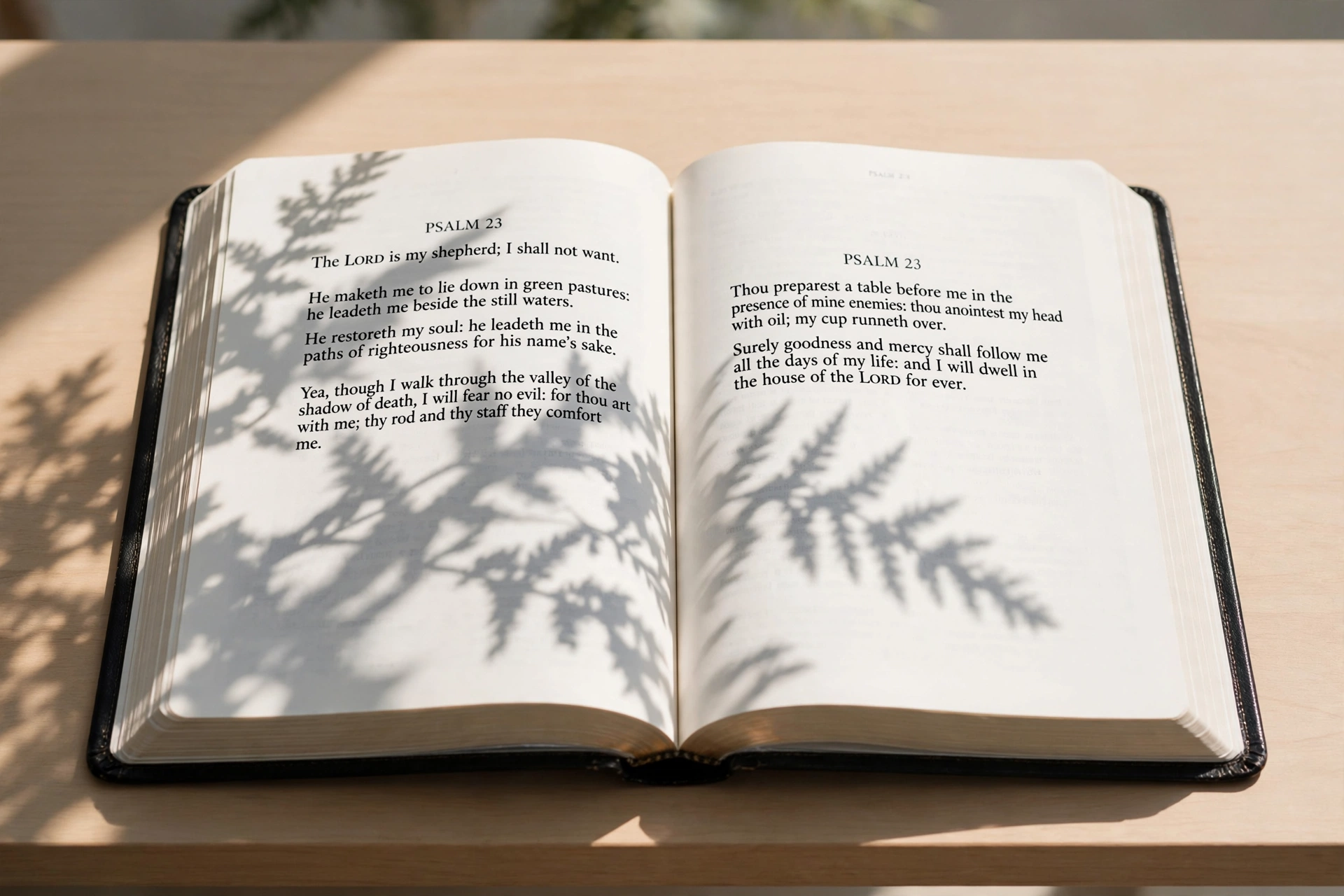
1. Isaiah 41:10
“Fear thou not; for I am with thee: be not dismayed; for I am thy God: I will strengthen thee; yea, I will help thee; yea, I will uphold thee with the right hand of my righteousness.”
Isaiah wrote these words to a nation on the brink of exile. The people of Israel were facing the looming threat of the Babylonian empire, a reality that induced profound existential terror. In this context, the prophet is not offering a platitude but a theological anchor. He is reminding a displaced and frightened people that their identity as the covenant people of God precedes their geopolitical circumstances. The command “Fear thou not” is predicated entirely on the preceding clause: “For I am with thee.”
The Hebrew word for “dismayed” (sha’ah) carries the connotation of looking around in panic or being bewildered by a threat. When God says, “I will uphold thee with the right hand of my righteousness,” the imagery is that of a king or a father physically grasping his child to keep them from slipping into an abyss. The “right hand” is the symbol of authority, strength, and active intervention. It is not a passive promise of “everything will be okay” in a worldly sense, but an active commitment that God will sustain the believer’s soul through the turbulence.
The spiritual lesson here is the transition from self-reliance to God-reliance. We fear because we intuitively know we lack the resources to handle our future. God’s response is to offer His own resources—His strength, His help, and His righteous hand—as a substitute for our weakness. The antidote to fear is not a lack of danger, but the presence of the Almighty.
2. 2 Timothy 1:7
“For God hath not given us the spirit of fear; but of power, and of love, and of a sound mind.”
Paul writes this to his young protégé, Timothy, who was naturally timid and facing intense persecution in Ephesus. The “spirit of fear” (deilia) refers to cowardice or a shrinking back, which is the antithesis of the boldness required for ministry. Paul is reminding Timothy that his emotional state is not a reflection of his spiritual endowment. The Holy Spirit does not produce a spirit of timidity; that is a byproduct of the flesh and the enemy’s influence.
The “power” (dunamis) Paul mentions is the same resurrection power that raised Christ from the dead. “Love” (agape) acts as the stabilizer for that power, ensuring it is used for edification rather than self-preservation. A “sound mind” (sophronismos) suggests self-discipline and the ability to think clearly under pressure. It is the ability to keep one’s head when the world is losing its own, brought about by the alignment of our thoughts with God’s truth.
This verse teaches us that fear is a spiritual intruder. It is an alien impulse that does not originate from the heart of the Father. When we feel overwhelmed, we have the authority to reject that spirit and instead activate the gifts of power, love, and a sound mind. It is a call to intellectual and spiritual sobriety, reminding us that we are empowered to act despite our feelings.
3. Psalm 56:3
“What time I am afraid, I will trust in thee.”
David wrote this Psalm while he was being held captive by the Philistines in Gath. He was literally in a life-or-death situation, surrounded by enemies who wanted him dead. The beauty of this verse lies in its honesty. David does not claim that he never feels fear; in fact, he acknowledges the reality of it (“What time I am afraid”). He does not try to suppress the emotion through toxic positivity or denial.
The phrase “I will trust in thee” is a deliberate act of the will. Trust is not a feeling; it is a posture. It is a decision to lean the weight of one’s life onto the character of God when the circumstances seem to contradict His goodness. The Hebrew root for “trust” (batach) implies a sense of security and safety, like a person throwing themselves onto a solid foundation or taking refuge in a fortress.
The spiritual lesson here is that courage is not the absence of fear, but the presence of faith. It is the deliberate choice to anchor one’s heart in the unchanging nature of God, regardless of the shifting sands of external threats. We can be afraid and still be faithful, provided we channel that fear into an act of trust.
Summary Takeaways Table
| Verse (KJV) | Core Spiritual Message | Actionable Lesson |
|---|---|---|
| Isaiah 41:10 | God’s presence is our ultimate security. | When anxiety strikes, pray: “Lord, I feel weak, but I lean on Your righteous hand.” |
| 2 Timothy 1:7 | Fear is not from God; we are equipped for clarity. | Replace racing thoughts with a list of God’s truths to regain a “sound mind.” |
| Psalm 56:3 | Trust is an active decision, not a feeling. | When fear arises, audibly declare: “I am afraid, but I choose to trust You.” |
Practical Devotional Application
The “Truth-Journaling” Method
Fear often thrives in the vague, unexamined spaces of the mind. To combat this, keep a “Truth Journal.” When you feel a specific fear—whether it is about finances, health, or the future—write it down on the left side of the page. On the right side, write a corresponding scripture that directly contradicts the lie behind that fear. By externalizing the fear, you strip it of its mysterious power and subject it to the scrutiny of God’s Word.
Practicing “The Pause”
In moments of acute panic, the body enters a “fight or flight” state. Before reacting, implement a 60-second “spiritual pause.” Close your eyes, take deep, rhythmic breaths, and recite a short prayer like, “You are here, I am Yours, and You are in control.” This simple act forces the nervous system to slow down and allows the Holy Spirit to move from the periphery of your awareness to the center of your decision-making process.
Community Accountability
Fear is an isolating emotion; it whispers that you are the only one struggling. Share your struggles with a mature, spiritually grounded friend or mentor. Often, the act of speaking a fear aloud to another believer breaks the power of shame that accompanies it. Ask them to pray specifically for your peace, not just for the removal of your circumstances, but for the strengthening of your faith within them.
Empathic Daily Prayer
Guided Scriptural Prayer
Heavenly Father, I come before You today with a heart that often trembles at the weight of the unknown. You know the secret anxieties I carry and the moments when the shadows of the future feel longer than the light of Your promise. I confess that I have often looked to my own strength to solve problems that only Your sovereignty can address. Please forgive me for the times I have allowed fear to dictate my actions and silence my witness. Grant me the grace to see my circumstances through the lens of Your eternal perspective, remembering that You are the Alpha and the Omega, the beginning and the end of every trial I face.
Lord, infuse my spirit with the power, love, and sound mind that You have already provided. When my heart begins to race, let Your peace, which surpasses all understanding, guard my mind. Help me to be a person of courage—not because I am inherently brave, but because I am anchored in the One who has already overcome the world. May my life be a testimony to Your sufficiency, and may my fear be transformed into an opportunity to display Your glory. In the precious and powerful name of Jesus Christ, I pray, Amen.
Frequently Asked Questions
Why does the Bible command us not to fear if fear is a natural human emotion?
The biblical command “Fear not” is not a denial of human biology or emotion; rather, it is a directive to prevent fear from becoming our functional master. In the Bible, fear is often treated as a form of idolatry because it suggests that our current circumstances are more powerful than God. When God commands us not to fear, He is inviting us to shift our focus from the magnitude of the threat to the magnitude of His character. It is an invitation to transition from being driven by our impulses to being led by our convictions, acknowledging that while we may feel the emotion of fear, we are under no obligation to obey it.
Is it a sin to be afraid?
It is important to distinguish between a feeling and a sin. Experiencing an initial surge of fear—what we might call “startle response” or “anxious concern”—is a natural part of living in a fallen, broken world. Even Jesus experienced distress in the Garden of Gethsemane. Sin enters the picture not in the feeling itself, but in what we do with that feeling. If we allow fear to lead us into disobedience, bitterness, or a total rejection of God’s sovereignty, then it has crossed the line into sin. The goal is not to be emotionless, but to bring our fears to the foot of the Cross, refusing to let them dictate our path.
How do I differentiate between “healthy fear” (caution) and “sinful fear” (anxiety)?
Healthy fear, often referred to as wisdom or “the fear of the Lord,” leads to prudence and reliance on God. For example, staying away from a dangerous cliff is a form of healthy, God-given caution that preserves life. Sinful fear, or anxiety, is characterized by a lack of trust in God’s care and often manifests as repetitive, circular thinking that leads to paralysis. If your reaction to a situation leads you to pray, seek wisdom, and act with integrity, it is likely healthy caution. If your reaction leads you to despair, isolation, or the abandonment of your values, it is likely the kind of sinful, paralyzing fear that the Bible warns against.