

What Does the Bible Say About Faith in God?
The Bible teaches that faith in God is the foundational response of the human heart to His revealed truth, characterized by an active, unwavering trust in His character and promises. It is not merely an intellectual assent to facts, but a total reliance on God that produces obedience and sustains the believer through every season of life.
Scripture underscores that “faith is the substance of things hoped for, the evidence of things not seen” (Hebrews 11:1, KJV). In the Old Testament, faith is frequently expressed through the Hebrew word emunah (Strong’s H530), which carries the connotation of steadfastness, firmness, and fidelity. It is a posture of leaning entirely upon the reliability of Yahweh. In the New Testament, the Greek term pistis (Strong’s G4102) defines faith as a conviction and a confident reliance on Christ. For a deeper investigation into these linguistic nuances, you can explore the Blue Letter Bible Greek Lexicon for Pistis.
For modern Christians, understanding faith is critical because the world often equates faith with wishful thinking or emotional preference. However, biblical faith is objective and anchored in the historical reality of God’s redemptive work. Without this root, our spiritual lives become fragile, susceptible to the shifting tides of circumstance. By grounding ourselves in the biblical definition of faith, we move from passive observation to an active, transformative relationship with the Creator.
Most Powerful Bible Verses About Faith in God (KJV)
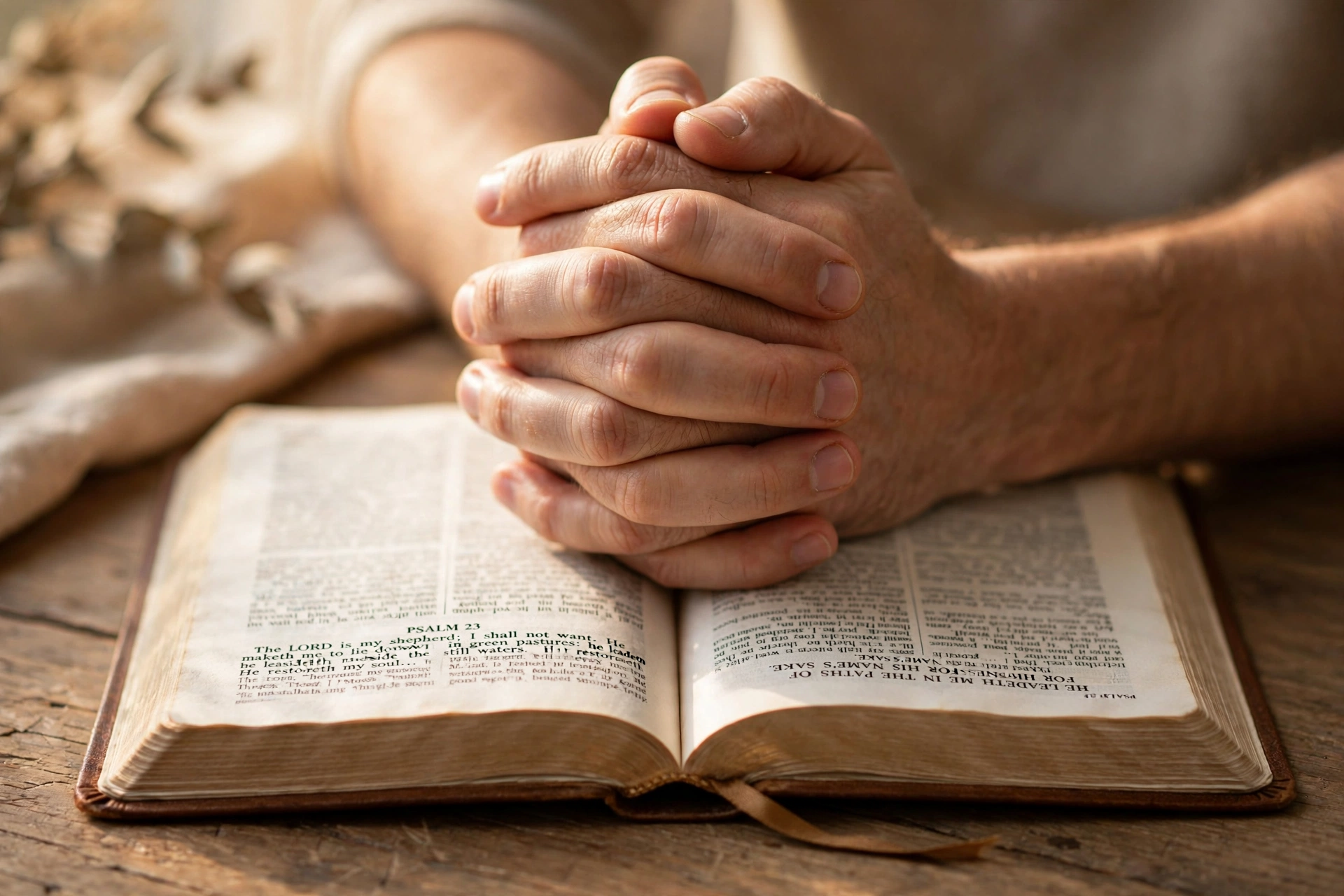
For by grace are ye saved through faith; and that not of yourselves: it is the gift of God: Not of works, lest any man should boast. Ephesians 2:8-9 (KJV)
The Apostle Paul wrote this letter to the church at Ephesus to emphasize the supremacy of Christ’s work over human effort. The historical context reflects a community transitioning from paganism to Christianity, needing to understand that their standing before God was entirely dependent on His initiative, not their religious performance or heritage.
In the original Greek, the word for “faith” is pistis, which we can analyze further via Strong’s Concordance. Here, faith is described as the instrument through which grace is received. It is not something we “manufacture” to earn salvation; rather, it is a divine endowment that enables us to grasp what God has already provided in Christ.
The spiritual lesson is profound: faith is a humble reception of a gift. When we realize our salvation is “not of ourselves,” it strips away the pride of legalism. Modern application requires us to stop trying to “perform” for God’s love and instead rest in the sufficiency of His grace, acknowledging that our very ability to believe is a manifestation of His kindness.
Trust in the LORD with all thine heart; and lean not unto thine own understanding. In all thy ways acknowledge him, and he shall direct thy paths. Proverbs 3:5-6 (KJV)
Solomon, the author of Proverbs, offers this wisdom as a father instructing his son on how to navigate life’s complexities. The historical setting is the royal court of Israel, where wisdom was essential for leadership. He warns against the arrogance of human intellect, which is limited and prone to error, urging total reliance on the omniscience of God.
The Hebrew word for “trust” is batach (Strong’s H982), meaning to feel safe, to be confident, or to lean upon. It implies a total weight-bearing reliance, like a person leaning their full body weight onto a sturdy wall. When we combine this with yada (to acknowledge), we see a call to invite God into every aspect of our decision-making process.
For the modern believer, this is a call to surrender the “need to know.” We often struggle with anxiety because we try to understand the “why” behind our circumstances. Applying this means pausing before major life decisions—or even daily stressors—to explicitly invite God’s direction, trusting that His path, though perhaps hidden, is always straight.
Now faith is the substance of things hoped for, the evidence of things not seen. Hebrews 11:1 (KJV)
The author of Hebrews writes to Jewish Christians who were tempted to revert to the rituals of the Old Covenant due to severe persecution. He provides a “hall of fame” of faith, beginning with this definition, to show that those who walked with God in the past did so by looking toward a future reality that was invisible to the naked eye.
The Greek word for “substance” is hupostasis, which refers to a foundation or a guarantee. It is what stands under a structure. Faith provides the firm ground for our hope. The word for “evidence” is elenchos, referring to a proof or a conviction that brings the truth to light even when the object of that truth is not currently observable.
This verse serves as a spiritual anchor. In an age of skepticism and material evidence, we are called to prioritize spiritual reality. Whether we are waiting for healing, reconciliation, or provision, our faith acts as the internal evidence that God’s promises are true, regardless of what our physical senses currently report.
Key Takeaways: Bible Verses About Faith in God
| Verse Reference (KJV) | Core Spiritual Message | How to Apply Today |
|---|---|---|
| Ephesians 2:8-9 | Salvation is a gift, not a wage. | Stop striving for approval; rest in Christ’s finished work. |
| Proverbs 3:5-6 | God’s wisdom exceeds our own. | Pray before every major decision; relinquish control. |
| Hebrews 11:1 | Faith is the foundation of hope. | Choose to believe God’s Word over your current feelings. |
How Can I Apply Bible Verses About Faith in God in My Daily Life?
When You Feel Overwhelmed by Uncertainty
When the future seems unclear, use the “Surrender Audit.” Write down three things causing you anxiety. Next to each, write a specific attribute of God (e.g., His faithfulness, His sovereignty, His love). Read Proverbs 3:5-6 aloud, consciously choosing to stop “leaning” on your own analysis of the problem and instead “leaning” on the character of God you just wrote down.
When You Are Waiting for an Answer to Prayer
Waiting often breeds doubt. To combat this, keep a “Faith Journal.” Record verses that promise God’s presence and provision. When you feel discouraged, read these promises as evidence (Hebrews 11:1). Instead of praying only for the outcome, shift your prayer to ask for patience and a deeper understanding of God’s nature during the wait.
When You Feel Your Efforts Are Not Enough
If you struggle with perfectionism or feeling “not good enough” for God, return to Ephesians 2:8-9. Practice the daily discipline of “Gospel Preaching.” Every morning, state aloud: “I am not loved because of what I do; I am loved because of what Christ has done.” This practice anchors your identity in grace rather than your daily performance.
A Prayer for Faith in God
Guided Scriptural Prayer
Heavenly Father, I come before You acknowledging that my faith is often weak and easily shaken by the circumstances of this world. Please grant me the grace to lean not on my own understanding, but to trust in Your perfect, sovereign plan for my life. Help me to grasp the reality of the things I cannot see, knowing that You are the author and finisher of my faith. May Your Holy Spirit strengthen my heart so that I may walk by faith and not by sight, finding my complete security in the finished work of Jesus Christ.
Lord, when I am tempted to worry or rely on my own strength, remind me that I am Your child, saved by Your unmerited favor. I choose today to lay my burdens at Your feet, trusting that You are directing my paths even when the way ahead is hidden. Thank You for being the substance of my hope and the evidence of Your truth in my life. In the precious name of Jesus, I pray, Amen.
Frequently Asked Questions About Faith in God in the Bible
Does the Bible say that faith can move mountains?
Yes, Jesus explicitly states in Matthew 17:20 (KJV) that if you have faith as a grain of mustard seed, you shall say to a mountain, “Remove hence to yonder place; and it shall remove.” This is not an endorsement of magic, but a metaphor for the power of God working through a believer. It highlights that the size of the faith is less important than the object of the faith—God Himself. When our faith is aligned with God’s will, even the most insurmountable obstacles in our spiritual lives can be overcome by His power.
Is it a sin to have doubts while having faith?
The Bible does not condemn the struggle of doubt, but rather encourages us to bring it to God. Consider the man who cried out to Jesus, “Lord, I believe; help thou mine unbelief” (Mark 9:24, KJV). His honesty was met with compassion, not rejection. Doubt often serves as an invitation to seek God more deeply. It is not the absence of doubt that defines faith, but the act of choosing to trust God in spite of the lingering questions that remain in our finite minds.
How does God reward our faith in Him?
The primary reward for faith is intimacy with God and the assurance of eternal life. Hebrews 11:6 (KJV) states that “he is a rewarder of them that diligently seek him.” This reward is not always material or worldly; often, it manifests as the “peace of God, which passeth all understanding” (Philippians 4:7, KJV). By exercising faith, we are positioned to experience His presence, guidance, and the transformation of our character, which are the most valuable treasures a human can possess in this life.
What is the difference between saving faith and temporary belief?
Saving faith is a supernatural, life-changing reliance on Jesus Christ, whereas temporary belief is often merely intellectual or emotional. In the Parable of the Sower, Jesus describes those who receive the word with joy but have no root, eventually falling away when trials arrive (Matthew 13:20-21, KJV). True, saving faith—as described in Ephesians 2:8—is a work of the Holy Spirit that produces fruit and endures through suffering. It is a permanent shift in allegiance to God, evidenced by a life that continues to seek Him even when the initial excitement fades.