

What Does the Bible Say About Faith in God?
The Bible presents faith in God not merely as an intellectual acknowledgment of His existence, but as a total, transformative reliance upon His character, promises, and redemptive work. It is the foundational requirement for salvation and the essential engine for a life that pleases the Creator, serving as the bridge between human limitation and divine omnipotence.
Scripture teaches that faith is the “substance of things hoped for, the evidence of things not seen” (Hebrews 11:1, KJV). In the Old Testament, faith is often synonymous with “trust” or “waiting” upon the Lord, exemplified by Abraham, who “believed in the LORD; and he counted it to him for righteousness” (Genesis 15:6, KJV). In the New Testament, the Greek word for faith, pistis, carries the nuance of firm persuasion and conviction based upon hearing the Word of God. You can explore the rich depth of this word at the Blue Letter Bible Lexicon.
In our modern era, where secularism and self-reliance are often elevated as the highest virtues, the biblical call to faith is a radical counter-cultural act. Faith is not a blind leap in the dark, but a step into the light of God’s established truth. As we navigate a world of uncertainty, understanding faith as a covenantal relationship rather than a feeling allows the believer to remain anchored in the unchanging nature of Jesus Christ, who is the author and finisher of our faith.
Most Powerful Bible Verses About Faith in God (KJV)
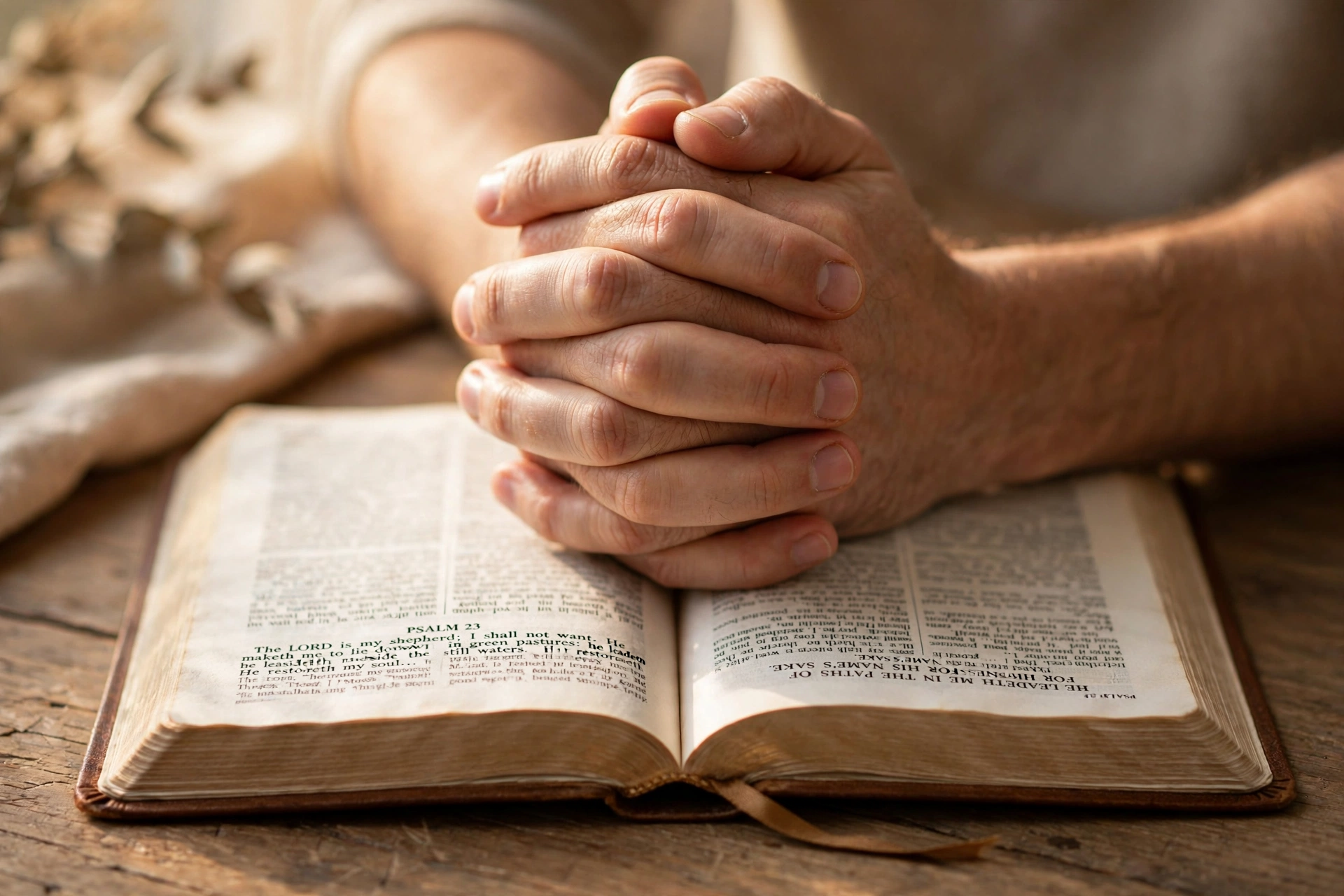
Now faith is the substance of things hoped for, the evidence of things not seen. Hebrews 11:1 (KJV)
Hebrews 11:1 was written to Jewish Christians who were facing severe persecution and the temptation to revert to the rituals of the Mosaic Law. The author provides this definition to encourage them to persevere by looking beyond their immediate suffering to the eternal reality of God’s promises, which are as certain as if they were already possessed.
The Greek word for “substance” is hupostasis, which refers to a foundation or a guarantee. When we examine this using Strong’s Concordance, we see it implies a title deed. Faith is the title deed to what God has promised. The word for “evidence” is elenchos, meaning a conviction or proof. Together, they suggest that faith brings the future reality of God’s kingdom into the present experience of the believer.
The spiritual lesson here is that our circumstances do not define our reality—God’s word does. Modern application requires us to stop viewing our problems as the final authority. When you feel discouraged, remember that your faith is the evidence of God’s work in progress, even when your physical eyes cannot yet see the outcome.
For by grace are ye saved through faith; and that not of yourselves: it is the gift of God: Not of works, lest any man should boast. Ephesians 2:8-9 (KJV)
The Apostle Paul wrote this letter to the church at Ephesus to emphasize the total sufficiency of Christ’s work. In a culture obsessed with status and achievement, Paul humbles the believer by stating that even the ability to believe is a gracious gift from the Almighty, ensuring that no human can claim credit for their salvation.
The term “faith” here relates to the active reception of grace. In the Greek, “gift” is doron, implying a present given freely without expectation of return. By examining this through Strong’s Concordance, we understand that grace is the source of salvation, while faith is the channel through which we receive it. We do not manufacture faith; we receive it from the Holy Spirit.
This truth liberates the modern Christian from the “performance trap.” You do not need to be “good enough” for God to love you or save you. Faith is simply the hand that reaches out to accept the gift that is already extended. It shifts our focus from our own efforts to the finished work of Jesus on the cross.
Trust in the LORD with all thine heart; and lean not unto thine own understanding. In all thy ways acknowledge him, and he shall direct thy paths. Proverbs 3:5-6 (KJV)
Solomon, the wisest king of Israel, penned these words as part of his fatherly instruction to his son. The historical context is a call to covenantal loyalty; it warns against the danger of relying on human logic—which is often clouded by emotion and limited perspective—instead of the divine wisdom of God.
The Hebrew word for “trust” is batach, which describes a sense of security and safety, like a person throwing themselves onto a solid foundation. “Lean not” comes from the Hebrew sha’an, meaning to support oneself or rely upon. By checking Strong’s Concordance, we see that the call to “acknowledge” (yada) implies an intimate, experiential knowledge of God in every single facet of life, not just in religious activities.
In our complex lives, we often try to “figure it out” through excessive planning or anxiety. This verse teaches us that true faith is a surrender of our desire for control. When you face a crossroads, your primary task is not to solve the puzzle, but to invite God into the decision-making process, trusting that He will straighten your path.
Key Takeaways: Bible Verses About Faith in God
| Verse Reference (KJV) | Core Spiritual Message | How to Apply Today |
|---|---|---|
| Hebrews 11:1 | Faith is the evidence of invisible realities. | Focus on God’s promises rather than current obstacles. |
| Ephesians 2:8-9 | Faith is a gift, not a human achievement. | Stop striving for approval; rest in His finished work. |
| Proverbs 3:5-6 | Surrender your logic to God’s guidance. | Pray before making decisions instead of just planning. |
How Can I Apply Bible Verses About Faith in God in My Daily Life?
When You Feel Overwhelmed at Work
When the pressure of deadlines or difficult colleagues mounts, practice the “Pause and Surrender” technique. Stop what you are doing, take a deep breath, and mentally acknowledge that God is the Sovereign over your career. Pray the words of Proverbs 3:5, explicitly telling Him, “Lord, I lean not on my own understanding of this situation.” By relinquishing the need to control the outcome, you invite the peace of God to guard your heart, allowing you to work with excellence rather than anxiety.
When a Relationship Hurts
In the midst of relational conflict, it is easy to rely on our own hurt and desire for justice. Shift your focus to faith by meditating on the fact that God is the ultimate healer and judge. Commit to praying for the person who offended you. This is an act of faith because it requires believing that God is working in their life and yours, even when you cannot see it. Trust that His grace is sufficient to cover the offense, and ask Him to replace your bitterness with His perspective.
During Financial Hardship
Financial stress is often a test of where our ultimate security lies. Practice “Stewardship Faith” by taking a small step of obedience. If you are struggling, set aside time to review your budget with prayer, asking for wisdom. Instead of focusing on the lack, intentionally thank God for what you do have. Remind yourself through Scripture that He is your Provider (Jehovah Jireh). This practice moves you from a mindset of scarcity to one of faith in God’s unfailing provision.
A Prayer for Faith in God
Guided Scriptural Prayer
Heavenly Father, I come before You today acknowledging that my faith is often small and my heart is often prone to worry. I thank You that faith is not something I must manufacture, but a gift that You have graciously provided through the sacrifice of Your Son, Jesus. Please increase my faith, Lord. Help me to look beyond the visible trials of this world and fix my eyes upon the eternal evidence of Your promises. When I am tempted to rely on my own limited understanding, remind me to surrender my path to You, knowing that Your ways are higher and Your plans are good.
I choose to trust You with all my heart today. I lay down my anxieties, my need for control, and my fear of the future at Your feet. Grant me the grace to walk in the assurance that You are the author and finisher of my faith. Let my life be a testimony to Your power, and may my actions be guided by Your wisdom in every step I take. In the precious and holy name of Jesus Christ, I pray. Amen.
Frequently Asked Questions About Faith in God in the Bible
Does the Bible say that faith is enough to move mountains?
Yes, Jesus explicitly addresses this in Matthew 17:20 (KJV), stating, “If ye have faith as a grain of mustard seed, ye shall say unto this mountain, Remove hence to yonder place; and it shall remove; and nothing shall be impossible unto you.” This is not an endorsement of “name-it-and-claim-it” theology, but rather a profound statement on the power of God. The “mountain” represents any obstacle that seems immovable to human effort. The emphasis is not on the size of our faith, but on the power of the God in whom we place that faith. Even a tiny, genuine seed of trust in an omnipotent God is sufficient to see the impossible happen according to His divine will.
Is it a sin to have doubts while trying to have faith?
The Bible treats doubt with compassion rather than condemnation. In Mark 9:24 (KJV), the father of a sick boy cries out, “Lord, I believe; help thou mine unbelief.” This honest confession shows that faith and doubt can coexist in a fallen human heart. Doubt becomes a problem only when it leads to persistent rebellion or a refusal to seek God. Instead of hiding your doubts, bring them to Him in prayer. God is capable of handling your questions, and He often uses times of struggle to deepen your reliance on Him, transforming shaky intellectual assent into a firm, experiential trust.
How does God reward those who exercise faith?
The primary reward for faith is God Himself. Hebrews 11:6 (KJV) declares, “He that cometh to God must believe that he is, and that he is a rewarder of them that diligently seek him.” While God often provides earthly blessings, the ultimate reward of faith is eternal life, peace that surpasses understanding, and the intimate presence of the Holy Spirit. Faith does not guarantee a life free from pain, but it does guarantee that you will never walk through that pain alone. The reward is a transformed character, a secure identity in Christ, and the inheritance of the kingdom of God.
What is the difference between “believing” and “having faith”?
In a biblical context, “believing” (the Greek pisteuo) is often just the beginning—an intellectual acceptance of facts. Even the demons believe and tremble (James 2:19, KJV). Saving faith, however, involves pistis, which includes personal trust, commitment, and surrender. Think of it like the difference between knowing that a chair is designed to hold your weight (believing) and actually sitting down in the chair and resting your full weight upon it (faith). True faith is the active, ongoing surrender of your life into the hands of a God you have come to know personally through the gospel of Jesus Christ.