
What Does the Bible Say About Faith in God?
The Bible presents faith in God not merely as an intellectual acknowledgment of His existence, but as a total, transformative reliance upon His character, promises, and redemptive work in Jesus Christ. It is the foundational requirement for a right relationship with the Creator, acting as the bridge between human limitation and divine power.
Scripture teaches that faith is both a gift from God and a necessary human response to His revelation. From the Old Testament accounts of the patriarchs to the New Testament focus on the finished work of the Cross, the Bible emphasizes that “without faith it is impossible to please him” (Hebrews 11:6, KJV). In the modern era, where secularism and self-reliance are often prioritized, understanding faith is essential for navigating life’s uncertainties. Faith provides the spiritual stability needed to anchor one’s soul when circumstances shift, shifting our perspective from the temporal to the eternal.
The Greek word most frequently used for faith is pistis (Strong’s G4102), which implies more than just “belief”; it carries the weight of conviction, trust, and faithful allegiance. You can explore the depth of this term through Blue Letter Bible’s Greek Lexicon. This pistis is not a static feeling but a dynamic force that manifests in obedience. When we study the biblical narrative, we see that faith is the “substance of things hoped for” (Hebrews 11:1, KJV), meaning it gives reality and form to the spiritual truths we cannot physically touch but know to be true through the Holy Spirit.
Most Powerful Bible Verses About Faith in God (KJV)
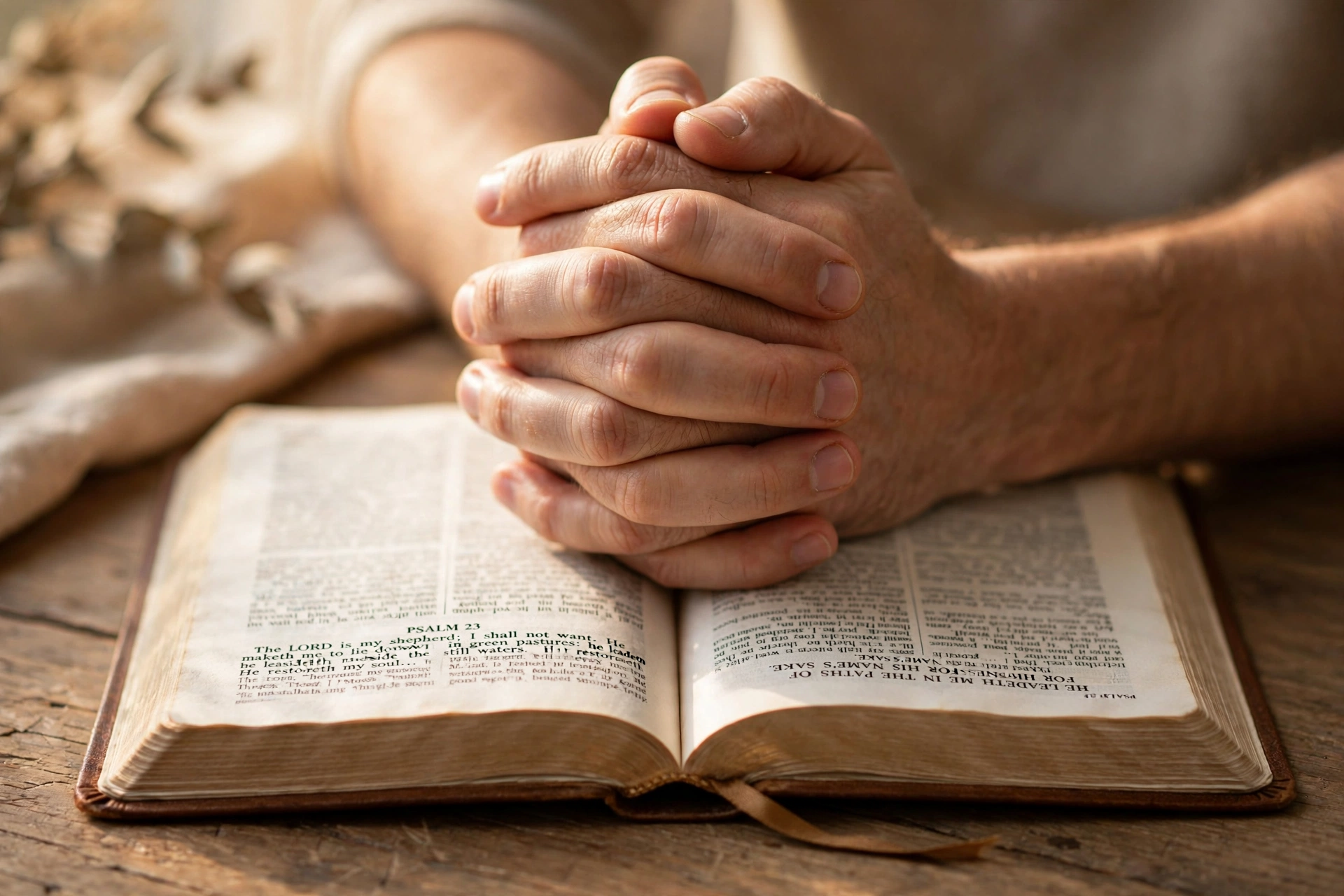
Now faith is the substance of things hoped for, the evidence of things not seen. Hebrews 11:1 (KJV)
The Epistle to the Hebrews was written to Jewish Christians who were facing severe persecution and tempted to return to the rituals of Judaism. The author encourages them to persevere by reminding them of the heroes of the faith who lived by trust in God’s unseen promises. This verse serves as the definitive biblical “definition” of faith, framing it as the bedrock upon which the believer’s life is constructed.
The word “substance” comes from the Greek hupostasis (Strong’s G5287), which literally means to stand under or a foundation. It suggests that faith is the “title deed” or the underlying reality of what we hope for. It is not wishful thinking; it is the spiritual confidence that God’s promises are already settled in heaven.
For the modern Christian, this means faith is the “evidence” or conviction that sustains us in the dark. When we cannot see the outcome of a situation, our faith acts as the internal proof that God is working behind the scenes. It transforms our perspective, allowing us to live for the reward of eternity rather than the fleeting comfort of the present.
For by grace are ye saved through faith; and that not of yourselves: it is the gift of God: Ephesians 2:8 (KJV)
Written by the Apostle Paul to the church in Ephesus, this passage addresses the tension between human works and divine grace. Paul emphasizes that salvation is entirely a work of God, clarifying that even our ability to believe is a gift. It humbles the believer, reminding us that we contribute nothing to our own rescue.
The term “faith” here relates to pistis, but the emphasis is on the source. It is “not of yourselves” (Greek: ouk ex humon). This signifies that faith is not a human achievement or an intellectual muscle we flex, but a divine spark ignited by the Holy Spirit. It is the channel through which we receive God’s grace.
This verse is a powerful remedy for spiritual pride. When you realize that your faith is a gift, you are freed from the pressure of “earning” God’s love. You can rest in the truth that God has already provided the means for your salvation, and your role is simply to accept that gift with a grateful heart.
Trust in the Lord with all thine heart; and lean not unto thine own understanding. In all thy ways acknowledge him, and he shall direct thy paths. Proverbs 3:5-6 (KJV)
This wisdom from Solomon, recorded in Proverbs, serves as a timeless directive for living a life aligned with God’s will. It was written to instruct the youth—and indeed all people—on the necessity of divine guidance over human logic in a world filled with moral and practical complexities.
The Hebrew word for “trust” is batach (Strong’s H982), which carries the vivid image of lying face down in complete surrender. It implies a sense of safety and security in the one being trusted. To “lean not” on our own understanding means we are not to use our limited human perspective as the final authority for our life decisions.
Practically, this means that when we face a crossroads—whether it is a career change or a difficult interpersonal conflict—we must pause and invite God into the decision-making process. By acknowledging Him in “all our ways,” we move from a state of anxious self-management to a state of peace-filled cooperation with God’s sovereign plan.
Key Takeaways: Bible Verses About Faith in God
| Verse Reference (KJV) | Core Spiritual Message | How to Apply Today |
|---|---|---|
| Hebrews 11:1 | Faith is the reality of the unseen. | Anchor your hope in God’s promises during seasons of uncertainty. |
| Ephesians 2:8 | Faith is a gift, not an achievement. | Release the burden of perfectionism; rest in God’s grace. |
| Proverbs 3:5-6 | Total surrender to divine wisdom. | Pray before major decisions; seek God’s Word over human logic. |
How Can I Apply Bible Verses About Faith in God in My Daily Life?
When You Feel Overwhelmed by Life’s Demands
When the weight of daily responsibilities feels crushing, shift your focus from the size of the problem to the size of your God. Practice “active surrender” by physically kneeling and praying, “Lord, I cannot carry this, but You can.” Read Matthew 11:28-30 (KJV), and consciously visualize placing each burden at the foot of the Cross. Replace your anxious thoughts with a specific promise from Scripture, repeating it throughout the day.
When You Must Make a Difficult Decision
Before making a choice that impacts your future, practice the “Proverbs 3:5-6 Test.” Write down your current plan and ask yourself, “Am I leaning on my own understanding?” Dedicate three days to fasting or intentional prayer, asking God for wisdom rather than a specific outcome. Look for confirmation in the Scriptures and through the counsel of godly mentors. Faith often requires us to wait, so be prepared to pause your plans until you have a sense of peace that transcends your circumstances.
When You Face Doubt or Spiritual Dryness
Doubt is not the opposite of faith; it is often the precursor to a deeper understanding of God. When you feel distant from Him, do not retreat. Instead, engage in “the discipline of remembrance.” Keep a journal where you record times God has been faithful in your past. Reviewing these “Ebenezers” (monuments of help) reminds your soul that the same God who acted yesterday is active today. Read the Psalms, which are filled with honest cries of doubt that eventually lead to praise, and allow their transparency to mirror your own prayers.
A Prayer for Faith in God
Guided Scriptural Prayer
Heavenly Father, I come before You acknowledging that my faith is a gift, a precious treasure You have placed within my heart. Please forgive me for the times I have relied on my own limited understanding and tried to navigate the storms of life without Your guidance. I hold onto the truth of Hebrews 11:1, believing that even when I cannot see the path forward, You are already there, preparing the way and holding my future in Your hands.
Lord, increase my faith so that I may trust You with all my heart. When the world feels overwhelming, remind me that I am saved by Your grace and sustained by Your power. Grant me the courage to surrender my anxieties and the wisdom to seek Your face in all my ways. May my life be a testament to Your faithfulness, reflecting Your love to everyone I meet. In the name of my Savior, Jesus Christ, I pray, Amen.
Frequently Asked Questions About Faith in God in the Bible
Does the Bible say that faith can move mountains?
Yes, Jesus explicitly uses this metaphor in Matthew 17:20 (KJV), stating, “If ye have faith as a grain of mustard seed, ye shall say unto this mountain, Remove hence to yonder place; and it shall remove.” This is not an endorsement of magic, but a teaching on the power of God available to those who trust Him. It emphasizes that even a small, genuine amount of faith in an omnipotent God is more effective than human strength. The “mountains” represent the seemingly impossible obstacles in our lives—sin, sickness, or deep-seated despair—that can only be overcome when we rely on God’s power rather than our own capabilities.
Is it a sin to have doubts if I have faith?
The Bible does not condemn the presence of doubt, but it encourages us to bring those doubts to God rather than letting them fester. In Mark 9:24 (KJV), a father cries out to Jesus, “Lord, I believe; help thou mine unbelief.” This honest confession shows that faith and doubt can coexist in the human heart. True faith is not the absence of questions; it is the decision to keep following God even when the questions remain. We are called to “grow in grace” (2 Peter 3:18, KJV), and often, our struggles with doubt serve as the very crucible where our faith is refined and strengthened into a more mature, resilient trust.
How does God reward those who exercise faith?
The primary reward for faith is not necessarily material prosperity, but a deep, abiding relationship with God and the assurance of eternal life. Hebrews 11:6 (KJV) states that God “is a rewarder of them that diligently seek him.” This reward often manifests as inner peace (Philippians 4:7, KJV), the guidance of the Holy Spirit, and the strength to endure trials with hope. While Scripture acknowledges that God cares for our physical needs, the ultimate reward of faith is the transformation of our character into the image of Christ, ensuring that we live a life that is pleasing to God and eternally significant.
What is the difference between faith and belief?
In a biblical context, “belief” is often the intellectual acceptance of facts, whereas “faith” is the active, life-altering commitment to those facts. James 2:19 (KJV) famously notes that “the devils also believe, and tremble,” proving that mere intellectual agreement is insufficient. Faith, as understood in the original Greek pistis, involves total reliance and personal surrender to Jesus Christ as Savior and Lord. While belief acknowledges that God exists, faith acts upon that knowledge by obeying His Word and trusting in His character. Faith is the living, breathing response of the entire person to the grace of God revealed in the Gospel.