

What Does the Bible Say About Faith in God?
The Bible presents faith in God as the foundational substance of a believer’s life, defining it as the confident assurance in things hoped for and the conviction of realities not yet seen. It is not merely an intellectual assent to theological facts, but an active, life-altering trust in the character, promises, and sovereignty of the Creator.
In the Old Testament, faith is deeply rooted in emunah (Strong’s H530), which signifies firmness, steadfastness, and fidelity. It describes a relationship where God is the faithful Rock, and the believer’s faith is a responsive, loyal reliance upon Him. You can explore the depth of this term through Blue Letter Bible’s Hebrew Lexicon. This faith sustained patriarchs like Abraham, who “believed in the LORD; and he counted it to him for righteousness” (Genesis 15:6, KJV), establishing the paradigm that true faith is credited as righteousness.
In the New Testament, the Greek word pistis (Strong’s G4102) moves the concept into the sphere of personal commitment to Jesus Christ. It is more than believing that God exists; it is a total abandonment of one’s self-reliance in favor of Christ’s sufficiency. For modern Christians, this guidance is essential because we live in an era of secular rationalism that demands empirical evidence for every truth claim. Biblical faith challenges us to look beyond the temporal horizon, recognizing that our ultimate security rests in the unseen, eternal hand of God.
Most Powerful Bible Verses About Faith in God (KJV)
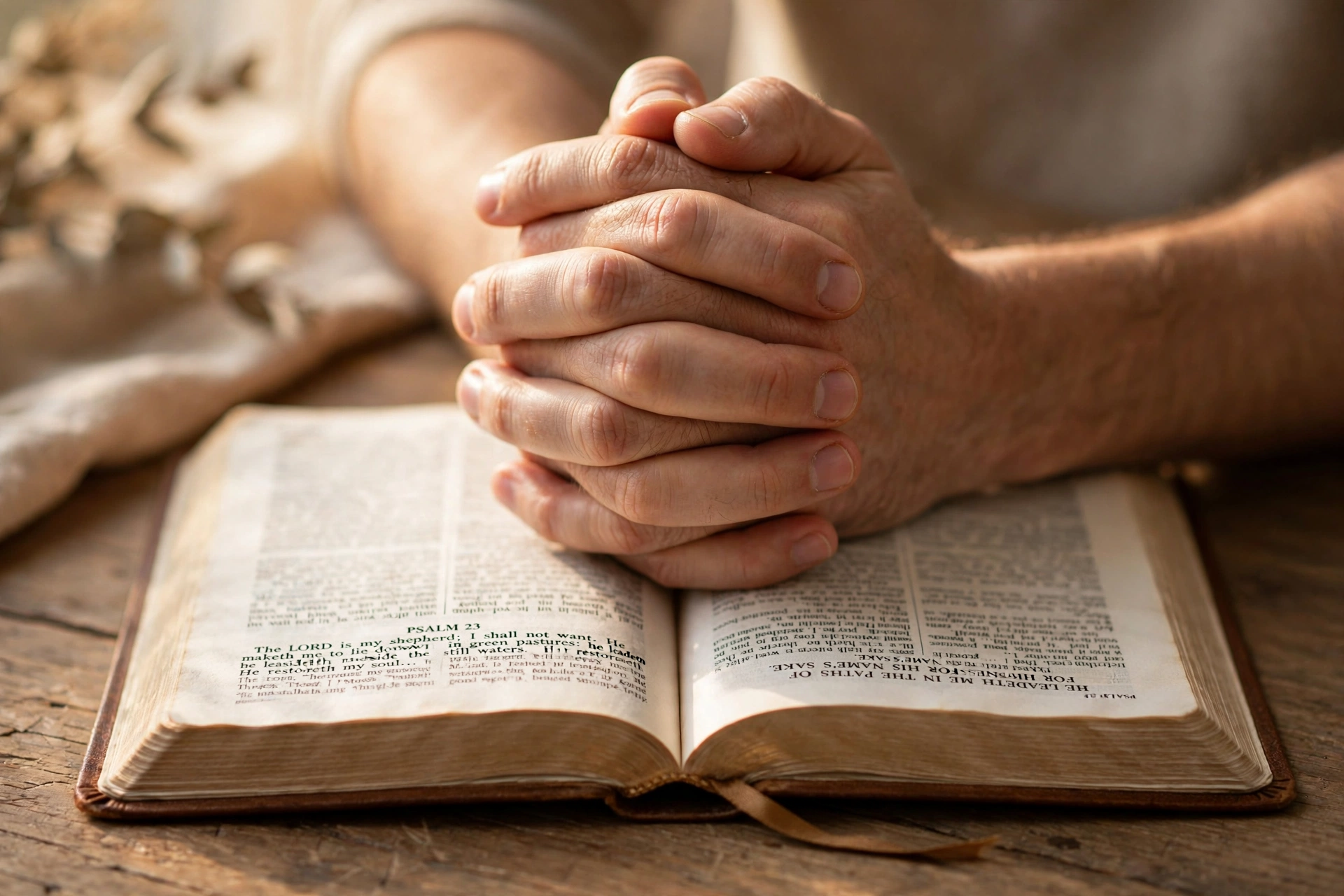
Now faith is the substance of things hoped for, the evidence of things not seen. Hebrews 11:1
The Epistle to the Hebrews was written to Jewish Christians who were facing severe persecution and the temptation to return to the rituals of the Mosaic Law. The author provides this definition of faith to remind them that the heroes of the Old Testament did not receive the promises in their lifetime, yet they endured because they saw the future fulfillment through the eyes of faith.
The Greek word for “substance” is hupostasis (Strong’s G5287), which carries the legal connotation of a “title deed” or “assurance.” It is that which stands under, or supports, our hope. The term “evidence” is elenchos, meaning a conviction or proof that is so powerful it forces the mind to accept the truth, even when physical eyes cannot perceive the reality of God’s plan.
The spiritual lesson here is that faith is not a blind leap into the dark, but a firm step into the light of God’s character. In our modern lives, when we face uncertainty, we must remember that faith acts as our spiritual title deed, guaranteeing that God’s promises are as real and legally binding as if we already possessed the outcome.
For by grace are ye saved through faith; and that not of yourselves: it is the gift of God. Ephesians 2:8
Paul the Apostle wrote this letter to the church at Ephesus to emphasize the supremacy of God’s grace. In a culture obsessed with status and achievement, Paul reminds the Ephesians that their standing with God was not earned by their works or religious pedigree, but was bestowed upon them entirely by God’s favor.
The word “faith” here is again pistis, but it is framed as the instrument through which we receive the gift of salvation. It is crucial to note that even the faith required to believe is described as a “gift of God.” This humbles the believer, acknowledging that we do not initiate the relationship with God; He initiates it, and He provides the very mechanism (faith) by which we respond to His call.
The application for today is profound: if you struggle with feeling “not good enough” for God, remember that your salvation is not based on your performance. Faith is simply the hand that receives the gift. You do not need to build your own bridge to heaven; you only need to receive the bridge that Christ has already laid down.
Trust in the LORD with all thine heart; and lean not unto thine own understanding. In all thy ways acknowledge him, and he shall direct thy paths. Proverbs 3:5-6
This wisdom from Solomon, written as a guide for his son, serves as a cornerstone for biblical living. The “heart” in Hebrew thought (leb) represents the center of human intellect, emotion, and will. To trust with “all” the heart means there is no room for divided loyalties or secret reservations.
The phrase “lean not” uses the Hebrew sha’an (Strong’s H8172), which literally means to support oneself or to rest one’s weight upon something. When we “lean” on our own understanding, we are putting our weight on a broken reed. The command to “acknowledge” (yada) implies a deep, intimate, experiential knowledge of God in every single decision we make.
Practically, this means that before we make a career move, enter a relationship, or navigate a crisis, we must invite God into the process. The promise is that He will make our “paths straight”—a metaphor for removing obstacles and aligning our lives with His perfect, sovereign will.
Key Takeaways: Bible Verses About Faith in God
| Verse Reference (KJV) | Core Spiritual Message | How to Apply Today |
|---|---|---|
| Hebrews 11:1 | Faith is the legal title deed to God’s promises. | Treat God’s promises as facts, even when your current circumstances suggest otherwise. |
| Ephesians 2:8 | Salvation is a gift, not a wage earned by work. | Stop trying to perform for God’s love; rest in the finished work of Christ. |
| Proverbs 3:5-6 | Total surrender of our logic to God’s wisdom. | Pause before big decisions to pray and ask for His perspective over your own. |
How Can I Apply Bible Verses About Faith in God in My Daily Life?
When You Feel Overwhelmed by Uncertainty
When the future feels like a fog, stop relying on your “own understanding” (Proverbs 3:5). Take a physical piece of paper and write down the specific situation causing you anxiety. Below it, write one attribute of God that counters that fear (e.g., “God is my Provider”). Read Hebrews 11:1 aloud, and consciously choose to treat God’s character as more “real” than the circumstances listed on your paper.
When You Are Struggling with Past Regrets
If you feel that your past mistakes have disqualified you from God’s favor, return to Ephesians 2:8. Recognize that faith is not about how good you are, but how good God is. Practice “receiving” the gift of grace daily by confessing your need for Him, rather than focusing on your own efforts to make amends. Your faith is the vessel, not the source, of your righteousness.
During Times of Financial Hardship
Financial stress often highlights where we are “leaning” for security. When money is tight, replace the urge to panic with the practice of “acknowledging Him in all thy ways” (Proverbs 3:6). Before paying bills or making a budget, pray specifically for God to direct your path. This shifts your focus from the scarcity of resources to the abundance of the One who owns the cattle on a thousand hills.
A Prayer for Faith in God
Guided Scriptural Prayer
Heavenly Father, I come before You acknowledging that my heart is often prone to doubt and my mind is quick to rely on my own limited understanding. Please forgive me for the times I have looked at my circumstances instead of looking at Your promises. I ask that You would increase my faith, not through my own striving, but by the power of Your Holy Spirit, that I might truly rest in the finished work of Christ.
Lord, make my heart a fertile ground for Your Word. As I walk through the challenges of this life, remind me that You are the author and finisher of my faith. Help me to trust You with all my heart, leaning not on my logic but on Your perfect wisdom. May my life be a testimony of the evidence of things not seen, bringing glory to Your name forever. Amen.
Frequently Asked Questions About Faith in God in the Bible
Does the Bible say that faith is the only requirement for salvation?
The Bible consistently teaches that faith is the instrument of salvation, as seen in Ephesians 2:8. However, biblical faith is never described as a stagnant, dead intellectual belief. James 2:17 clarifies that “faith, if it hath not works, is dead, being alone.” True faith in God inevitably produces a transformation in the believer’s life. It is not that works earn salvation, but that genuine, living faith will always manifest in a life of obedience and love for God. Therefore, faith is the “only requirement” in the sense that Christ’s work is sufficient, but it is a living, active faith that proves the reality of that salvation.
Is it a sin to have doubts about God?
The Bible does not treat honest, struggling questions as sins, but rather as opportunities for growth. Consider the father in Mark 9:24 who cried out, “Lord, I believe; help thou mine unbelief.” His honesty was met with compassion by Jesus. Doubt becomes a problem when it hardens into rebellion or a refusal to seek God’s truth. If you are struggling with doubt, bring it to the Lord in prayer. He is strong enough to handle your questions, and He often uses these seasons of doubt to deepen your roots in His truth, leading you to a more mature and resilient faith.
How does God reward those who have faith?
The greatest reward for faith is God Himself. Hebrews 11:6 states that God is “a rewarder of them that diligently seek him.” While the world often defines rewards in terms of material prosperity, the biblical reward is the presence, peace, and guidance of God. When we walk by faith, we receive the “fruit of the Spirit” (Galatians 5:22-23) and the assurance of eternal life. The reward is not just something God gives; it is the privilege of knowing Him intimately. By trusting Him, we experience the fulfillment of His promises, which provide a satisfaction that no earthly wealth or accomplishment can ever match.
What is the difference between believing in God and having faith in God?
The Bible distinguishes between mere intellectual assent and saving faith. James 2:19 notes that even “the devils also believe, and tremble.” This shows that knowing facts about God—or even believing He exists—is not the same as the “faith” that saves. Having faith in God involves a personal, active commitment. It is the difference between knowing that a chair is designed to hold weight (intellectual belief) and actually sitting down in the chair and trusting it with your full weight (biblical faith). Faith requires a surrender of the will and a reliance on God’s character as the foundation of your entire life, rather than just an acknowledgment of His existence.