
What Does the Bible Say About Faith in God?
The Bible teaches that faith in God is the foundational response of the human heart to the revelation of His character, requiring both intellectual assent and active, trust-filled obedience. It is not merely a passive belief in His existence, but a transformative reliance on His promises and His Son, Jesus Christ.
Scripture consistently portrays faith—the Hebrew emunah (Strong’s H530) and the Greek pistis (Strong’s G4102)—as the essential conduit through which grace is received and salvation is realized. In the Old Testament, emunah implies firmness, steadfastness, and fidelity; it is the quality of a person who is “steady” because they are anchored in the faithfulness of Yahweh. You can explore the depths of this term further through the Blue Letter Bible. In the New Testament, pistis moves beyond mere conviction to a “persuasion” that leads to action, famously defined in Hebrews 11:1 as the “substance of things hoped for, the evidence of things not seen” (KJV).
For modern Christians, understanding biblical faith is a vital antidote to the cultural tendency to equate faith with “feeling” or “self-belief.” Modern life is fraught with anxiety, and the biblical call to faith is a call to transfer the weight of our lives from our own shoulders to the sovereignty of God. When we study the heroes of the faith, we see that their strength was never in themselves, but in the God who called them out of darkness into His marvelous light.
Most Powerful Bible Verses About Faith in God (KJV)
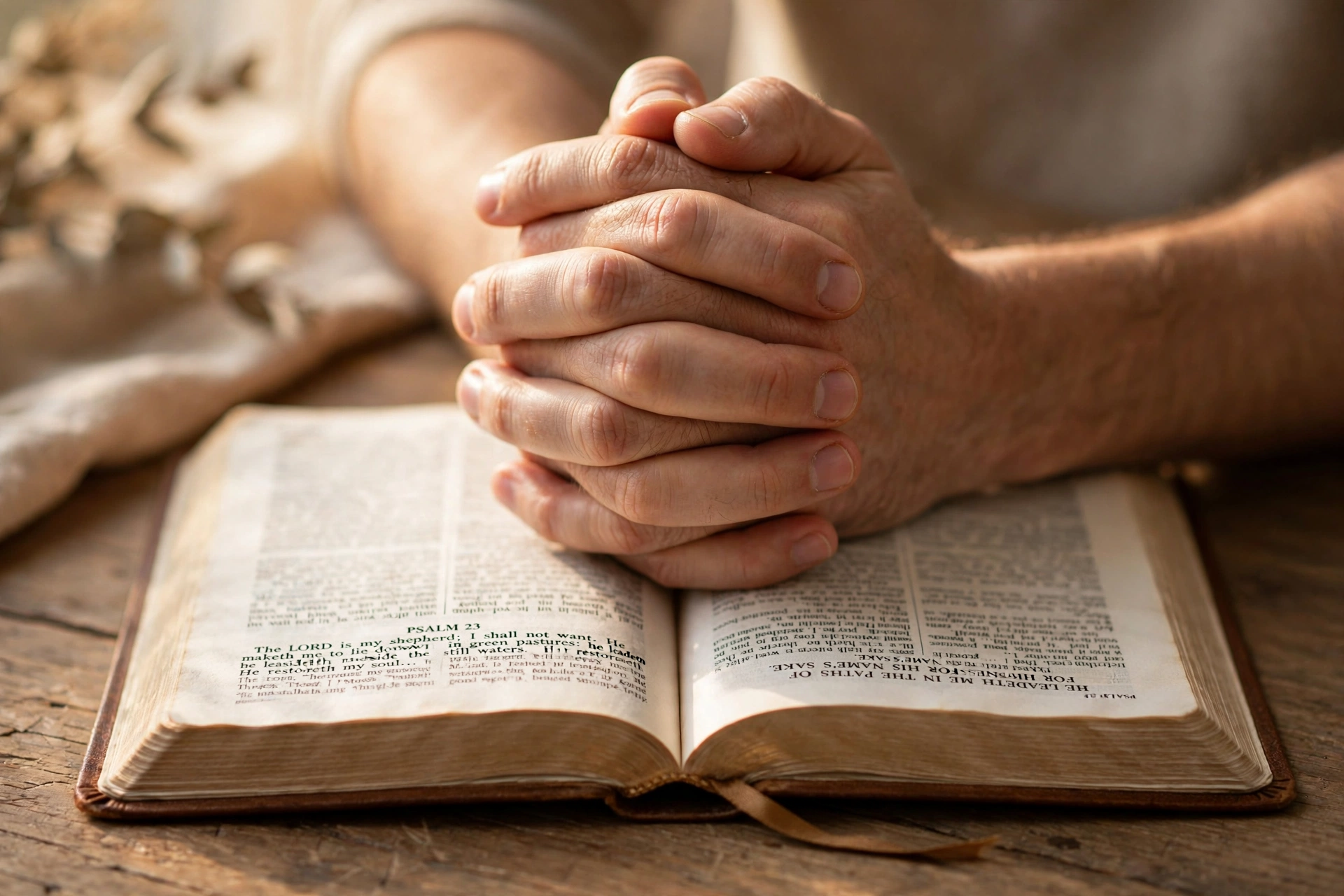
Now faith is the substance of things hoped for, the evidence of things not seen. Hebrews 11:1 (KJV)
The author of Hebrews writes to Jewish Christians who were tempted to retreat from the gospel due to persecution and the allure of the old covenant rituals. This chapter, often called the “Hall of Faith,” serves to bolster the resolve of the weary by grounding their hope in the historical and eternal reality of God’s interaction with humanity.
The Greek word for “substance” here is hypostasis (Strong’s G5287), which carries the legal meaning of a “title deed” or “guarantee.” It suggests that faith is not a wishful thought, but a present possession of a future reality. The “evidence” (elenchos) implies a conviction so strong that it acts as a proof to the conscience, even when the physical senses remain uninformed.
The lesson for the modern believer is clear: your faith is the spiritual “title deed” to the promises of God. When you face circumstances that suggest God is absent, faith allows you to hold the “deed” to His presence, standing firm on the truth that He is at work even when He is hidden from your sight.
For by grace are ye saved through faith; and that not of yourselves: it is the gift of God. Ephesians 2:8 (KJV)
In this epistle to the church at Ephesus, the Apostle Paul establishes the cornerstone of Christian soteriology. He is reminding the believers that their standing before God is not a result of their own moral achievement or religious pedigree, but a divine intervention initiated by God Himself.
The word “faith” here is again pistis. The theological nuance is critical: while we exercise faith, that faith itself is described as a “gift” (doron). According to Bible Gateway, this verse underscores that even the capacity to trust God is an enablement provided by the Holy Spirit, stripping away any room for human boasting.
This is a liberating truth for the believer struggling with inadequacy. If your salvation and your faith were dependent on your own strength, you would have every reason to fear. But because faith is a gift from God, you can trust that He who began the work in you will also sustain your faith until the day of Christ Jesus.
Trust in the LORD with all thine heart; and lean not unto thine own understanding. In all thy ways acknowledge him, and he shall direct thy paths. Proverbs 3:5-6 (KJV)
These verses, penned by Solomon, serve as the quintessential wisdom for daily living. In the context of Proverbs, “the LORD” is Yahweh, the covenant-keeping God. Solomon is contrasting the limitations of human wisdom with the infinite perspective of the Almighty.
The Hebrew word for “trust” is batach (Strong’s H982), which literally means to “throw oneself down” or to “lie helpless” upon someone. It is the imagery of a child falling back into the arms of a parent, fully expecting to be caught. To “lean” (sha’an) is to prop oneself up; we are told not to use our own understanding as a crutch.
Modern application involves a radical surrender. When you are at a crossroads—perhaps in your career or family—God invites you to stop trying to “solve” the future with your own intellect and instead commit your steps to Him. By acknowledging Him in the small, daily decisions, you invite His direction into your entire life.
Key Takeaways: Bible Verses About Faith in God
| Verse Reference (KJV) | Core Spiritual Message | How to Apply Today |
|---|---|---|
| Hebrews 11:1 | Faith is the reality of God’s promises. | When doubting, pray for the “title deed” of His Word. |
| Ephesians 2:8 | Faith is a gift, not a work. | Stop performing for God; rest in His grace. |
| Proverbs 3:5-6 | Total surrender leads to guidance. | Consult God before every major decision. |
How Can I Apply Bible Verses About Faith in God in My Daily Life?
When You Feel Overwhelmed by Life’s Uncertainties
When the future feels like a fog, practice the art of “Biblical Anchoring.” Take one specific promise from Scripture—such as Isaiah 41:10—and write it on a card. When anxiety spikes, read the verse aloud. Instead of ruminating on the “what-ifs,” speak the truth of God’s sovereignty back to your soul. This act of verbalizing your trust turns your focus from your lack of control to His absolute control.
When You Are Making Major Life Decisions
Before making a move, move into a posture of “Holy Hesitation.” Stop relying on your own logical analysis, which is limited by your current perspective. Spend three days in fasting and prayer, specifically asking, “Lord, what is Your perspective on this?” Look for confirmation through the counsel of godly mentors and the alignment of your decision with the clear moral commands of Scripture.
When You Are Dealing with Unanswered Prayer
Faith in the silence is the highest form of faith. When God seems distant, shift your focus from the “gift” you are requesting to the “Giver” Himself. Use this time to read the Psalms, where the writers frequently wrestle with God’s silence. Acknowledge your frustration to Him honestly; this is not a lack of faith, but an expression of intimacy. Remember that faith is not believing God will do what you want, but believing He is who He says He is, regardless of the outcome.
A Prayer for Faith in God
Guided Scriptural Prayer
Heavenly Father, I come before You acknowledging that my faith is often small and easily shaken by the storms of this life. Lord, I thank You that faith is a gift from Your hand, and I ask that You would increase my capacity to trust You. Help me to lay aside my own understanding and the burdens I was never meant to carry, finding my rest in the shadow of Your wings. May my life be a living testimony to the truth that You are the author and finisher of my faith.
Grant me, O Lord, the grace to walk by faith and not by sight. When I am overwhelmed, remind me that You are my rock and my fortress. I commit my path into Your hands, believing that You are directing my steps even when the way ahead is hidden. Let my heart be anchored in the promises of Your Word, and may I live with the boldness that comes from knowing the Creator of the universe is my Father. In the name of Jesus Christ, I pray, Amen.
Frequently Asked Questions About Faith in God in the Bible
Does the Bible say that faith is the only requirement for salvation?
The Bible teaches that faith is the sole instrument of salvation, as seen in Ephesians 2:8-9. However, it clarifies that this faith is not a stagnant or empty belief. As James 2:17 states, “faith, if it hath not works, is dead, being alone” (KJV). The Bible distinguishes between “dead faith”—which is merely intellectual agreement—and “living faith,” which naturally produces the fruit of obedience. Therefore, while we are saved by grace through faith alone, the faith that saves is never alone; it is always accompanied by a transformed life and a desire to follow Christ.
Is it a sin to have doubts about God?
The Bible does not condemn the honest struggle with doubt, but rather invites us to bring our questions to Him. Consider the example of the father in Mark 9:24 who cried out, “Lord, I believe; help thou mine unbelief” (KJV). Jesus did not rebuke him; He honored his transparency and granted his request. Doubt becomes a sin only when it turns into a hardened, willful rejection of God’s truth. When you face doubt, use it as a catalyst to search the Scriptures and seek fellowship, turning your questioning into a pursuit of God’s character.
How does God reward our faith in Him?
The reward of faith is primarily the presence and favor of God Himself. Hebrews 11:6 teaches that God is a “rewarder of them that diligently seek him” (KJV). While the world often views rewards in terms of material prosperity, the Bible defines the reward of faith as spiritual intimacy, the peace that passes understanding, and the assurance of eternal life. God rewards our faith by conforming us to the image of His Son, which is the highest good a human being can experience. The “reward” is the deepening of our relationship with the Creator.
What is the difference between “believing in God” and “having faith in God”?
The difference lies in the level of personal commitment and reliance. James 2:19 notes that “the devils also believe, and tremble” (KJV), demonstrating that mere intellectual belief in God’s existence is insufficient. Having faith in God involves a relational surrender—it is moving from believing that God exists to trusting that He is for you, relying on His promises, and anchoring your identity in His Son. Belief is an acknowledgement of a fact; faith is a total commitment of the heart to a Person. Faith changes your life, whereas belief can exist without ever affecting your daily walk.