

What Does the Bible Say About Faith in God?
The Bible teaches that faith in God is the foundational substance of the Christian life, defined as the confident assurance of things hoped for and the evidence of things not seen. It is not merely an intellectual assent to facts, but a total, life-altering reliance upon the character and promises of the Creator.
Scripture consistently emphasizes that faith is the primary mechanism through which humanity accesses the grace of God. In the Old Testament, faith is often synonymous with “trust” or “leaning” upon the Lord, as seen in the Hebrew word emunah (Strong’s H530), which carries the connotation of firmness, stability, and steadfastness. You can explore the nuances of this term through the Blue Letter Bible Lexicon. This stability is not found in human capability, but in the unchangeable nature of Yahweh.
In the New Testament, the Greek word pistis (Strong’s G4102) expands this concept, representing a conviction that results in active obedience. Without faith, the Bible declares it impossible to please God (Hebrews 11:6). For the modern believer, navigating a world of skepticism and secularism requires a return to this biblical definition: a faith that is not a passive feeling, but a deliberate, daily commitment to believe what God has revealed, even when circumstances suggest the contrary.
Most Powerful Bible Verses About Faith in God (KJV)
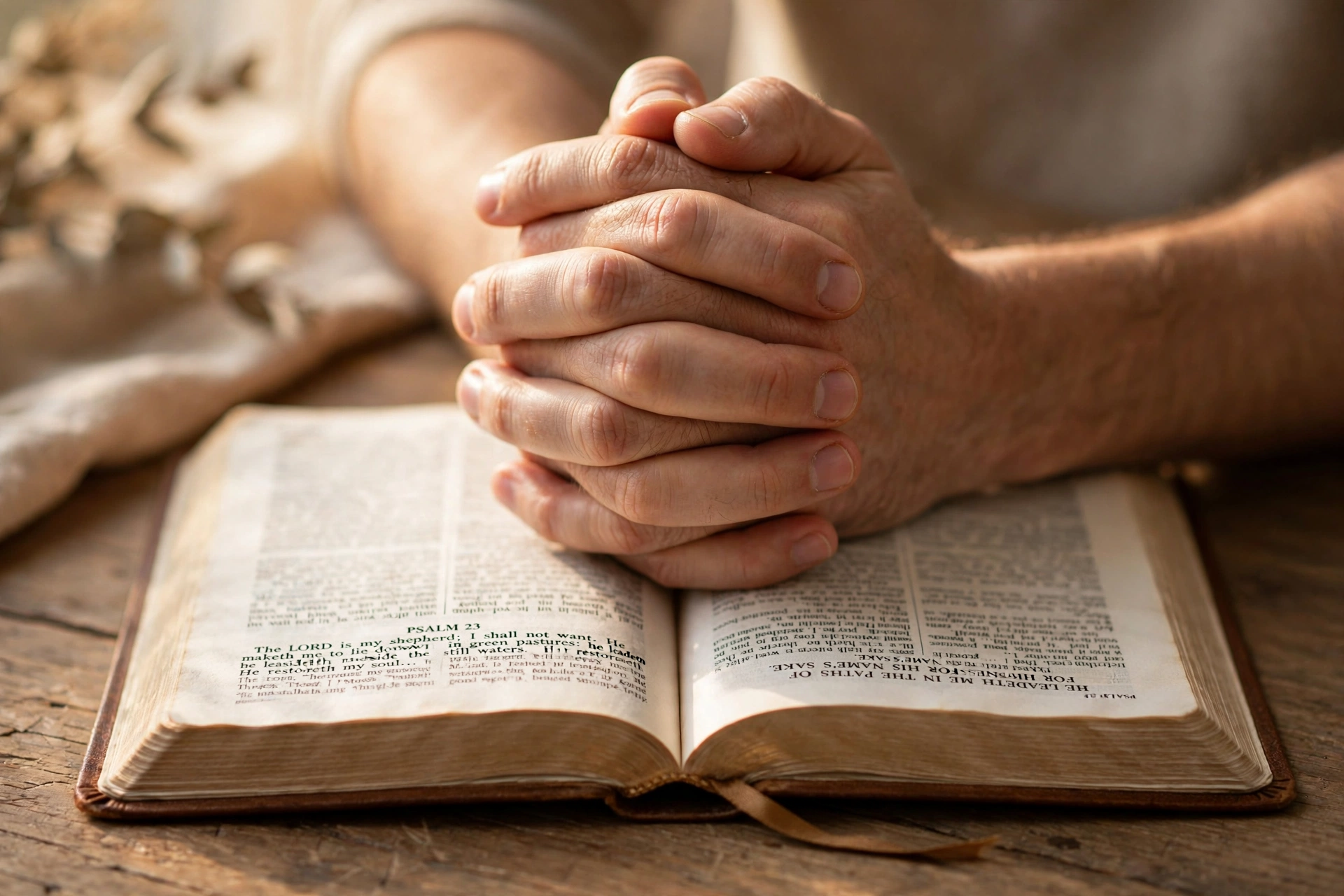
Now faith is the substance of things hoped for, the evidence of things not seen. Hebrews 11:1 (KJV)
The Apostle Paul (or the inspired author of Hebrews) wrote this to Jewish Christians facing intense persecution and the temptation to revert to the rituals of the Mosaic Law. By defining faith as “substance” (Greek: hupostasis), the author is arguing that faith provides a concrete reality to spiritual promises that have not yet manifested in the physical world.
The term hupostasis, as analyzed in Strong’s Concordance (G5287), literally means a “setting under” or a foundation. It suggests that faith is the bedrock beneath our feet. When the world tells us our hope is foolish, faith acts as the legal title deed to the promises of God, proving that what He has spoken is as good as done.
For the modern Christian, this verse serves as a crucial reminder that our internal conviction is a spiritual reality. We do not walk by sight, which is prone to error and change, but by the “substance” of God’s Word. Faith is the lens through which we view our trials, transforming them from obstacles into opportunities for God’s faithfulness to be revealed.
For by grace are ye saved through faith; and that not of yourselves: it is the gift of God. Ephesians 2:8 (KJV)
Written by Paul to the church in Ephesus, this passage serves as a theological anchor regarding the mechanics of salvation. Paul clarifies that human effort, religious striving, or moral perfection cannot earn a standing before a holy God. Instead, salvation is a divine transaction initiated by grace and received through the conduit of faith.
The Greek word for faith here is pistis (G4102), which implies a transformative trust in the person of Jesus Christ. Paul emphasizes that even the ability to believe is a “gift” (Greek: doron) from God. This humbles the believer, removing any grounds for boasting, as our very capacity to trust in Christ is sustained by the Holy Spirit.
In our daily lives, this truth provides immense relief from the “performance trap.” Many believers live in constant anxiety, wondering if they have “enough” faith or if they have done “enough” works. This verse confirms that faith is not a measure of our strength, but a reliance on God’s finished work. It is the humble admission that we cannot save ourselves, and the joyful acceptance of the salvation He freely provides.
Trust in the Lord with all thine heart; and lean not unto thine own understanding. In all thy ways acknowledge him, and he shall direct thy paths. Proverbs 3:5-6 (KJV)
These verses from the wisdom literature of Solomon provide a roadmap for the life of faith. The Hebrew word for “trust,” batach (Strong’s H982), implies a sense of security and safety, like a child resting in a parent’s arms. It stands in stark contrast to “leaning” upon one’s own limited, fallible human logic.
The injunction to “acknowledge him” (Hebrew: yada, H3045) suggests an intimate, experiential knowledge of God. It is not merely acknowledging His existence, but consulting Him in every decision, every relationship, and every challenge. The promise of “directing paths” implies that God will clear the obstacles and guide the believer toward His perfect will.
Applying this today requires a conscious surrender of our need for control. When we face a crossroads—whether in a career move, a family crisis, or a moral dilemma—the default human response is to analyze the situation based on past experience. Faith, however, invites us to pause, acknowledge God’s sovereignty through prayer, and wait for His leading, even when the path ahead is not immediately clear.
Key Takeaways: Bible Verses About Faith in God
| Verse Reference (KJV) | Core Spiritual Message | How to Apply Today |
|---|---|---|
| Hebrews 11:1 | Faith is the reality of our unseen hope. | Hold onto God’s promises during seasons of waiting. |
| Ephesians 2:8 | Salvation is a gift, not earned by works. | Rest in your identity as a child of God, not your performance. |
| Proverbs 3:5-6 | Surrender your logic to God’s wisdom. | Seek God in prayer before making major life decisions. |
How Can I Apply Bible Verses About Faith in God in My Daily Life?
When You Feel Overwhelmed by Life’s Uncertainties
When the future seems hazy and anxiety rises, practice the “Proverbs 3:5” pause. Stop your cycle of overthinking and physically bow your head. Verbalize to God exactly what you are worried about, then say, “Lord, I am leaning on You, not my own understanding.” Write down one promise from Scripture that counters your current fear and place it somewhere visible.
When You Experience a Season of Spiritual Dryness
Faith is not a feeling; it is a choice to believe regardless of the emotional climate. During dry seasons, commit to “The Discipline of the Word.” Read one Psalm aloud every morning, regardless of whether you “feel” connected to God. By speaking the truth of His character, you are feeding your faith with the objective reality of who He is, which will eventually stabilize your emotions.
When You Face a Major Moral or Life Decision
Before moving forward, apply the “Acknowledge Him” test. Ask yourself: “Have I sought counsel in the Word and through prayer, or am I moving based on my own convenience?” Fast for one meal or set aside a dedicated hour to seek God’s face. Faith is demonstrated by our willingness to delay our plans until we have sensed His direction through the peace of the Holy Spirit.
A Prayer for Faith in God
Guided Scriptural Prayer
Heavenly Father, I come before You acknowledging that my faith is often small and easily shaken by the storms of this life. Lord, increase my faith. Help me to grasp the substance of the things I hope for and to trust in Your unseen power even when my circumstances seem overwhelming. I cast my burdens upon You, for You have promised to direct my paths if I but acknowledge You in all my ways.
Thank You, Lord, that my salvation does not depend on my own strength, but on the finished work of Your Son, Jesus Christ. May Your Holy Spirit dwell within me, granting me the wisdom to lean not on my own understanding, but to rest securely in Your perfect, sovereign will. Let my life be a testament to the reality of Your promises, today and forevermore. Amen.
Frequently Asked Questions About Faith in God in the Bible
Does the Bible say that faith is enough to save me?
The Bible teaches that faith in Jesus Christ is the sole requirement for salvation, as stated in Ephesians 2:8. However, this is not a “dead faith” that produces no change. As the book of James 2:17 (KJV) clarifies, “faith, if it hath not works, is dead, being alone.” This means that true, saving faith will naturally manifest in a life of obedience and love. We are not saved *by* our works, but we are saved *for* good works, which serve as the outward evidence of the internal transformation that faith has initiated in the believer’s heart.
Is it a sin to have doubts about my faith?
Doubt is a universal human experience and is not necessarily a sin, but a call to deeper inquiry. Many biblical figures, including Thomas and even John the Baptist, experienced moments of questioning. The key is how we handle that doubt. Instead of letting doubt lead to unbelief, we should take our questions to God, just as the father did in Mark 9:24 (KJV): “Lord, I believe; help thou mine unbelief.” God is big enough to handle your questions; He desires that you seek Him for the truth that resolves your uncertainty.
How does God measure the strength of my faith?
God does not measure faith by quantity, but by the object in which that faith is placed. Jesus taught in Matthew 17:20 (KJV) that even “faith as a grain of mustard seed” can move mountains. The strength of your faith is not found in your ability to “believe hard enough,” but in the faithfulness of the God you are believing in. A tiny amount of faith placed in an all-powerful God is infinitely more effective than a massive amount of confidence placed in one’s own self or circumstances.
What is the difference between faith and hope in the Bible?
While often used together, they have distinct roles. Faith is the current, active trust in God’s character and Word; it is the “substance” we possess right now (Hebrews 11:1). Hope, in a biblical context, is the eager anticipation of the fulfillment of those promises in the future. Faith is the foundation, and hope is the expectation that rises from that foundation. You cannot have biblical hope without faith, because you cannot expect a future promise to be fulfilled if you do not first believe in the One who made the promise.