
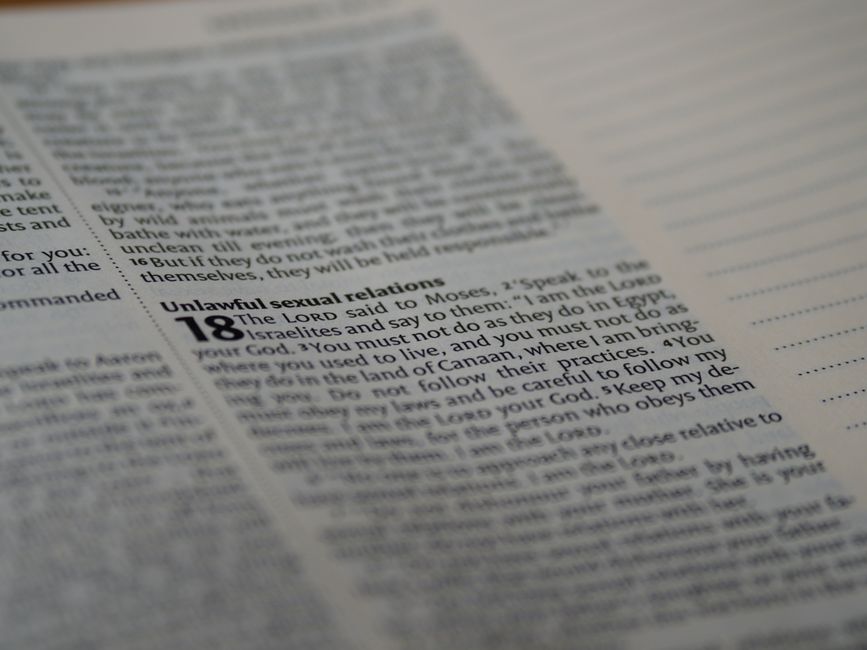
Welcome to this deep-dive study of Deuteronomy 30, a pivotal chapter in the Pentateuch that bridges the gap between the Mosaic Law and the promise of a transformed heart. Together, we will explore the themes of restoration, the accessibility of God’s word, and the profound choice between life and death that remains relevant for every believer today.
Deuteronomy 30 — Historical and Spiritual Context
Deuteronomy 30 is situated at the conclusion of Moses’ final address to the Israelites on the plains of Moab, just before they enter the Promised Land under Joshua. Moses, knowing the people would eventually fail and face exile, provides this prophetic framework to ensure that even in their darkest moments of disobedience and subsequent scattering among the nations, there remains a clear path of repentance and return to a covenant-keeping God. You can read Deuteronomy 30 on Bible Gateway to ground yourself in the original text.
Theologically, this chapter serves as the “Gospel of the Old Testament,” highlighting that God’s grace always precedes and follows our failures. It shifts the focus from external legalism to internal transformation, foreshadowing the New Covenant where the law is written upon the heart. For the modern believer, Deuteronomy 30 serves as a timeless reminder that God is never further than a sincere prayer away, and that choosing life is an active, daily decision to align our hearts with His revealed will.
Verse-by-Verse Commentary on Deuteronomy 30
Deuteronomy 30:2 — Meaning and Explanation
“And shalt return unto the Lord thy God, and shalt obey his voice according to all that I command thee this day, thou and thy children, with all thine heart, and with all thy soul;”
This verse highlights the necessity of a total, heartfelt return to God as the prerequisite for spiritual restoration. The Hebrew verb for “return” here is shub (Strong’s H7725), which implies a radical change in direction—a literal turning around from the path of sin back to the path of obedience. It is not merely a regretful feeling, but a deliberate, active reversal of one’s life trajectory.
The requirement to obey “with all thine heart, and with all thy soul” emphasizes that God is not interested in mere ritualistic performance. In the context of the ancient Near East, where many religions focused on outward sacrifices to appease fickle deities, Yahweh demands the internal alignment of the believer’s affections. For the modern Christian, this serves as a reminder that our repentance must reach the root of our desires, ensuring that our obedience is motivated by love rather than fear of retribution.
Deuteronomy 30:6 — Meaning and Explanation
“And the Lord thy God will circumcise thine heart, and the heart of thy seed, to love the Lord thy God with all thine heart, and with all thy soul, that thou mayest live.”
This verse serves as a profound promise of divine enablement, revealing that the ability to truly love and obey God is a gift of His grace. The concept of heart-circumcision refers to the removal of the “fleshly” or hardened nature—the Hebrew word mul (Strong’s H4135) implies a cutting away of the foreskin, symbolizing the removal of spiritual impurity and stubbornness.
This passage is a direct precursor to the New Testament teaching on regeneration. While the Law demands obedience, God here promises to perform the work in us that allows that obedience to flourish. He promises to do for us what we cannot do for ourselves: transform our inner nature so that our natural inclination shifts from rebellion to love. It is a beautiful picture of the Holy Spirit’s work in the believer, creating a new heart capable of sustaining a life-giving relationship with the Creator.

Deuteronomy 30:14 — Meaning and Explanation
“But the word is very nigh unto thee, in thy mouth, and in thy heart, that thou mayest do it.”
This verse asserts that God’s revelation is not hidden in some inaccessible, mystical realm, but is readily available and internal to the believer. The word “nigh” (Hebrew: qarob, Strong’s H7138) conveys proximity—it is near enough to touch, speak, and internalize. Paul later quotes this passage in Romans 10, applying it directly to the message of faith in Christ.
The spiritual lesson here is the accessibility of truth. We often treat God’s guidance as if it were a complex riddle or a distant secret, but through His Word and His Spirit, He makes His will known clearly. When the Word is in our “mouth” (confession) and our “heart” (conviction), it becomes the fuel for our daily actions. This removes the excuse of ignorance; the instruction for righteous living is already within the reach of anyone who seeks the Lord with sincerity.
Deuteronomy 30:19 — Meaning and Explanation
“I call heaven and earth to record this day against you, that I have set before you life and death, blessing and cursing: therefore choose life, that both thou and thy seed may live:”
This is the climactic ultimatum of the entire book of Deuteronomy, presenting the reader with a binary choice of eternal consequence. The word “choose” (Hebrew: bachar, Strong’s H977) implies a careful selection or an act of preference. God is essentially saying, “I have laid out the reality of the universe; now you must decide which reality you will inhabit.”
The “heaven and earth” acting as witnesses signifies that this choice is not a private, trivial matter, but one that has cosmic significance. To choose “life” is to choose the path of covenantal blessing—to walk in the ways of God’s wisdom. To choose “death” is to choose autonomy from the Source of Life. This verse serves as a powerful call to intentionality for the believer. We choose life every time we prioritize prayer, act with integrity in business, or show grace to those who have offended us.

How to Apply Deuteronomy 30 in Your Daily Life
Applying Deuteronomy 30 requires moving from the abstract to the concrete. In your family life, “choosing life” means prioritizing the spiritual atmosphere of your home. Instead of allowing the chaos of modern schedules to dictate your priorities, intentionally cultivate a space where God’s Word is spoken and practiced. When conflict arises between family members, choose the “life” of forgiveness and patience, which are fruits of the heart God has circumcised, rather than the “death” of holding grudges or using sharp words.
In the workplace, you can apply this by being a person of radical integrity. When faced with a decision to cut a corner or sacrifice your ethics for a quick gain, remember that you are “choosing life.” By choosing the harder, honest path, you are demonstrating that your life is governed by the Word of God rather than the pressures of the world. Each of these small, daily decisions is an act of worship, proving that you have internalized the Law of God and are allowing it to guide your interactions, your labor, and your witness to others.
A Prayer Based on Deuteronomy 30
Guided Scriptural Prayer
Heavenly Father, I come before You today acknowledging that You are the source of all life and blessing. I thank You for Your promise in Deuteronomy 30:6 to circumcise my heart, that I might love You with everything I am. Please remove the hardness of my nature and replace it with a tender, obedient spirit that delights in Your ways. Help me to remember that Your Word is always near me, and grant me the courage to choose life in every decision I face today. May my life be a testimony to Your grace and a reflection of Your love to those around me. Amen.
Frequently Asked Questions About Deuteronomy 30
What is the main message of Deuteronomy 30?
The main message of Deuteronomy 30 is the availability of restoration through repentance. Moses teaches that even if the people of God fall into disobedience and face exile, they are never beyond the reach of God’s mercy. If they return to Him with all their heart, He will gather them again. It emphasizes that God’s requirements are not impossibly distant or mysterious; rather, His Word is near, and He provides the spiritual transformation (heart-circumcision) necessary to follow Him. Ultimately, it is a call for the believer to proactively “choose life” by choosing to live in obedience to God’s covenantal love.
What does it mean to “circumcise the heart” in Deuteronomy 30:6?
To “circumcise the heart” is a metaphor for the internal, spiritual transformation that only God can perform. Just as physical circumcision was the sign of the covenant in the Old Testament, the circumcision of the heart signifies the removal of the “flesh”—the stubborn, sinful, and rebellious nature that prevents a person from truly loving God. It represents the transition from a heart that is closed off to God to one that is receptive, sensitive, and empowered by His Spirit. In the New Testament, this is fulfilled in the concept of being “born again” or receiving a new heart, enabling us to walk in the Spirit.
How does Deuteronomy 30 relate to the Gospel of Jesus Christ?
Deuteronomy 30 is a prophetic foundation for the Gospel. The promise of a circumcised heart in verse 6 anticipates the New Covenant (Jeremiah 31:31-34; Ezekiel 36:26), where God writes His law on the hearts of His people through the Holy Spirit. Furthermore, the Apostle Paul quotes Deuteronomy 30:11-14 in Romans 10:6-9 to explain the “righteousness of faith.” He identifies the “Word” that is near as the message of faith in Christ—that if you confess with your mouth and believe in your heart, you will be saved. Thus, the chapter points directly to the finished work of Jesus, who makes the path to life accessible to everyone who believes.
May you walk in the light of His truth and find the abundant life that comes from choosing Him every single day.