
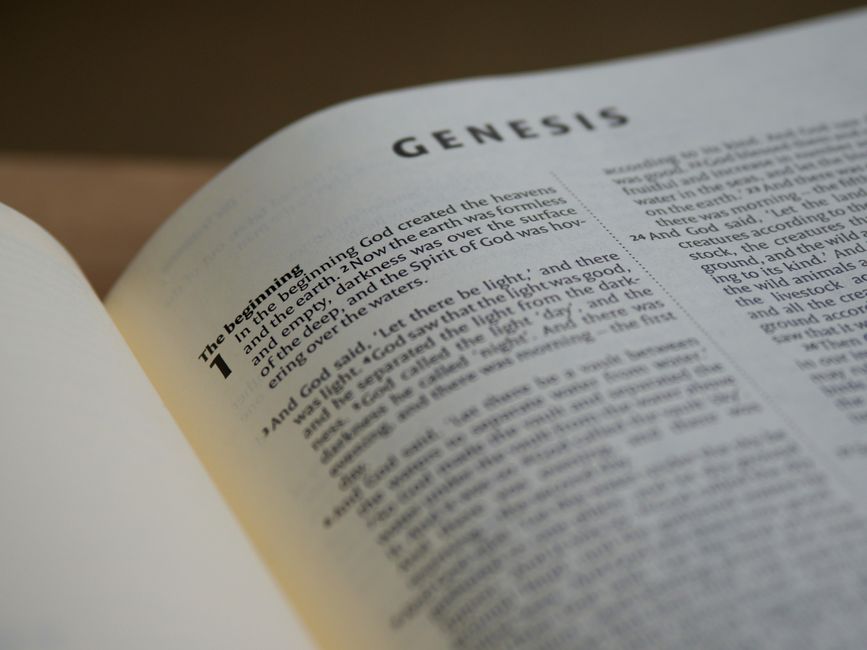
Welcome to this deep-dive study of Genesis 12, a pivotal turning point in the biblical narrative where the focus shifts from the history of humanity at large to the specific history of God’s redemptive covenant. Together, we will explore the themes of divine calling, the life of faith, the testing of our obedience, and the sovereignty of God in the face of human frailty.
Genesis 12 — Historical and Spiritual Context
Genesis 12 marks the transition from the primeval history of chapters 1–11 to the patriarchal narrative, beginning with the call of Abram. Traditionally attributed to Moses, this text was likely compiled for the Israelites wandering in the wilderness, serving as a foundational reminder of their divine heritage, the promise of the land, and their identity as a people set apart by a covenant-keeping God.
The overarching theological theme of Genesis 12 is the initiation of the Abrahamic Covenant, which functions as the backbone of redemptive history. For the believer today, this chapter serves as a profound model of faith; it demonstrates that God’s call often requires leaving behind the familiar to walk in the mystery of His providence. You can read Genesis 12 on Bible Gateway to ground yourself in the text before we proceed.
Verse-by-Verse Commentary on Genesis 12
Genesis 12:1 — Meaning and Explanation
“Now the LORD had said unto Abram, Get thee out of thy country, and from thy kindred, and from thy father’s house, unto a land that I will shew thee:”
This verse captures the radical nature of God’s call, which demands total separation from the past to embrace a future defined solely by divine promise. The Hebrew verb for “get thee out” is halak (Strong’s H1980), which literally means “to walk” or “go.” In this imperative form, God is commanding Abram to embark on a journey of faith where the destination is not fully disclosed.
Historically, Abram was living in Ur of the Chaldees, a hub of idolatry and sophisticated urban culture. By calling him out of his “father’s house,” God was effectively stripping Abram of his social security, his inheritance, and his cultural identity. Spiritually, this teaches us that God’s blessing often necessitates a “leaving behind”—a renunciation of our worldly comforts and self-reliance—so that we may become fully dependent on the unseen hand of God.
Genesis 12:2 — Meaning and Explanation
“And I will make of thee a great nation, and I will bless thee, and make thy name great; and thou shalt be a blessing:”
This verse outlines the multifaceted nature of the Abrahamic Covenant, promising both personal elevation and a legacy that would impact all humanity. The Hebrew word for “bless” used here is barak (Strong’s H1288), which carries the connotation of endowing with power, prosperity, and favor. God’s promise is not merely for Abram’s private enjoyment but for the benefit of the world.
Matthew Henry notes in his commentary that the greatness promised to Abram was not for his own pride, but to serve as a conduit for divine grace. In the context of the Bible, this is the first explicit promise that the “blessing” will eventually extend to the nations. As believers, we are reminded that God’s favor in our lives is never an end in itself; we are blessed so that we might become a blessing to those around us in a broken world.

Genesis 12:3 — Meaning and Explanation
“And I will bless them that bless thee, and curse him that curseth thee: and in thee shall all families of the earth be blessed.”
This verse establishes the divine principle of covenantal protection, setting the stage for the global mission of the gospel. The Hebrew term for “curse” is arar (Strong’s H779), implying a state of being cut off from the presence and favor of the Creator. God essentially pledges His own reputation to the defense of the one who follows Him.
Theologically, this verse is a messianic prophecy. The phrase “in thee shall all families of the earth be blessed” points forward to the coming of Jesus Christ, the seed of Abraham, through whom the Gentiles would receive the promise of the Spirit. It serves as a reminder that the church’s mandate is global. We are part of a lineage that transcends ethnicity and geography, united by the singular blessing of salvation found in Christ. You can explore further linguistic nuances on Blue Letter Bible.
Genesis 12:10 — Meaning and Explanation
“And there was a famine in the land: and Abram went down into Egypt to sojourn there; for the famine was in the land was grievous.”
This verse introduces the reality of human fallibility in the life of faith. Even after receiving a direct promise from God, Abram faces a “grievous” famine (Hebrew: kabed, Strong’s H3515, meaning heavy or burdensome). Abram’s decision to go to Egypt represents a moment of wavering where he relies on human instinct rather than inquiring of the Lord.
This serves as a sobering lesson for the modern believer: the path of obedience is not free from earthly trials. Famines—whether financial, emotional, or spiritual—will come. The danger lies in “going down” to the world (represented by Egypt) to solve problems that God intends to use to grow our character. It is a cautionary tale about the necessity of staying anchored in the Promised Land of God’s will, even when the circumstances seem to dictate that we must flee.

How to Apply Genesis 12 in Your Daily Life
Applying Genesis 12 to your life requires a shift in perspective from “security-seeking” to “promise-following.” In your career, this might mean turning down a lucrative opportunity that requires you to compromise your ethical standards or time with your family. Just as Abram left Ur, you may be called to leave behind a “comfortable” environment that is stagnant for your spiritual growth. Ask yourself: “Am I staying in this situation because it is where God placed me, or because I am afraid to trust Him with my future?”
In your family life, strive to be a “blessing” to your neighborhood and community. Instead of hoarding your resources or your time, view your home as a sanctuary of hospitality. When you face “famines”—such as a sudden job loss, health scare, or relational conflict—resist the urge to panic or compromise your integrity. Instead, treat these seasons as a trial of your faith. Pray for discernment to know whether to stay and trust God in the midst of the famine, or to move according to His clear, peaceful direction.
A Prayer Based on Genesis 12
Guided Scriptural Prayer
Heavenly Father, I thank You for the call You have placed upon my life, just as You called Abram to leave his home and follow Your lead. Help me to trust Your promises even when the road ahead is obscured by uncertainty. When I face the famines of life, keep my heart from turning toward the world for security, and instead, keep my eyes fixed firmly on Your Word. May my life be a vessel of the blessing You have poured into me, that others may see Your light in my actions. I choose to walk by faith and not by sight, in the name of Jesus Christ, my Lord and Savior. Amen.
Frequently Asked Questions About Genesis 12
What is the main message of Genesis 12?
The main message of Genesis 12 is the initiation of the Abrahamic Covenant, centered on God’s sovereign choice of an individual to be the vehicle of His global redemptive plan. It emphasizes that faith is not a static belief, but a dynamic, life-altering walk with God. Through the call of Abram, God demonstrates that He is a promise-keeper who demands total obedience, yet who remains faithful to His people even when they falter in their own faith, as seen in the Egypt incident (Genesis 12:10-20).
What does the call of Abram in Genesis 12 mean for Christians?
For Christians, the call of Abram is the historical precursor to the Great Commission. It signifies that God’s redemptive purpose is not limited to one family or nation, but is intended to reach “all families of the earth” (Genesis 12:3). This is fulfilled in the New Testament through Jesus Christ, the true seed of Abraham. As believers, we are grafted into this covenant through faith, meaning we share in the calling to be a blessing to the world and to live as strangers and pilgrims on this earth.
Why did Abram lie about Sarai in Genesis 12?
Abram’s decision to claim that Sarai was his sister (Genesis 12:11-13) was a lapse in faith driven by fear. Despite having heard from God directly, Abram relied on his own human cunning to protect his life, essentially putting his wife in jeopardy to save himself. This demonstrates that even the “father of faith” struggled with human weakness and the temptation to solve problems through deception. It serves as a stark reminder that even the greatest heroes of the Bible were imperfect people entirely dependent on the grace of God.
May the Lord bless your study of His Word and grant you the courage to follow Him wherever He leads.